
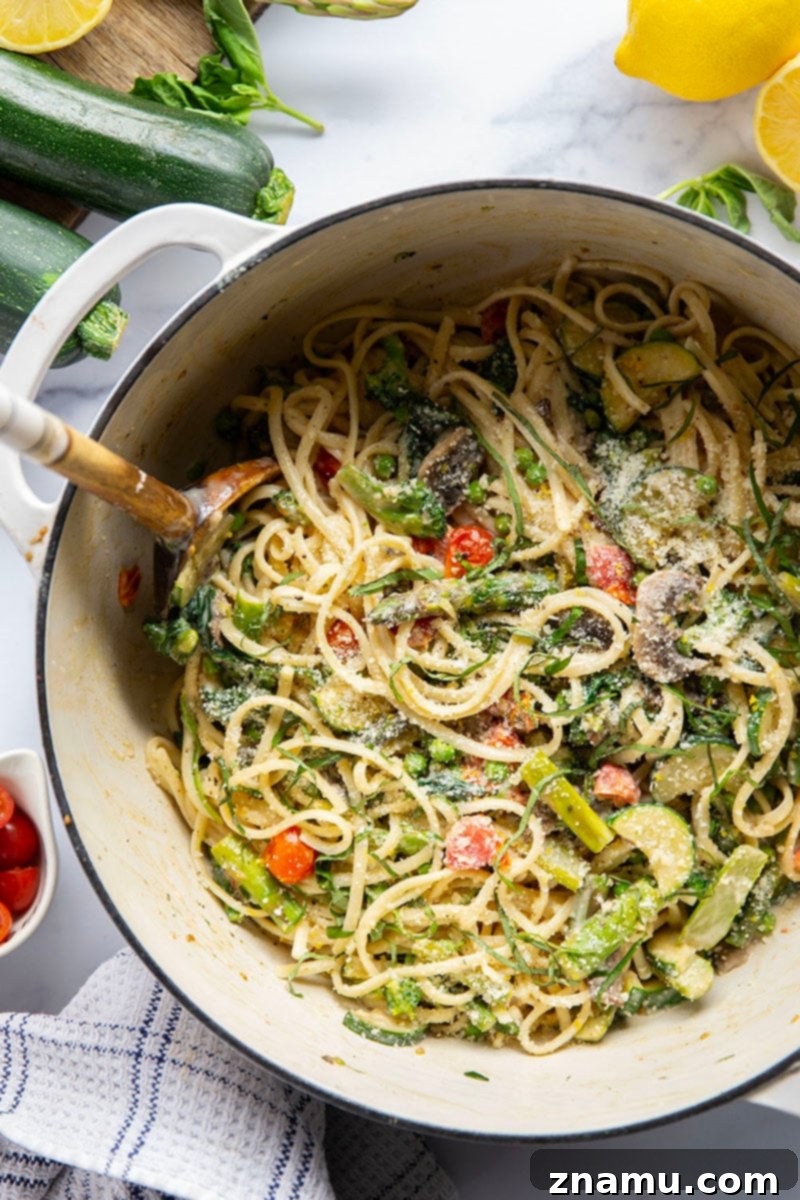
Embrace the vibrant flavors of the season with this exquisite Spring Pasta Primavera. Loaded with a bountiful array of fresh spring vegetables and enrobed in a light, creamy Parmesan sauce, this dish is effortlessly elegant, simple to prepare, and a true showstopper for any gathering.
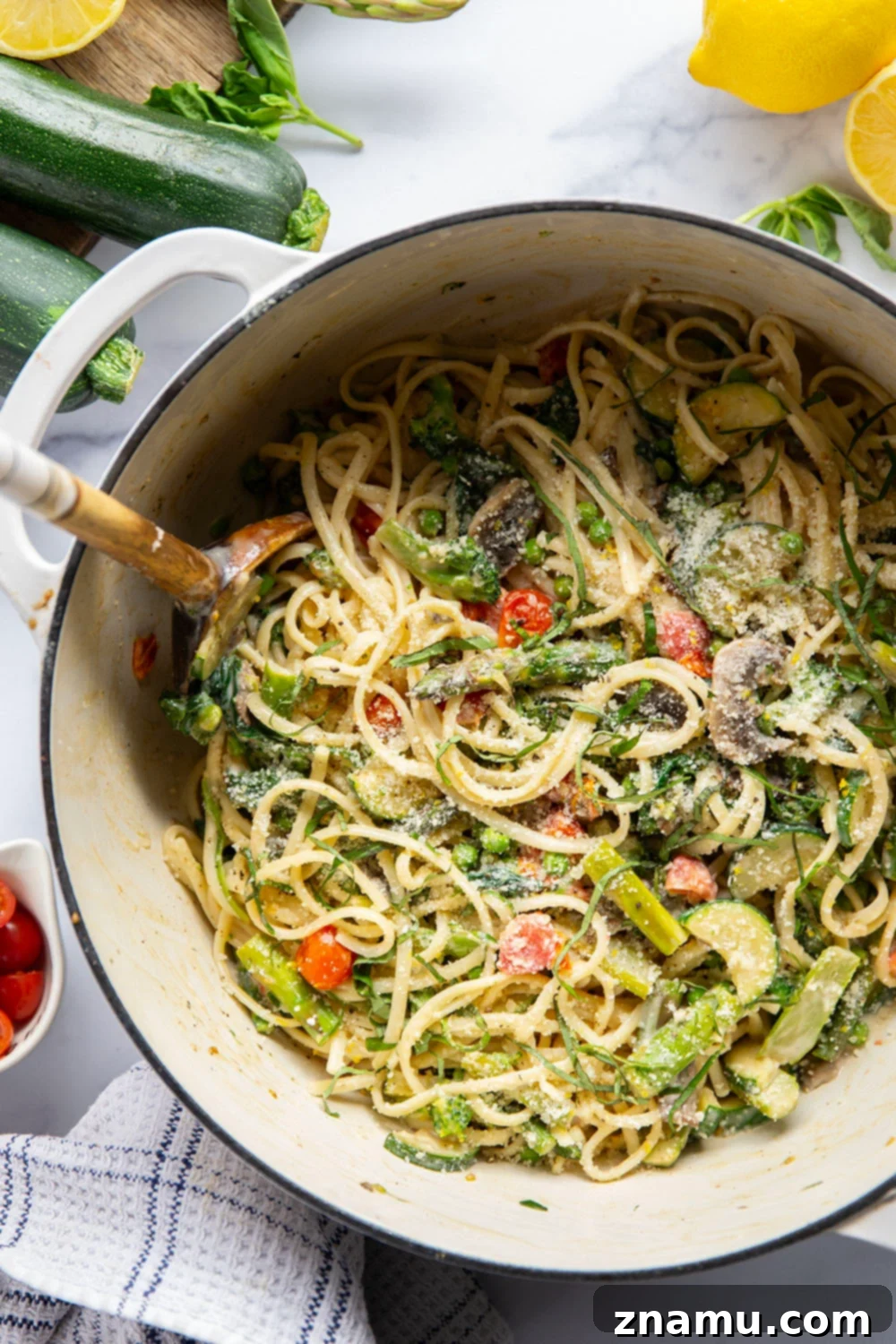
Discovering the Delight of Spring Pasta Primavera
There’s something inherently magical about springtime produce. As the earth awakens, it blesses us with an abundance of colorful, nutritious vegetables, each bursting with fresh flavor. This Spring Pasta Primavera is a celebration of that bounty, bringing together the best of the season in a harmonious and incredibly satisfying meal. Forget complicated recipes or heavy dishes; this primavera is designed for ease, vibrancy, and pure culinary joy. If you haven’t yet welcomed a homemade pasta primavera into your kitchen, prepare to be introduced to a new favorite that promises to become a regular fixture in your meal rotation.
The true beauty of a pasta primavera lies in its incredible versatility. The name “primavera” itself, meaning “spring” in Italian, suggests a dish that is adaptable to whatever fresh vegetables are in season. While we’ll highlight a fantastic combination of spring’s finest, don’t feel limited. This recipe encourages you to mix and match vegetables based on what’s fresh at your local market or what you already have nestled in your refrigerator. Each variation will yield a wonderfully unique and delicious result, ensuring that this pasta dish never gets old.
Why This Spring Pasta Primavera Will Be Your New Favorite
Our Spring Pasta Primavera recipe stands out for its perfect balance of fresh, earthy vegetables and a luxurious, yet surprisingly light, lemon basil Parmesan sauce. It’s a dish that feels both comforting and invigorating, making it ideal for a weeknight dinner or a special occasion. We’ve carefully selected ingredients that complement each other beautifully, creating a symphony of textures and flavors that will tantalize your taste buds. This isn’t just another pasta dish; it’s an experience that encapsulates the very essence of spring on a plate.
Key Components of This Irresistible Primavera:
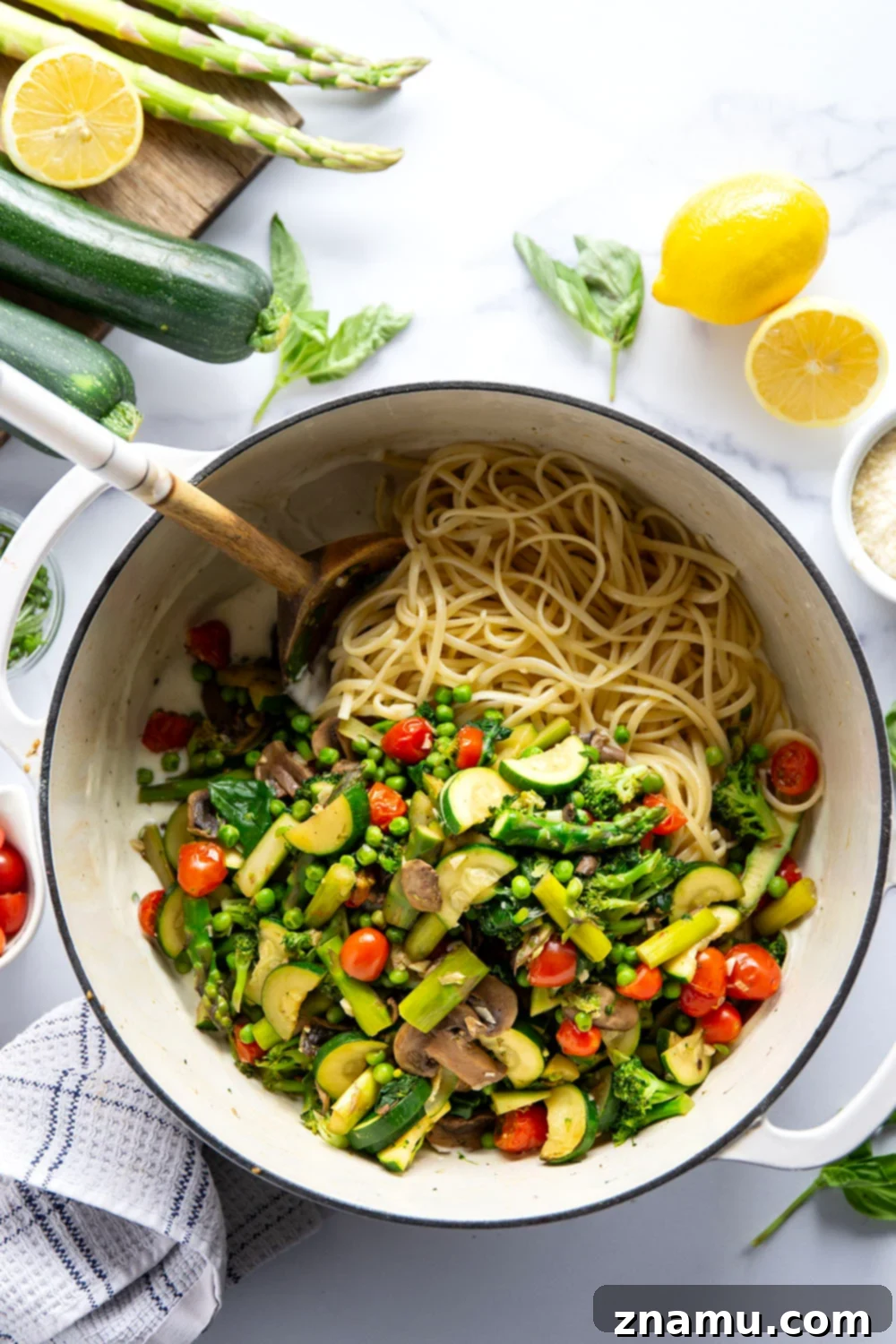
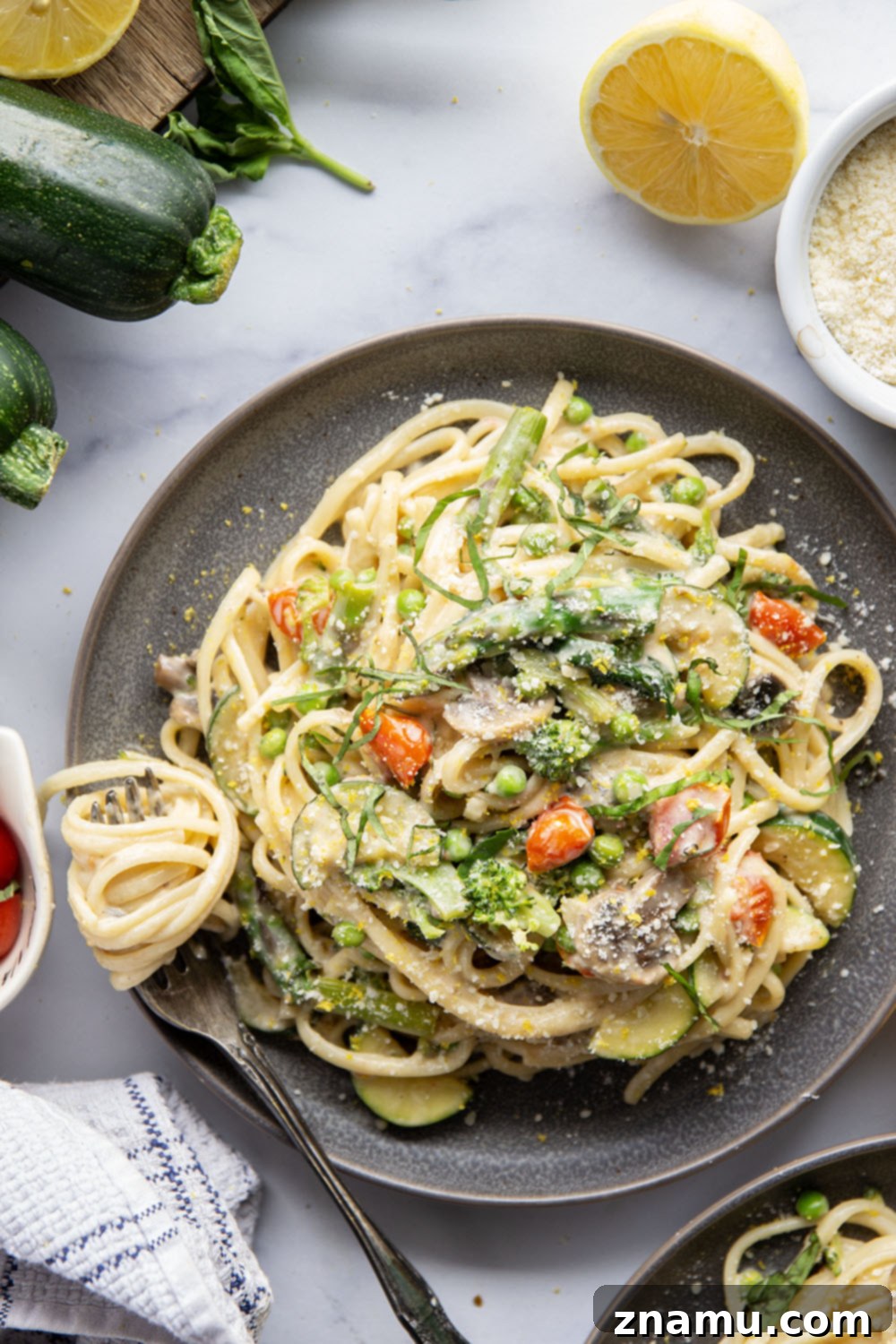
- A Rainbow of Sautéed Vegetables: Featuring tender asparagus, crisp broccoli, mild zucchini, earthy mushrooms, sweet cherry tomatoes, wilted baby spinach, and bright green peas. This combination ensures every bite is packed with nutrients and delightful crunch.
- Light & Creamy Lemon Basil Parmesan Sauce: A velvety sauce crafted with a touch of butter, flour, heavy cream, milk, freshly grated Parmesan, bright lemon zest, and fragrant fresh basil. It’s rich without being heavy, allowing the vegetable flavors to shine.
- Perfectly Cooked Fettuccine Pasta: Long, flat strands of fettuccine provide the ideal canvas for the creamy sauce and tender vegetables to cling to, ensuring a satisfying mouthful every time.
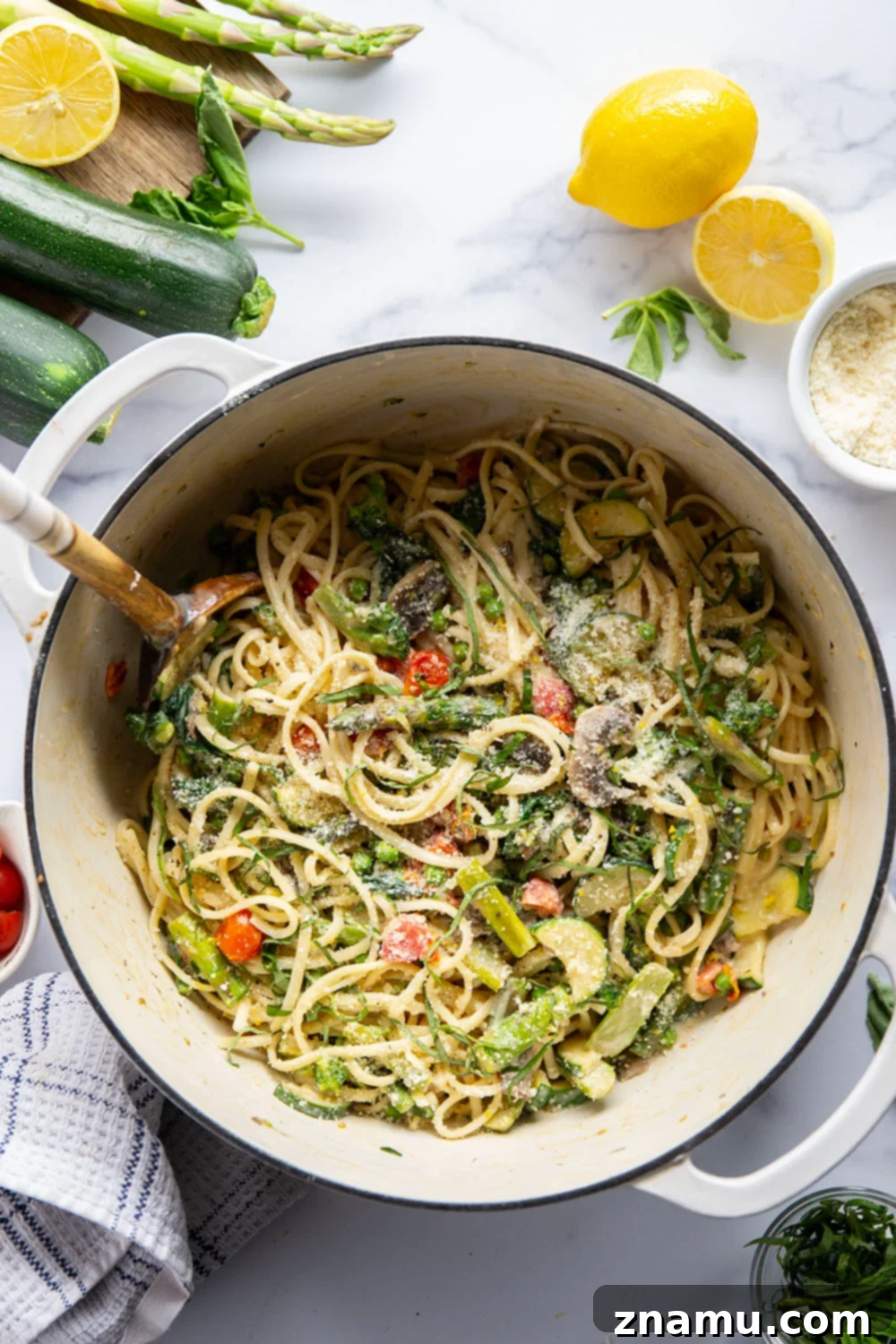
Crafting Your Spring Pasta Primavera: A Step-by-Step Guide
Creating this stunning pasta dish is simpler than you might imagine. With a little organization and fresh ingredients, you’ll have a gourmet-quality meal on your table in under an hour. Below, we’ll walk through the essential ingredients and detailed instructions to ensure your pasta primavera is nothing short of spectacular.
Essential Ingredients You Will Need:
- Olive Oil: The foundation for sautéing your vegetables, imparting a subtle richness.
- Asparagus: Trimmed and cut, offering a distinct spring flavor and tender-crisp texture.
- Broccoli: Cut into small florets for quick cooking and a vibrant green pop.
- Mushrooms: Sliced to add an umami depth and meaty texture.
- Zucchini: Thinly sliced, providing a delicate flavor and soft bite.
- Garlic: Freshly minced, crucial for building the aromatic base of the dish.
- Cherry Tomatoes: Halved, introducing bursts of sweet and tangy juiciness.
- Baby Spinach: Packed into the pan, it wilts quickly, adding a touch of bitterness and vibrant color.
- Frozen Peas: A convenient way to add sweetness and a lovely green hue, tossed in at the last minute.
- Fettuccine Pasta: The ideal pasta shape for this creamy sauce, but feel free to experiment with others.
- Unsalted Butter: The base for your rich and flavorful sauce.
- All-Purpose Flour: Used to create a roux, thickening the sauce to perfection.
- Heavy Whipping Cream: For ultimate creaminess and indulgence in your sauce.
- 2% or Skim Milk: Balances the richness of the cream, keeping the sauce light yet luxurious.
- Parmesan Cheese: Freshly grated is key for superior melting and flavor.
- Lemon Zest: Provides a bright, aromatic lift that cuts through the richness of the sauce.
- Fresh Basil: Minced, offering a final flourish of herbaceous freshness.
- Salt and Pepper: To season the vegetables and sauce to your desired taste.
Mastering Your Vegetable Selection for Primavera
The true artistry of pasta primavera comes from its flexible approach to vegetables. While our recipe features a fantastic medley, consider this a starting point for your own culinary exploration. We’re aiming for a colorful array that not only pleases the eye but also provides a diverse nutritional profile and varied textures. The combination of asparagus, broccoli, peas, spinach, zucchini, mushrooms, and cherry tomatoes delivers a wonderful balance, but the possibilities are truly endless.
Think about what’s in peak season in your region. Other excellent additions include sweet bell peppers (red, yellow, or orange for extra color), crisp snow peas, nutrient-dense fresh kale or Swiss chard, finely diced shallots for a milder onion flavor, or tender green beans. Even seasonal root vegetables like thinly shaved carrots or radishes could add an interesting twist. The key is to choose vegetables that cook relatively quickly or can be cut into small, manageable pieces to ensure even cooking and a delightful texture in every forkful. Don’t be afraid to embrace what’s available and create your own signature blend!
Expert Tips for the Perfect Pasta Primavera
Achieving a restaurant-quality pasta primavera at home is entirely within reach with these helpful tips and tricks. Paying attention to these details will elevate your dish from good to absolutely unforgettable.
- Uniform Vegetable Sizing: For consistent texture and even cooking, ensure all your vegetables are cut to a similar, bite-sized dimension. This prevents some vegetables from becoming mushy while others remain raw. For example, 1-inch pieces for asparagus, 1/2-inch florets for broccoli, and thin slices for zucchini work perfectly.
- Sautéing for Flavor and Texture: Begin by sautéing the heartier vegetables such as asparagus, broccoli, zucchini, and mushrooms in a large skillet. This initial cook time allows them to become tender-crisp and develop a deeper flavor. Avoid overcrowding the pan, as this can steam the vegetables rather than sauté them. Work in batches if necessary.
- Strategic Addition of Delicate Ingredients: Garlic, baby spinach, cherry tomatoes, and frozen peas require less cooking time. Add these towards the end of the vegetable cooking process. Garlic needs only a minute to become fragrant, while spinach wilts quickly. Cherry tomatoes soften and release their juices, and peas simply need to be warmed through to retain their bright color and sweet flavor.
- The Unbeatable Flavor of Freshly Grated Parmesan: This is a non-negotiable tip for an exceptional sauce. Pre-grated Parmesan often contains anti-caking agents that can prevent it from melting smoothly. Hand-grating a block of high-quality Parmesan ensures a silky, luxurious sauce that perfectly emulsifies and clings to the pasta.
- Cook Pasta to Al Dente Perfection: Pasta primavera is best with pasta that has a slight bite to it. Boil your fettuccine until it is “al dente,” meaning “to the tooth.” It will continue to cook slightly when tossed with the hot sauce, preventing it from becoming overcooked and mushy.
- Reserve That Precious Pasta Cooking Water: Before draining your cooked pasta, always reserve about 3/4 to 1 cup of the starchy cooking water. This liquid is a secret weapon! It helps thin out and loosen the sauce to your desired consistency, allowing it to coat every strand of pasta and vegetable beautifully while also helping the sauce cling.
- Final Burst of Freshness: The lemon zest and fresh basil are added right at the very end of cooking. This preserves their delicate flavors and vibrant aromas, providing a bright, herbaceous finish that truly defines the “spring” in pasta primavera.
Creative Recipe Variations to Inspire You
While our core recipe is truly outstanding, there’s always room for personal touches and creative modifications. Here are some ideas to put a unique spin on your next pasta primavera, making it perfectly suited to your taste or dietary needs.
- Explore Different Pasta Shapes: While fettuccine is classic, this dish adapts beautifully to other pasta shapes. Consider using penne, rigatoni, fusilli (spirals), farfalle (bow ties), or even delicate orecchiette (little ears) for a different textural experience that still captures the sauce and vegetables effectively.
- Boost Your Protein: For those who prefer a heartier meal, adding a protein element is simple. Sautéed chicken breast, crispy crumbled bacon, seared shrimp, or even Italian sausage would integrate wonderfully. For vegetarian protein, consider roasted chickpeas, cannellini beans, or pan-fried halloumi cheese.
- Experiment with Cheeses: If you’re looking for an alternative to Parmesan, try grated Asiago for a sharper, nuttier flavor, or a Pecorino Romano for a bolder, saltier kick. A milder, creamier touch could come from a dollop of fresh ricotta swirled in at the end.
- Expand Your Herb Garden: Fresh herbs are transformative. Beyond basil, consider incorporating fresh dill for a bright, slightly citrusy note, chopped parsley for an earthy freshness, or chives for a delicate oniony touch. A blend of multiple herbs can create an even more complex flavor profile.
- Make it Gluten-Free: Easily adapt this recipe by using your favorite gluten-free pasta. Ensure it’s cooked according to package directions, often with a slightly shorter cooking time.
- Dairy-Free Adaptation: For a dairy-free version, substitute unsalted butter with olive oil or a plant-based butter, use unsweetened plant-based milk (like almond or oat milk) and a dairy-free cream alternative. Nutritional yeast can often provide a cheesy flavor in place of Parmesan.
Final Thoughts on Your Homemade Primavera
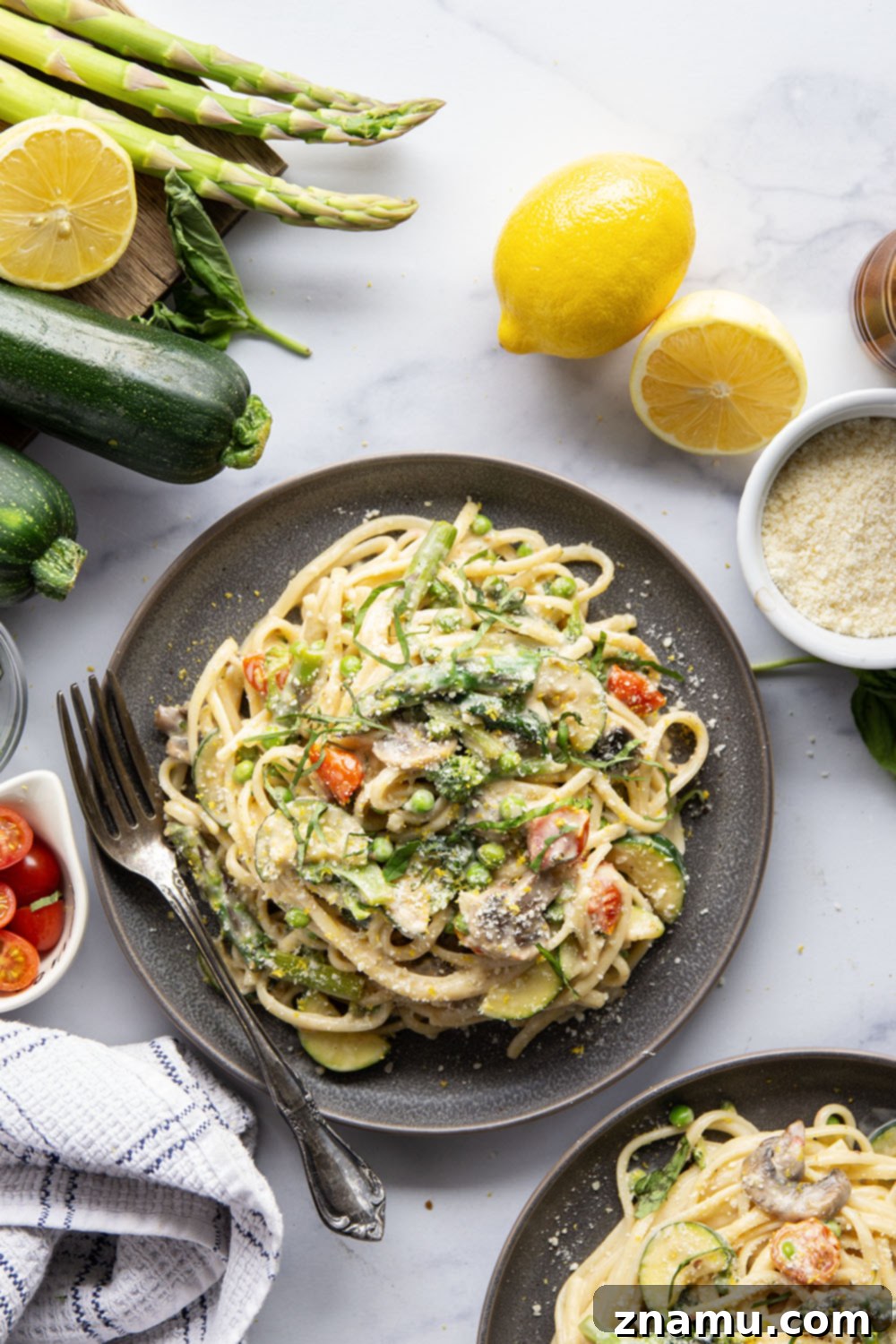
Once you’ve savored a forkful of this homemade pasta primavera, you’ll understand why ordering it from a restaurant will become a distant memory. The vibrant, fresh vegetables provide a hearty and wholesome foundation, while the exquisite lemon basil cream sauce adds just the right touch of indulgent luxury. It’s a dish that feels simultaneously light and deeply satisfying.
For the ultimate experience, remember to finish your bowl with an unapologetically generous covering of freshly grated Parmesan cheese. This final touch truly elevates the dish, adding another layer of salty, umami goodness that perfectly complements the fresh spring flavors. Serve it with a crisp green salad and some crusty bread for a complete and utterly delightful meal.
Complete Recipe: Spring Pasta Primavera
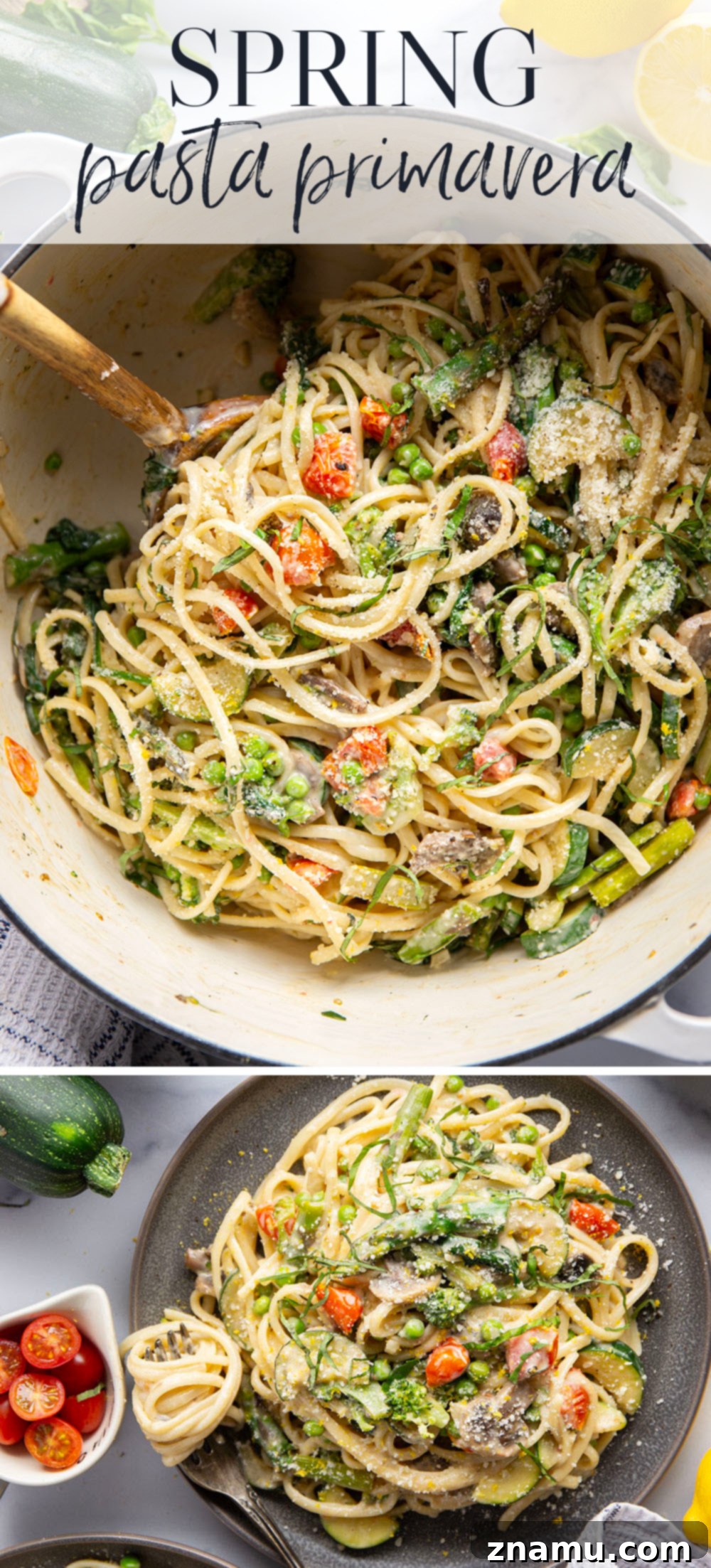
Spring Pasta Primavera
Loaded with a rainbow of spring vegetables and tossed in a creamy Parmesan sauce, this spring pasta primavera is easy to throw together and a beautiful pasta dish for any occasion.
Rating: 4.91 from 21 votes
Prep Time: 20 minutes
Cook Time: 20 minutes
Total Time: 40 minutes
Servings: 6 servings
Calories: 448 kcal per serving
Ingredients
- 2 tablespoons extra-virgin olive oil
- 1/4 lb fresh asparagus, ends trimmed and cut into 1-inch pieces
- 1-1/2 cups fresh broccoli, cut into 1/2-inch florets
- 1 cup sliced mushrooms
- 1 small zucchini, ends trimmed and thinly sliced
- 3 medium cloves garlic, minced
- 1 cup cherry tomatoes, halved
- 1 cup firmly-packed baby spinach
- 1 cup frozen peas
- Salt and pepper to taste
- 12 oz dry fettuccine pasta
- 3 tablespoons unsalted butter
- 1 tablespoon all-purpose flour
- 1/2 cup heavy whipping cream
- 3/4 cup 2% or skim milk
- 1/2 cup grated Parmesan cheese
- 1 tablespoon grated lemon zest
- 3 tablespoons minced fresh basil
Instructions
- Heat a large skillet over medium-high heat. Add olive oil and swirl to coat bottom. Add asparagus, broccoli, mushrooms, and zucchini and sauté 3-5 minutes until vegetables are tender.
- Add garlic, cherry tomatoes, spinach, and peas to vegetables and cook 2-3 additional minutes until spinach is wilted. Season vegetables with salt and pepper to taste and set aside.
- Cook pasta in salted boiling water until al dente. Reserve 3/4 cup pasta cooking water and drain pasta. Set aside.
- Melt butter in a large skillet over medium heat. Whisk in flour and cook 1-2 minutes until golden-brown. Slowly drizzle in heavy cream and milk until smooth. Stir sauce over medium heat until bubbly and thickened. Remove sauce from heat and whisk in Parmesan, lemon zest, and basil. Season sauce with salt and pepper to taste.
- Fold pasta and sautéed vegetables into sauce until evenly coated, thinning with a few splashes of pasta water as needed until sauce is loosened and clinging to pasta and vegetables. Season primavera with salt and pepper to taste and serve warm. Enjoy!
Notes
Storing Instructions: Store pasta primavera in an airtight container in the refrigerator for up to 6 days.
Nutrition Information
- Serving: 8 oz pasta
- Calories: 448 kcal
- Carbohydrates: 52.8g
- Protein: 14.6g
- Fat: 21.7g
- Saturated Fat: 10.7g
- Cholesterol: 52mg
- Sodium: 176mg
- Potassium: 377mg
- Fiber: 4.7g
- Sugar: 5.2g
- Calcium: 176mg
- Iron: 4mg
Explore More Veggie-Packed Dinner Ideas!
- Vegetarian Pad Thai
- Grilled Zucchini and Peppers with Burrata and Chimichurri
- Thai Basil Beef Stir Fry
Tried this recipe? We’d love to hear from you! Leave a comment and a star rating below to share your experience. You can also take a photo and tag us on Instagram with #wholeandheavenlyoven. Your feedback helps our community!
This post was updated with new recipe adjustments and photos on March 13, 2025.