
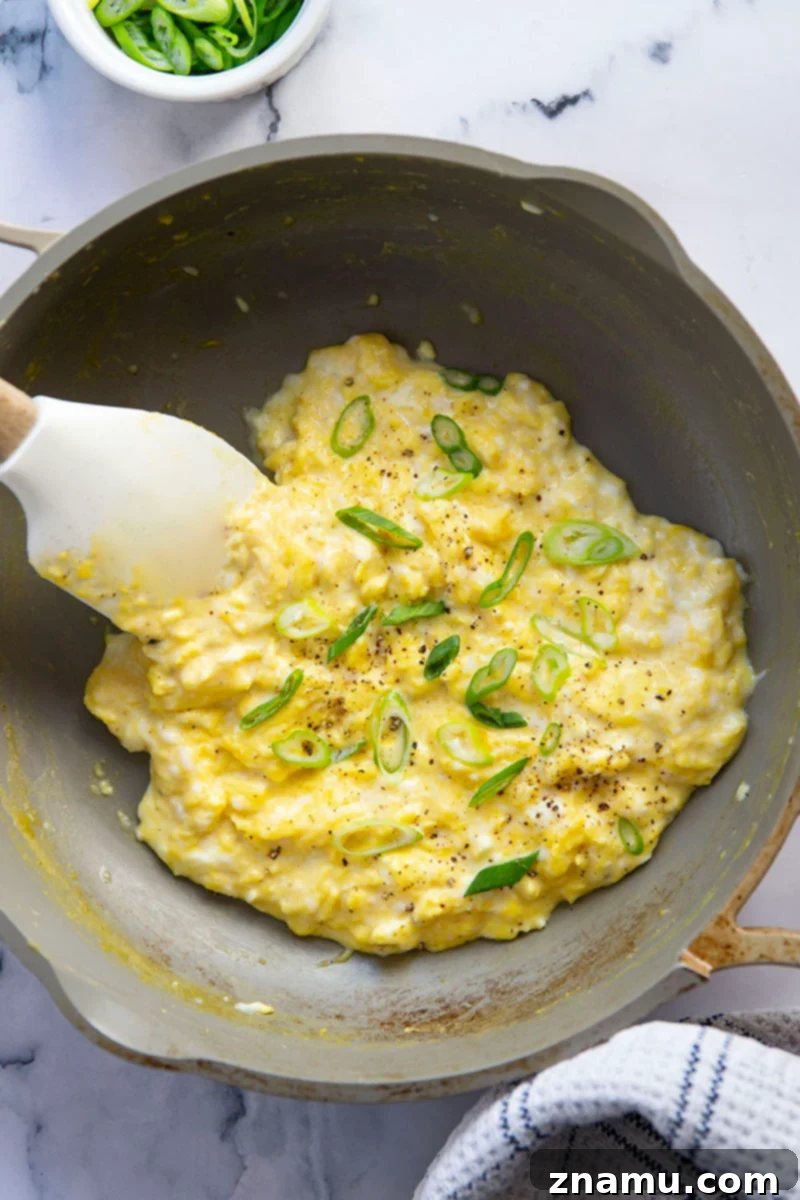
Unleash the secret to exceptionally creamy and fluffy scrambled eggs with this foolproof recipe and expert techniques. Elevate your breakfast game effortlessly!
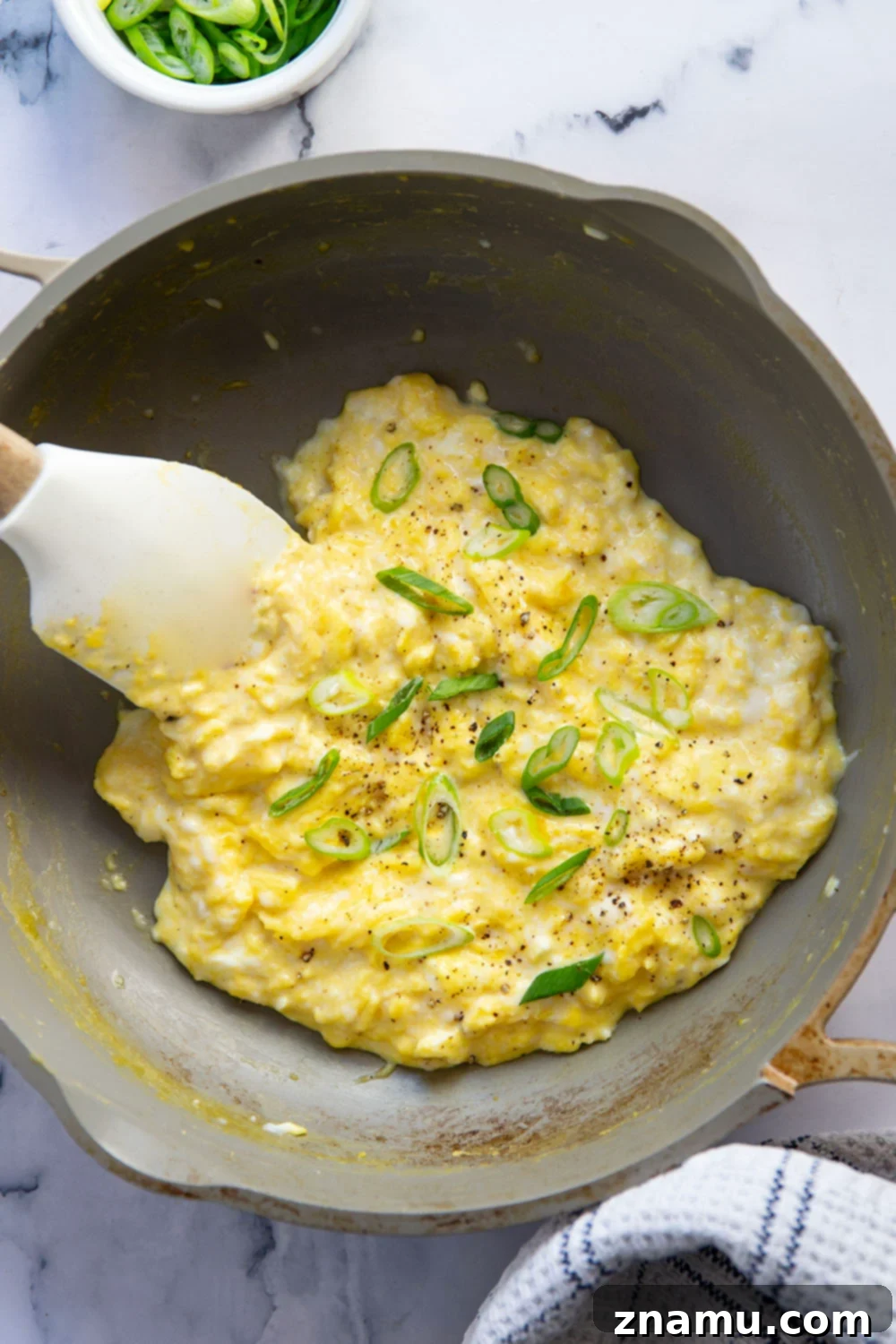
Mastering the art of cooking eggs is a fundamental skill for any aspiring chef, and today, we’re diving deep into what truly makes a stellar plate of scrambled eggs. Forget everything you thought you knew; there are no complex steps or exotic ingredients required here. Just a few simple tweaks, and you’ll be making the best creamy scrambled eggs you’ve ever tasted.
My journey to perfect scrambled eggs took an exciting turn when I picked up some invaluable techniques from none other than Chef Gordon Ramsay during an episode of MasterChef. His insights completely transformed my approach, and I was eager to adapt his wisdom to my own breakfast routine. The key ingredient he championed for achieving that coveted creamy texture? Sour cream. When combined with a careful, slower cooking method, this seemingly small addition elevates ordinary eggs into a truly indulgent breakfast experience.
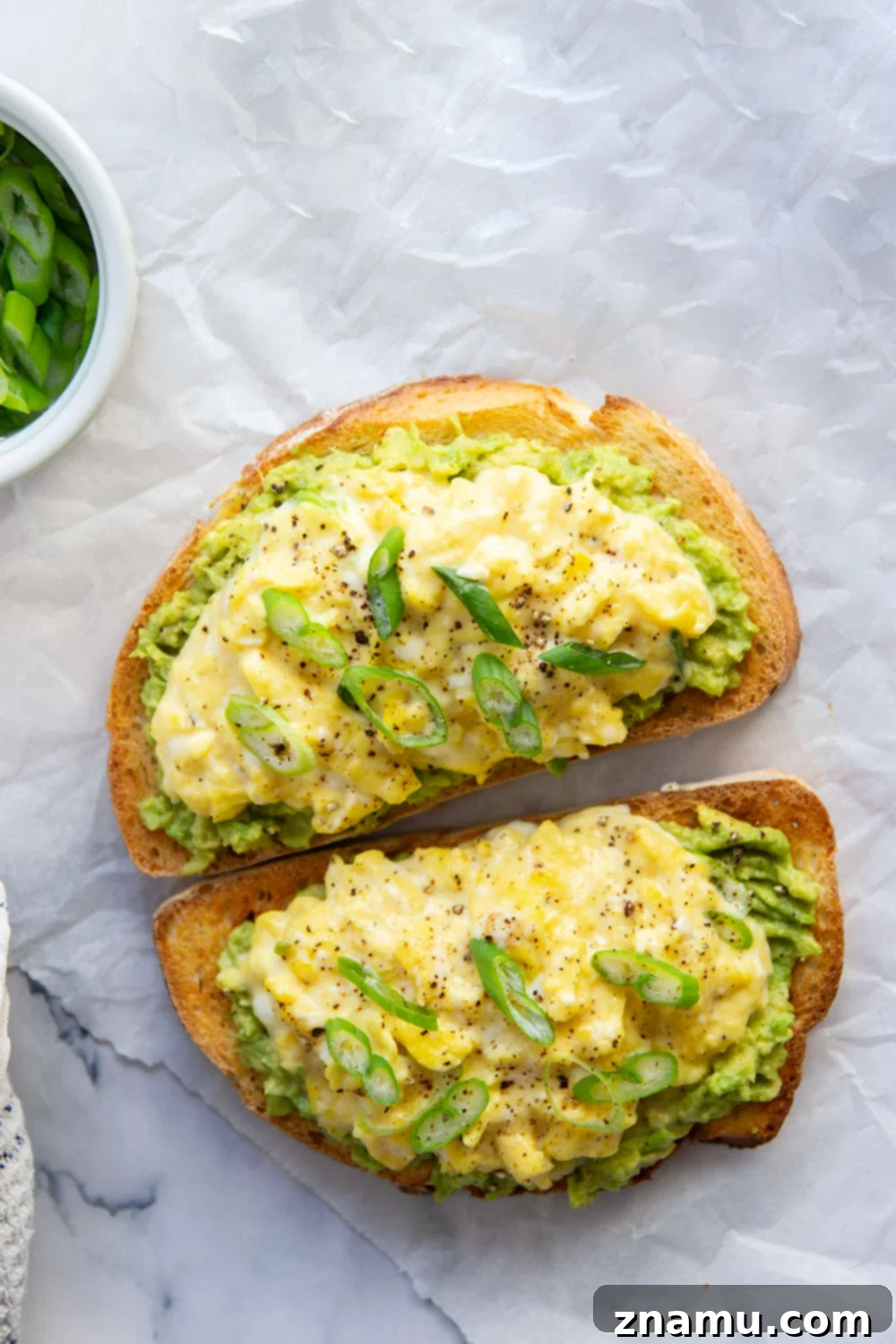
Once you try these scrambled eggs, you’ll understand why this recipe is a game-changer. The rich, velvety texture and the subtle tang from the sour cream create a symphony of flavors that will make you rethink your breakfast favorites. Get ready to impress yourself and your family with this surprisingly simple yet incredibly delicious method.
Why You’ll Love These Creamy Scrambled Eggs
This recipe isn’t just about cooking eggs; it’s about mastering a technique that guarantees perfection every time. Here’s what makes these scrambled eggs truly stand out:
- Unbelievably Creamy and Fluffy Texture: Say goodbye to rubbery, dry eggs. Our method ensures a custardy, soft, and melt-in-your-mouth consistency that is simply irresistible. The secret ingredient plays a pivotal role in achieving this luxurious texture.
- Ready in Minutes: Despite their gourmet appeal, these scrambled eggs are incredibly quick to prepare, making them perfect for busy mornings or a lazy weekend brunch. From pan to plate, you’re looking at just a few minutes of cooking time.
- A Versatile Culinary Canvas: These eggs are a blank slate, ready to be customized with your favorite additions. Whether you prefer savory spices, fresh herbs, or a medley of vegetables, they adapt beautifully, allowing for endless breakfast creativity.
- Minimal, Simple Ingredients: You only need three core ingredients – butter, eggs, and sour cream – along with basic salt and pepper. These pantry staples come together to create something extraordinary, proving that delicious food doesn’t require a long shopping list.
- Elevated Flavor Profile: The hint of tang from the sour cream, combined with the rich butter, adds a depth of flavor that sets these scrambled eggs apart from standard preparations.
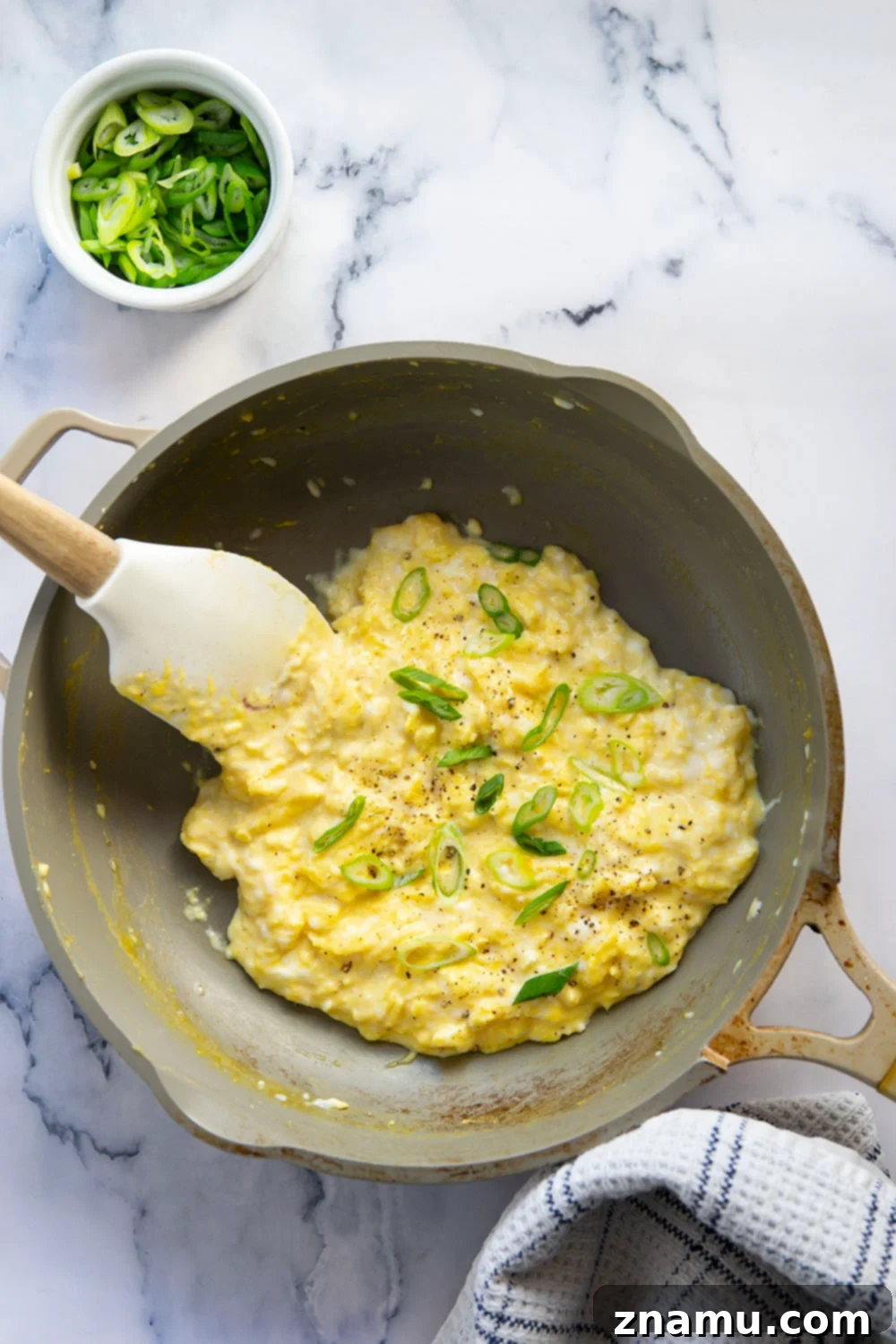
Mastering Creamy Scrambled Eggs: The Step-by-Step Guide
Creating perfect scrambled eggs involves understanding a few key principles and executing them with a gentle touch. This section will guide you through the process, ensuring fluffy, creamy results every time. (For the full detailed recipe, please scroll down to the dedicated recipe card below.)
Essential Ingredients for Perfect Scrambled Eggs
Simplicity is at the heart of this recipe. You don’t need a pantry full of exotic items to create an exceptional breakfast. Here’s what you’ll need:
- Unsalted Butter: The foundation of flavor and helps prevent sticking. Unsalted allows you to control the overall saltiness.
- Fresh Large Eggs: The fresher the eggs, the better the flavor and texture. Room temperature eggs also tend to cook more evenly.
- Sour Cream (or Crème Fraîche): This is our secret weapon! It adds an incredible creamy texture and a subtle, delightful tang without thinning the eggs like milk or cream can.
- Salt and Pepper: Essential for seasoning to taste.
- Optional Garnishes: Sliced green onions, shredded cheese, or fresh herbs for serving.
Choosing the Right Pan: A Crucial Step
The right equipment can make all the difference when cooking scrambled eggs. A nonstick pan is not just recommended; it’s practically essential for achieving that effortlessly smooth, creamy finish without the frustration of eggs sticking and burning.
A good quality nonstick pan ensures even heat distribution, which is vital for slow and gentle cooking. It also allows the eggs to slide off easily, maintaining their delicate curds and creamy texture. Look for a pan that is sturdy, has a flat bottom for consistent contact with the heat source, and a comfortable handle. Investing in a reliable nonstick skillet will truly elevate your scrambled egg experience and make breakfast preparation a joy.
Expert Tips for Unbeatable Creamy Scrambled Eggs
Beyond the ingredients, technique plays a significant role in achieving that coveted creamy and fluffy texture. Follow these crucial tips for perfect results:
- Maintain Medium Heat: This is arguably the most important rule. Resist the urge to crank up the heat. High heat causes eggs to cook too quickly, resulting in small, tough, and rubbery curds. Medium heat allows the eggs to gently coagulate, forming larger, softer, and more tender curds. The goal is a slow, controlled cook.
- Regulate Temperature by Removing from Heat: Scrambled eggs cook quickly, typically within 2-3 minutes. If you notice your eggs cooking faster than anticipated or the pan seems too hot, simply lift the pan off the heat for a few seconds. This temporary removal allows the temperature to stabilize, preventing overcooking and giving you more control over the egg’s texture. Keep folding gently even when off the heat.
- Fold Sour Cream in at the End: The timing of adding sour cream is critical. Incorporate 1 tablespoon of sour cream (or crème fraîche) when the eggs are mostly set but still slightly wet. Gently fold it in until it’s fully melted and absorbed. This late addition ensures maximum creaminess and prevents the sour cream from separating or thinning out the eggs during the initial cooking phase. It also imparts that beautiful, subtle tang that enhances the overall flavor.
- Gentle Folding, Not Stirring: Use a flexible rubber or silicone spatula to gently push and fold the eggs from the edges towards the center. Avoid vigorous stirring, which can break up the curds too much and lead to a less desirable texture. The gentle folding creates larger, softer, and more appealing curds.
- Season Appropriately: Season with salt and freshly ground black pepper to taste, preferably after the sour cream has been incorporated and just before serving. Salting too early can sometimes affect the egg’s texture, making it slightly watery.
Delicious Serving Suggestions for Your Scrambled Eggs
These creamy scrambled eggs are fantastic on their own, but they also serve as a versatile base for countless breakfast and brunch creations. Here are some ideas to inspire your next meal:
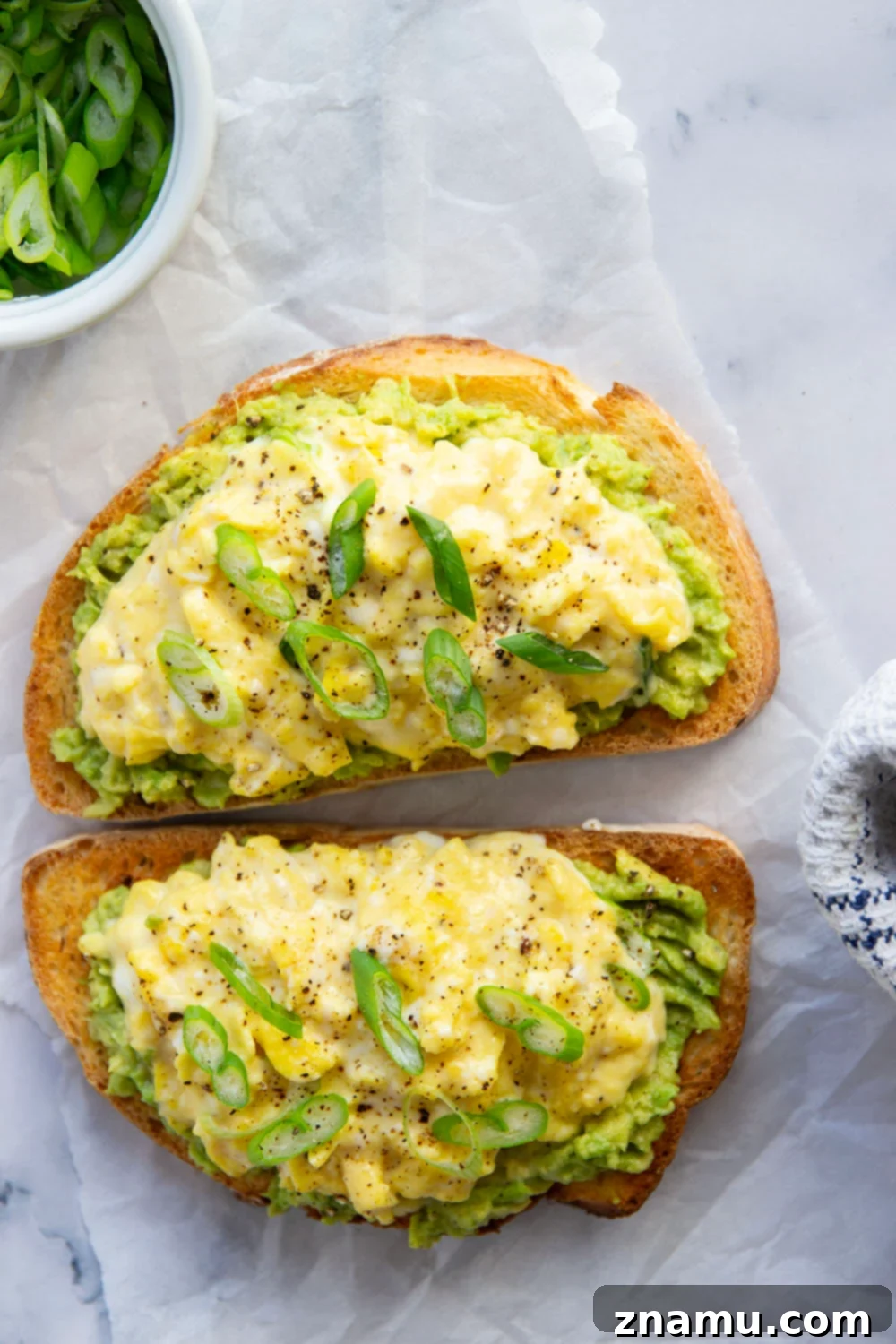
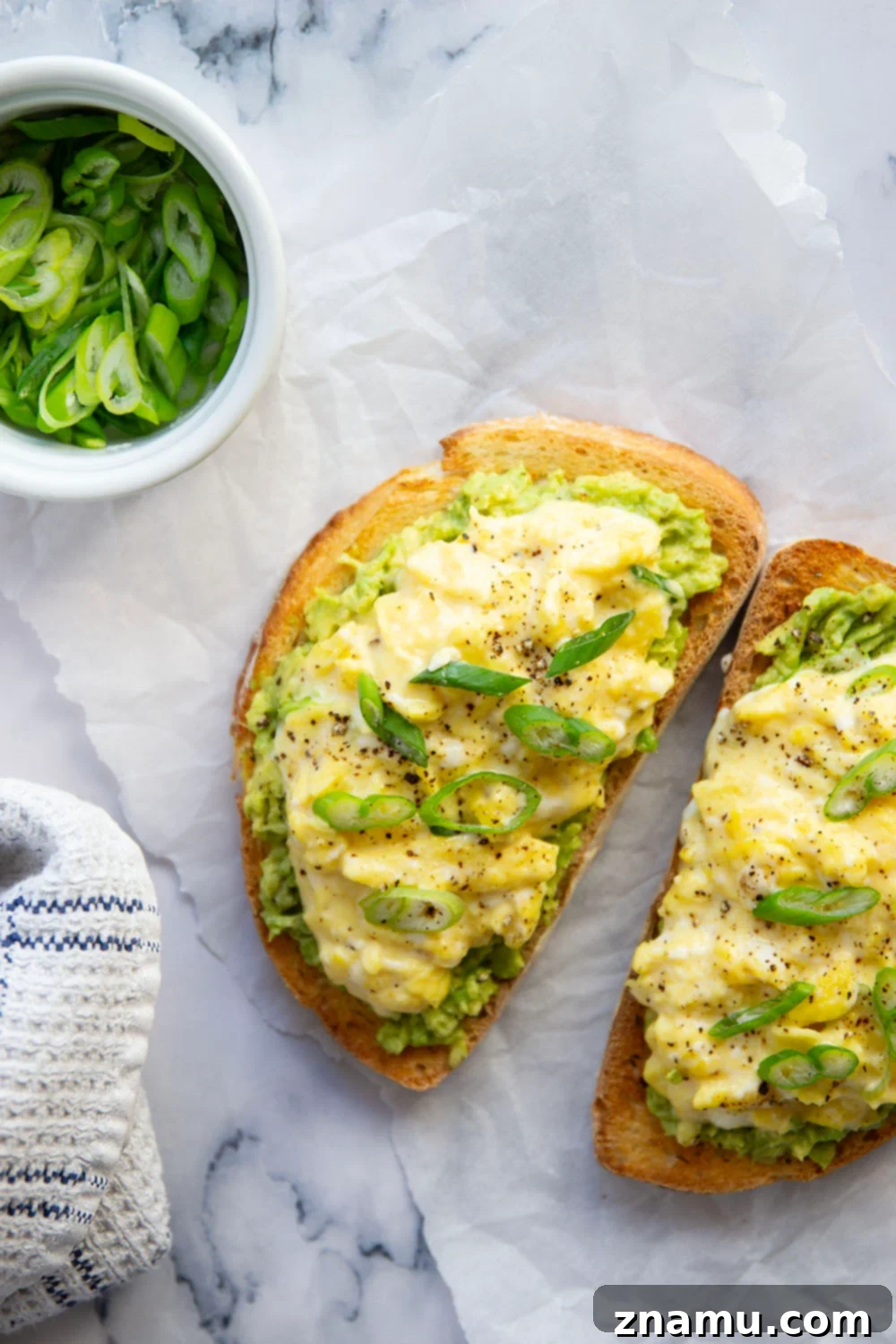
- Classic Toast Pairings: Serve them alongside creamy avocado toast or traditional buttered toast. The richness of the eggs pairs perfectly with the crunch of bread.
- Creative Add-Ins: Elevate your eggs by folding in extra ingredients once they’re almost cooked. Consider sliced avocado, various cheeses (cheddar, feta, goat cheese), sautéed mushrooms, fresh spinach, diced sweet peppers, vibrant fresh herbs (chives, parsley, dill), a dash of hot sauce for a kick, or a spoonful of zesty salsa. The possibilities are endless!
- Breakfast Wraps and Sandwiches: Transform them into a satisfying breakfast burrito with beans, rice, and salsa, or tuck them into a warm breakfast sandwich with bacon or sausage and a slice of cheese.
- Hearty Side Companions: Serve alongside classic breakfast meats like crispy bacon, savory sausage patties, or juicy ham for a complete and fulfilling meal.
- On a Bed of Greens: For a lighter, fresher option, serve your creamy scrambled eggs over a bed of lightly dressed arugula or spinach.
Common Scrambled Egg Mistakes and How to Avoid Them
Even though scrambled eggs seem simple, there are a few common pitfalls that can prevent you from achieving perfection. Knowing these can help you avoid rubbery, dry, or bland results:
- Overcooking: This is the cardinal sin of scrambled eggs. Overcooked eggs become tough, dry, and lose their delicate texture.
- Solution: Remove the pan from the heat when the eggs are still slightly wet and glossy. Residual heat will continue to cook them to perfection. The addition of sour cream at the end also helps to halt the cooking process and add moisture.
- Too High Heat: Cooking eggs on high heat is the primary cause of overcooking.
- Solution: Always use medium or medium-low heat. This allows for a gentle, controlled cook, creating larger, softer curds.
- Adding Liquid (Milk/Cream) Too Early: While milk or cream can add richness, adding them early in the cooking process, especially in large amounts, can make eggs watery or thin.
- Solution: Our recipe uses a small amount of sour cream added at the very end, which contributes creaminess without diluting the eggs. For those who prefer a touch of dairy before cooking, a splash of heavy cream is better than milk as it’s less likely to make the eggs watery.
- Using the Wrong Pan: A sticky pan can ruin the delicate structure of scrambled eggs.
- Solution: Always opt for a high-quality nonstick pan. This ensures the eggs slide effortlessly and prevents burnt bits from sticking.
- Not Seasoning Properly: Bland eggs are a missed opportunity.
- Solution: Season your eggs with salt and pepper to taste, ideally after they are mostly cooked and the sour cream has been incorporated. This allows the seasoning to truly enhance the flavor without altering the cooking process.
- Stirring Too Vigorously: Over-stirring can break down the egg curds into very small, almost mushy pieces.
- Solution: Use a flexible spatula to gently fold the eggs from the edges to the center of the pan. This technique encourages the formation of beautiful, soft curds.
Frequently Asked Questions About Scrambled Eggs
Here are answers to some common questions about making the best scrambled eggs:
Q: Can I use milk or cream instead of sour cream?
A: While milk or cream can be used, they won’t provide the same luxurious creaminess or subtle tang as sour cream. Sour cream (or crème fraîche) is superior for preventing overcooking and yielding a truly velvety texture without making the eggs watery. If you must substitute, use a small amount of heavy cream.
Q: How many eggs should I use per person?
A: Generally, 2-3 large eggs per person is a good serving size, depending on appetite and what other items are being served with the eggs. This recipe calls for 6 eggs for 2 servings, indicating generous portions.
Q: Can I make scrambled eggs ahead of time?
A: Scrambled eggs are best enjoyed immediately after cooking. Reheating them often results in a drier, rubbery texture. If you need to prepare elements ahead, you can chop vegetables or grate cheese, but cook the eggs fresh.
Q: How do I store leftover scrambled eggs?
A: While not ideal for reheating, if you have leftovers, store them in an airtight container in the refrigerator for up to 1-2 days. Gently reheat them in a nonstick pan over low heat, perhaps with a tiny splash of milk or a pat of butter, to restore some moisture, but be aware the texture will not be as perfect as fresh.
Q: What’s the difference between gently folding and vigorous stirring?
A: Gently folding involves pushing and turning the eggs with a spatula to create larger, soft curds. Vigorous stirring breaks the eggs into smaller, often denser pieces. For creamy, fluffy eggs, gentle folding is key.
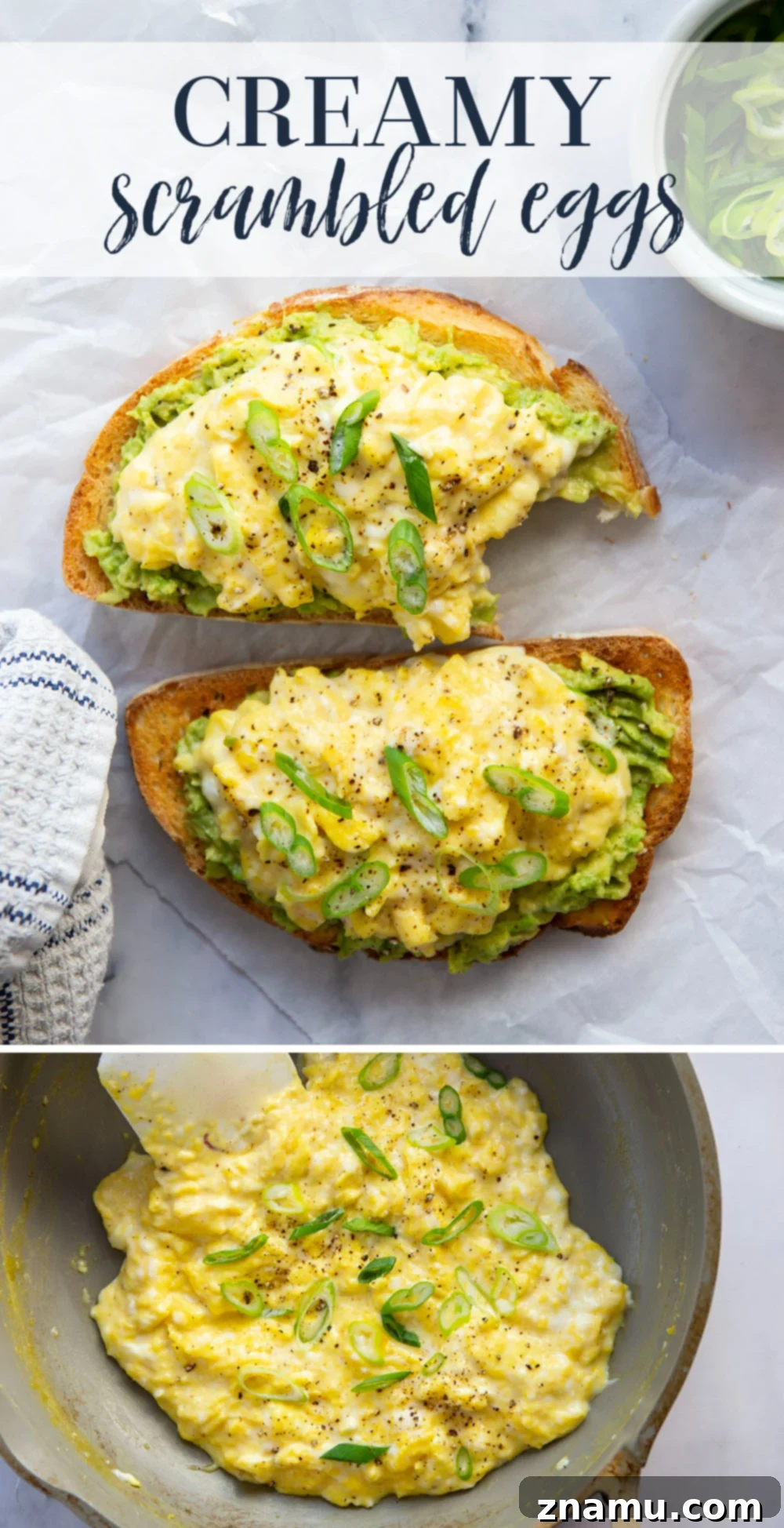
There you have it! The secret to making perfectly creamy and utterly delicious scrambled eggs is now yours. With these simple techniques and the magic of sour cream, your breakfast will be transformed. The result is an insanely fluffy, yet rich and creamy consistency, beautifully balanced by just the right hint of tang. Congratulations, you’ve just conquered breakfast in the most delectable way possible!
We encourage you to try this recipe. If you make it, please share your experience! Leave a comment and a star rating below. You can also take a photo and tag it on Instagram using the hashtag #wholeandheavenlyoven.
More Egg Breakfast Favorites to Explore Next!
- Asparagus Smoked Salmon Avocado Toast
- Sheet Pan Sweet Corn Summer Squash Hash
- Chilaquiles Verdes
Print Recipe
Creamy Scrambled Eggs
Learn all the secrets to making perfectly creamy scrambled eggs with this simple recipe and a few easy techniques!
This recipe may included paid links. As an Amazon Associate, I earn a commission from qualifying purchases.
Prep Time: 5 minutes
Cook Time: 5 minutes
Total Time: 10 minutes
Servings: 2 servings
Calories: 278 kcal
Ingredients
- 1 tablespoon unsalted butter
- 6 large eggs, lightly beaten
- 1 tablespoon sour cream or crème fraiche
- Salt and pepper to taste
- Sliced green onions and cheese for serving, optional
Instructions
- Melt butter in a medium nonstick skillet over medium heat. Pour eggs into pan and use a flexible spatula to gently fold eggs several times, removing eggs from heat for a moment if they’re cooking too fast. Eggs should take about 2-3 minutes to fully cook.
- Once eggs are almost set, fold sour cream or crème fraiche into eggs until melted. Remove eggs from heat, season with salt and pepper to taste, and fold in green onions and cheese if desired. Serve eggs immediately and enjoy!
Notes
Storing Instructions
Eggs are best if enjoyed immediately after cooking.
Recipe adapted from Gordon Ramsay.
Nutrition
Calories: 278kcal |
Carbohydrates: 1.4g |
Protein: 19.1g |
Fat: 21.9g |
Saturated Fat: 9.1g |
Cholesterol: 576mg |
Sodium: 254mg |
Potassium: 211mg |
Sugar: 1.2g |
Calcium: 88mg |
Iron: 3mg
Tried this recipe?
Leave a comment and rating below. Feel free to share a picture on Instagram and tag @wholeandheavenlyoven or hashtag it #wholeandheavenlyoven
This post was updated with new recipe tips and photos on 2/22/24.