
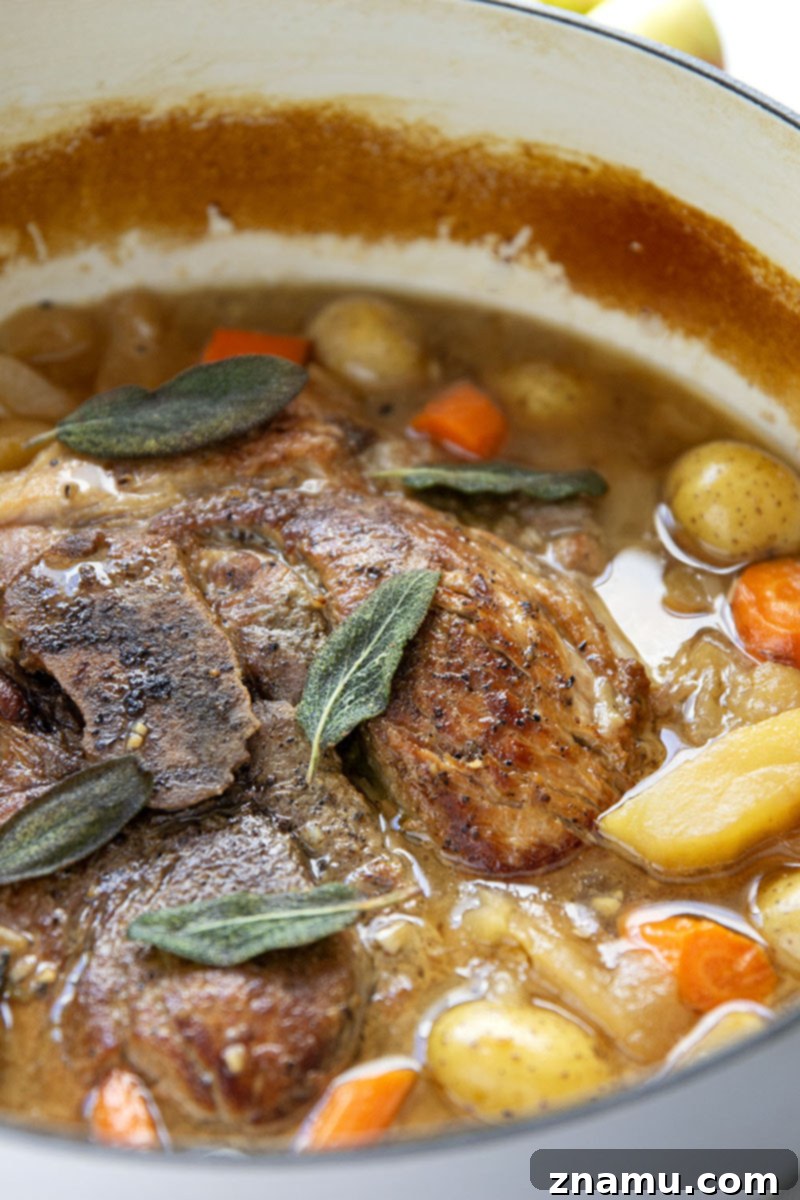
Braised low and slow in sweet apple cider and fragrant fresh sage, this apple cider braised pork shoulder cooks up fall-apart tender and is a true fall dinner favorite that promises to become a cherished family meal!
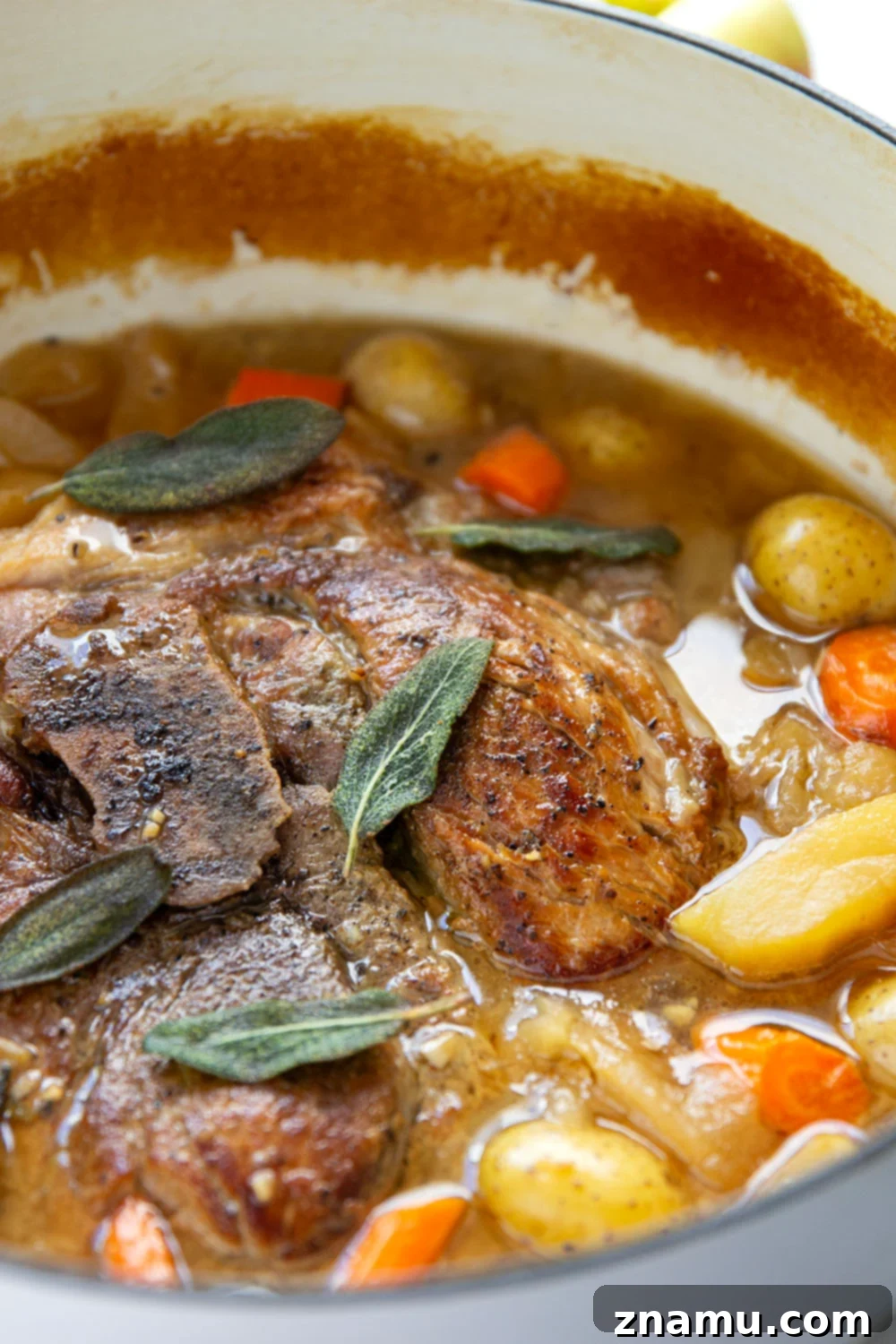
Get ready to embrace the ultimate comfort food experience! Today, we’re giving the humble pork shoulder a luxurious transformation. Imagine succulent pork, slow-cooked to perfection in a rich, aromatic apple cider and sage broth, alongside a medley of tender vegetables. This isn’t just dinner; it’s an event, a celebration of autumn’s bounty, all made effortlessly in your trusty Dutch oven.
The beauty of this recipe lies in its simplicity and the incredible flavors it yields. With just a few minutes of active preparation, you’ll set this culinary magic in motion, allowing your kitchen to fill with the most inviting scents of fall. The gentle braising process does all the heavy lifting, ensuring every bite of pork is melt-in-your-mouth tender, while the vegetables soak up all the delicious juices.
There’s something uniquely comforting about a slow-braised meal, especially when the weather turns crisp. This Apple Cider Braised Pork Shoulder truly embodies the spirit of the season. It’s a dish that warms you from the inside out, making it an ideal choice for cozy family dinners or a relaxed weekend gathering. Plus, the convenience of a one-pot meal means less cleanup and more time to savor the moment.
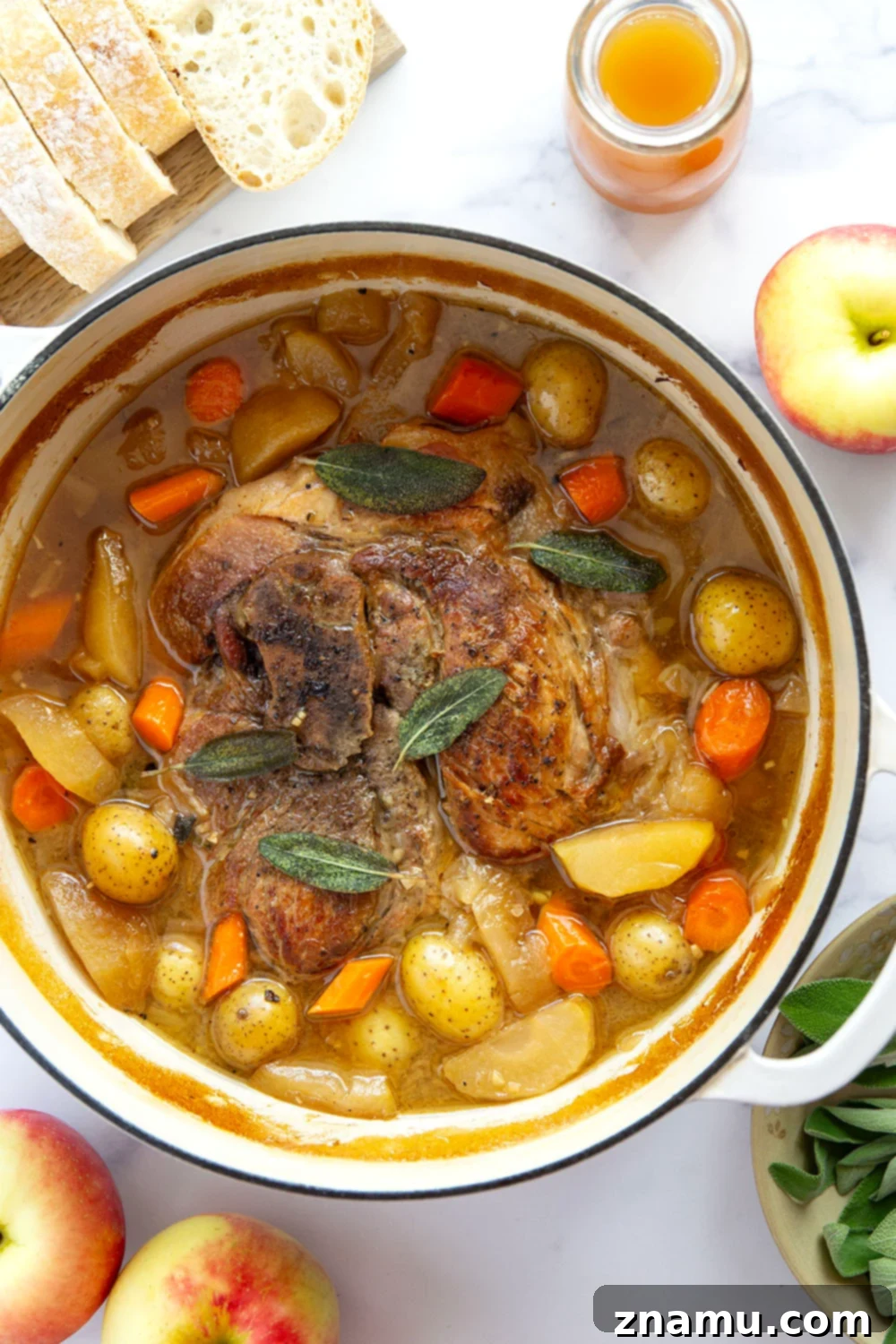
We absolutely adore this pork shoulder recipe because it’s a complete meal unto itself. Loaded with savory pork and a generous portion of wholesome vegetables, it’s designed to nourish and satisfy. I often serve hearty bowls of this braise with a few thick slices of crusty bread, perfect for soaking up every last drop of the exquisite apple cider sauce. It’s truly a meal that leaves everyone feeling content.
What Makes This Apple Cider Braised Pork Shoulder So Special?
- Unrivaled Tenderness: Experience pork shoulder so incredibly tender it practically melts off the bone (if bone-in) and can be pulled apart with just a fork. The low and slow braising technique ensures maximum succulence.
- Harvest Flavors: Enjoy a harmonious blend of sweet and savory with soft, roasted potatoes, earthy carrots, and optional, lightly softened apples that beautifully complement the rich pork.
- Aromatic Braising Base: The foundation of this dish is an exceptionally flavorful liquid infused with sweet apple cider, robust beef broth, and fragrant fresh sage, creating a truly irresistible sauce.
- Effortless Elegance: This recipe delivers a gourmet-quality meal with minimal hands-on effort, thanks to the magic of Dutch oven cooking.
- A Complete One-Pot Meal: With meat and vegetables cooking together, this dish is a convenient and satisfying full meal in a single pot.
Mastering the Braised Pork Shoulder: A Culinary Journey
Crafting this delightful Apple Cider Braised Pork Shoulder is a straightforward process, primarily relying on the “low and slow” method to achieve its signature tenderness and depth of flavor. While the full, detailed recipe card is provided below, let’s walk through the key components and techniques that make this dish truly shine.
Essential Ingredients You Will Need
- Pork Shoulder: The star of the show, chosen for its excellent marbling and ability to become incredibly tender when braised.
- Unsalted Butter & Olive Oil: Used for searing the pork and sautéing the aromatics, building the initial flavor layers.
- Shallots & Garlic: These aromatics provide a foundational savory sweetness that deeply enhances the braising liquid.
- Apple Cider: The defining flavor of the dish, adding a sweet and tangy autumnal note. Opt for unsweetened, natural apple cider for the best results.
- Beef Broth: Complements the cider, adding richness and depth to the braising liquid.
- Fresh Sage: Imparts a warm, earthy, and aromatic essence, perfectly pairing with both pork and apple.
- Potatoes & Carrots: Hearty root vegetables that absorb the braising liquid’s flavors beautifully and cook to tender perfection.
- Apples (Optional): A fantastic addition for an extra touch of autumnal sweetness and a slightly tart contrast. Gala or Honeycrisp are excellent choices.
Selecting and Preparing Your Pork Cut
For this recipe, you’ll need approximately 2 pounds of pork shoulder. This cut is also commonly known as pork butt or Boston butt, despite being from the front shoulder of the hog. It’s an ideal choice for braising due to its higher fat content and connective tissue, which break down during slow cooking, yielding incredibly moist and flavorful meat.
Both boneless and bone-in pork shoulder cuts work wonderfully. A bone-in cut might take slightly longer to cook but often adds an extra layer of flavor to the braising liquid. Whichever you choose, ensure you cook the pork until it easily pulls apart with a fork, indicating ultimate tenderness.
Before cooking, it’s crucial to properly prepare the pork. Pat the pork shoulder thoroughly dry with paper towels. This step is essential for achieving a beautiful, flavorful sear on the meat. Then, use a sharp knife to trim off any large pieces of excess fat from the exterior. A small amount of fat is desirable for flavor and moisture, but excessive fat can be rendered down.
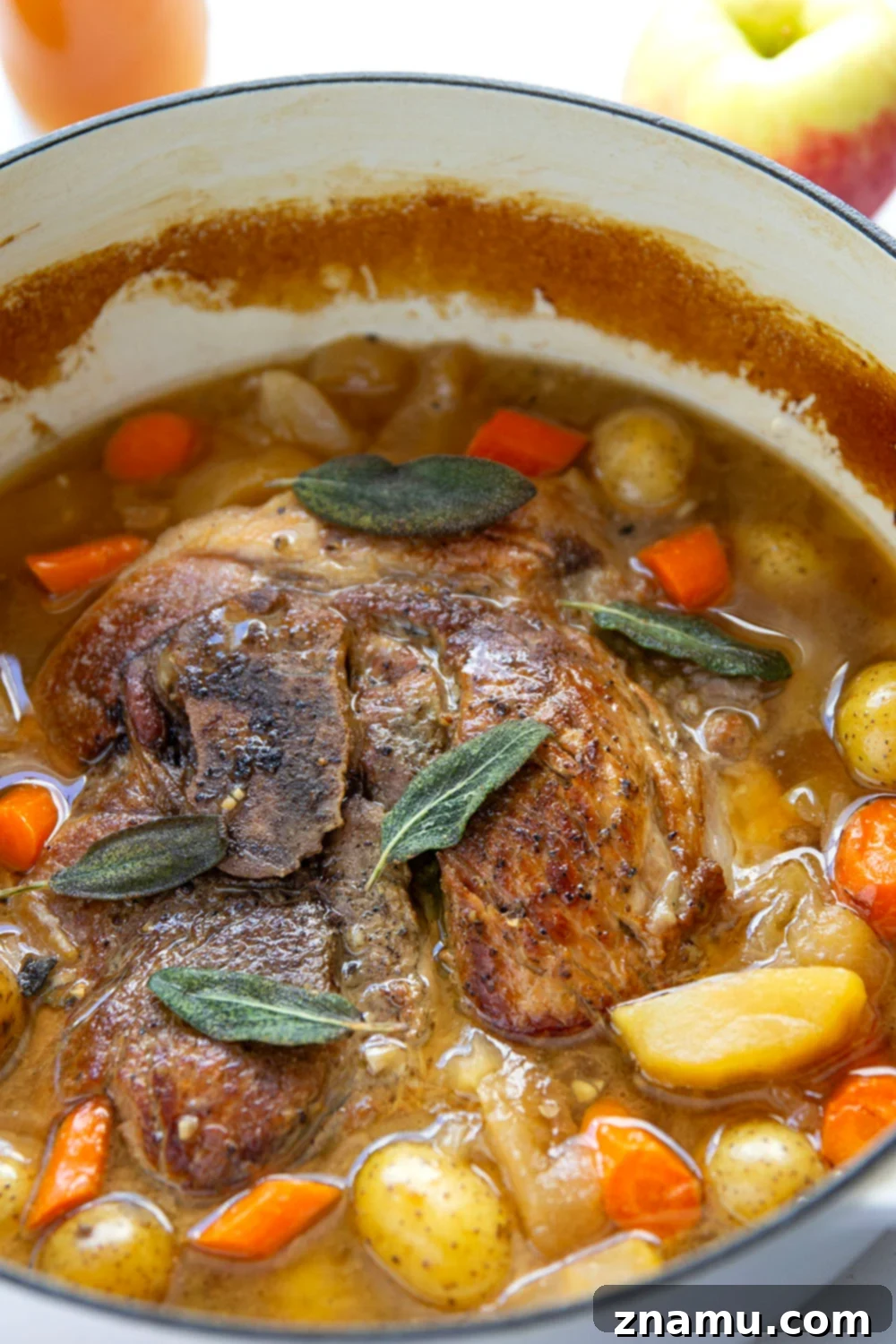
Expert Tips for Achieving Perfect Braised Pork Shoulder
Follow these essential tips to ensure your Apple Cider Braised Pork Shoulder turns out perfectly tender, flavorful, and unforgettable every time.
- Always Pan Sear the Pork Shoulder: Before you begin the slow braising process, it is absolutely crucial to achieve a deep, golden-brown sear on all sides of the pork shoulder. This step isn’t just for aesthetics; it’s fundamental for developing a rich, complex flavor base for the entire dish through the Maillard reaction. Don’t rush this step – a good sear means a more flavorful final product.
- Embrace the Low and Slow Braise: The secret to fall-apart tender pork shoulder lies in patience and consistent low heat. Braise your pork shoulder for approximately 3 to 3.5 hours at a steady 300°F (150°C). This extended, gentle cooking time allows the connective tissues in the pork to slowly break down, transforming the meat into an incredibly tender and succulent cut.
- Incorporate Vegetables During the Final Hour: To prevent your potatoes and carrots from becoming overly mushy, add them to the Dutch oven only during the last hour of cooking. This timing ensures they become perfectly tender while retaining their shape and a slight bite, absorbing all the wonderful flavors of the braising liquid without disintegrating.
- Add Apples After Cooking for Optimal Texture (Optional): If you choose to include fresh apples for their delightful autumnal sweetness and slight tartness, add them to the pot immediately after removing it from the oven. Cover the pot and let it stand for about 10 minutes. The residual heat will gently soften the apples just enough, keeping them from turning to mush and allowing their flavor to infuse beautifully into the sauce.
- Craft Crispy Sage for an Elegant Garnish: Elevate your dish with a simple yet sophisticated crispy sage garnish. Melt a tablespoon of butter in a small pan over medium heat, then add a few extra sage leaves in a single layer. Cook for a minute or two on each side until they become fragrant and delightfully crispy. Drain them on paper towels and use them to add a textural and aromatic finishing touch to your plated pork.
Creative Recipe Variations to Explore
While this recipe is perfect as is, feel free to experiment with these ideas to give your braised pork shoulder a unique twist that suits your taste or what you have on hand.
- Experiment with Different Vegetables: The beauty of braising is how versatile it is with vegetables. Instead of, or in addition to, potatoes and carrots, consider adding sweet potatoes, cubes of butternut squash, parsnips, or even sliced beets. Each will bring its own unique flavor profile and texture to the dish, enhancing the autumnal feel.
- Swap Out the Herb: While sage is a classic pairing with pork and apple, other aromatic herbs can work wonderfully. Try a few sprigs of fresh rosemary for a more resinous, earthy note, or fresh thyme for a slightly brighter, herbaceous flavor.
- Adjust the Braising Liquid: For a deeper, richer flavor, you could incorporate a splash of dry hard cider or even a dry white wine alongside the apple cider and beef broth. For a completely different profile, consider a dark beer or stout for a malty, robust braise.
Serving Suggestions for a Memorable Meal
This Braised Apple Cider Pork Shoulder is incredibly versatile and can be served much like a classic pot roast. Its rich, flavorful sauce and tender components make it a truly satisfying meal. Here are some ideas to make it even more special:
Beyond simply enjoying it straight from the pot, I highly recommend pairing this dish with creamy mashed potatoes, which are perfect for soaking up every drop of the luscious apple cider sauce. Buttered egg noodles are another fantastic choice, offering a comforting texture. And, of course, don’t forget plenty of crusty bread slices – they are practically mandatory for dipping into that incredible braising liquid, ensuring no deliciousness is left behind.
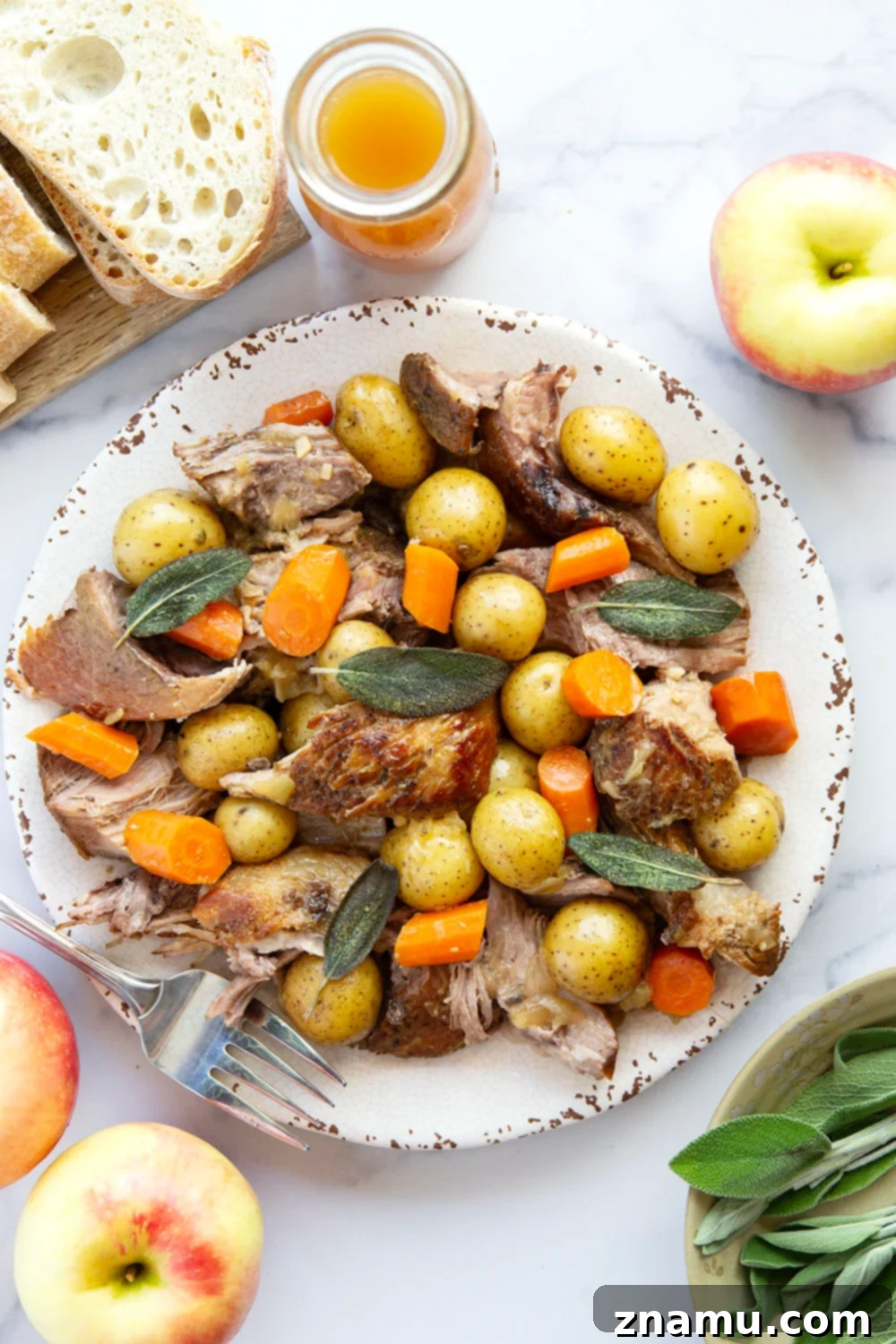
Why Braising is the Ultimate Cooking Method for Pork Shoulder
Braising is a culinary technique that involves searing meat at high temperature, then slowly cooking it in a liquid at a lower temperature for an extended period. For cuts like pork shoulder, which are rich in connective tissue, braising is a transformative process. The long, gentle heat slowly breaks down these tough fibers and renders the fat, resulting in meat that is incredibly tender, moist, and infused with the flavors of the braising liquid. This method makes inexpensive cuts of meat taste luxurious and creates a wonderfully rich, cohesive sauce that binds the entire dish together.
Make Ahead & Storage Tips
This Apple Cider Braised Pork Shoulder is an excellent meal for making ahead, as the flavors often deepen and improve overnight. Once completely cooled, transfer the pork and vegetables, along with all the braising liquid, into an airtight container. It will keep beautifully in the refrigerator for up to 4-5 days. To reheat, gently warm on the stovetop over medium-low heat or in the oven until heated through. For longer storage, this dish freezes exceptionally well for up to 3 months. Thaw overnight in the refrigerator before reheating.
Troubleshooting Common Braising Issues
Even seasoned cooks can encounter issues, but most braising problems are easily fixed:
- Pork Not Tender Enough? If your pork isn’t falling apart, it simply needs more time. Braising is all about patience. Cover the pot and return it to the oven, checking every 30-60 minutes until the desired tenderness is achieved.
- Sauce Too Thin? After removing the pork and vegetables, you can reduce the braising liquid on the stovetop over medium-high heat until it thickens to your liking. For a thicker sauce, mix a tablespoon of cornstarch with an equal amount of cold water, then whisk into the simmering sauce.
- Vegetables Overcooked/Mushy? This usually happens if they are added too early. Remember to add firm vegetables like potatoes and carrots only during the last hour of cooking. For future reference, you can even cook them separately and add them at the very end.
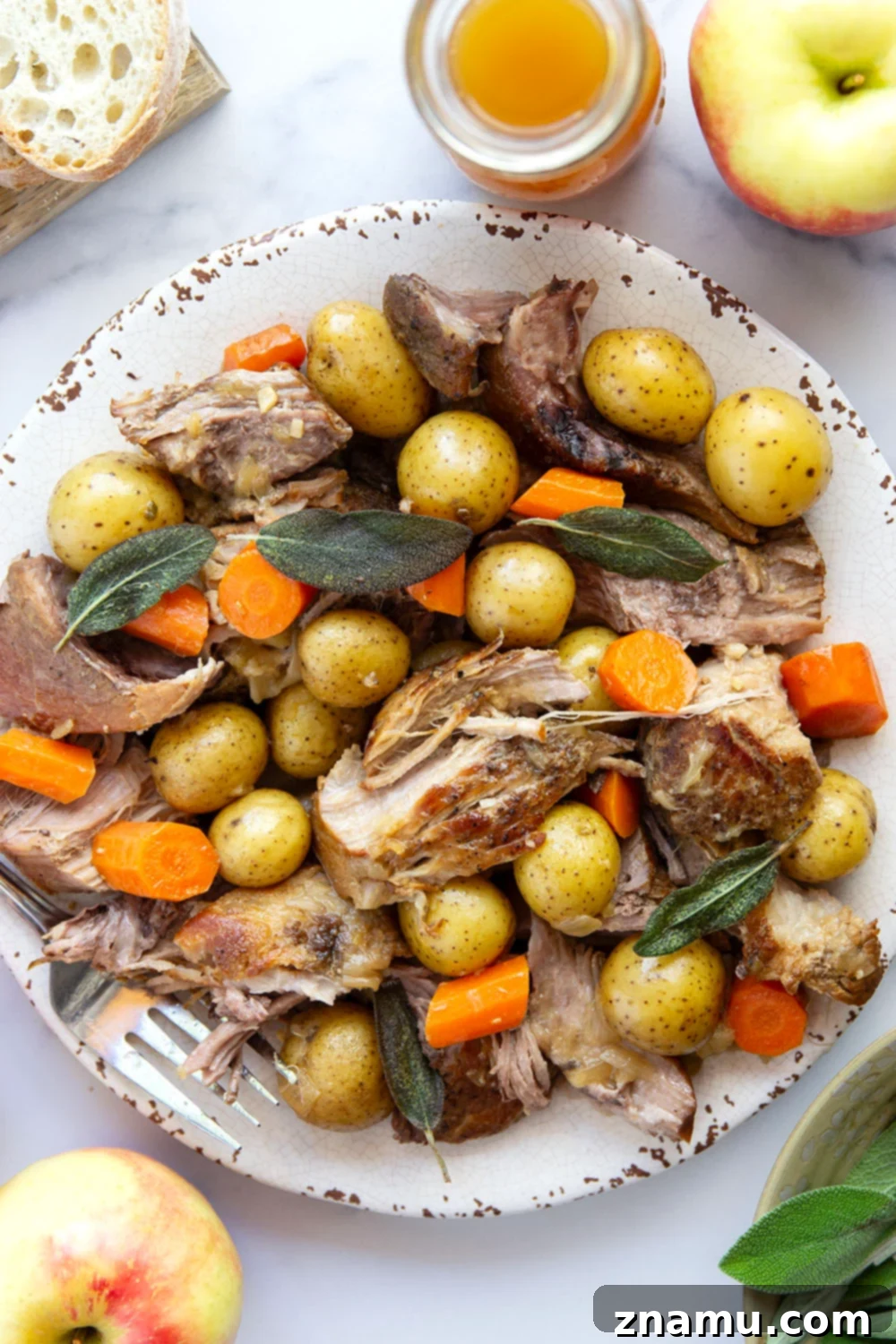
As the pork shoulder and vegetables slowly cook, they absorb every nuance of that amazing sweet apple cider and fragrant sage flavor, transforming into an impossibly tender and satisfying meal. Seriously, the pork is so tender you could effortlessly pull it apart with just a spoon, making it a dream to serve.
This is comfort food at its absolute finest, filling your home with warmth and irresistible aromas!
If you try this delightful recipe, please let us know your thoughts! Leave a comment and star rating below to share your experience. We’d also love to see your creations – take a photo and tag it on Instagram using @wholeandheavenlyoven and hashtag it #wholeandheavenlyoven.
For more delicious braised dinner inspiration, try these favorites next!
- Stout Braised Beef Short Ribs
- Braised French Onion Chicken Thighs
- Red Wine Beef Short Rib Ragu

Save To Recipe Box (Static Link)
Print
Pin
Sage Apple Cider Braised Pork Shoulder
This recipe may included paid links. As an Amazon Associate, I earn a commission from qualifying purchases.
Ingredients
- 2 lbs bone-in or boneless pork shoulder
- Kosher salt and pepper to taste
- 2 tablespoons unsalted butter, divided
- 1 tablespoon extra-virgin olive oil
- 2 medium shallots, cut into 1-inch pieces
- 3 medium cloves garlic, minced
- 2 cups apple cider (unsweetened recommended)
- 1 cup beef broth
- 3 sprigs fresh sage leaves plus 4-6 extra leaves for garnish
- 1 lb baby potatoes, halved if large
- 2 medium carrots, cut into 1-inch pieces
- 2 small gala or honeycrisp apples, peeled and sliced into 1-inch slices (optional)
Instructions
-
Preheat your oven to 300°F (150°C). Pat the pork shoulder thoroughly dry with paper towels and generously season all over with Kosher salt and freshly ground black pepper. Heat a large Dutch oven (or a substantial oven-safe skillet with high walls) over medium-high heat. Add 1 tablespoon of butter and the olive oil, swirling to coat the pan. Carefully place the seasoned pork shoulder into the hot pan and sear for 3-5 minutes on all sides until a rich, deep golden-brown crust forms. Remove the seared pork to a plate and set aside.
-
In the same Dutch oven, using the flavorful drippings left behind, reduce the heat to medium. Add the chopped shallots and sauté for about 3 minutes until they begin to soften and turn lightly browned. Stir in the minced garlic and continue to sauté for an additional minute until it becomes fragrant. Pour the apple cider and beef broth into the pan, using a wooden spoon to vigorously scrape up any browned bits stuck to the bottom of the pot. This deglazing step adds immense flavor to your braising liquid.
-
Return the seared pork shoulder to the pot, nestling it into the liquid. Add the fresh sage sprigs. Bring the liquid to a gentle simmer over medium heat on the stovetop. Once simmering, cover the Dutch oven tightly with its lid, transfer it to the preheated 300°F (150°C) oven, and let it braise slowly for 2 hours and 30 minutes.
-
After the initial braising period, remove the Dutch oven from the oven. Carefully lift the lid and add the baby potatoes and carrots to the pot, ensuring they are partially submerged in the braising liquid. Re-cover the pot and return it to the oven for an additional 1 hour, or until the pork is absolutely fall-apart tender and the vegetables are cooked through and soft. Once cooked, remove the sage sprigs and discard them. If using fresh apples, add the sliced apples to the pot at this stage, cover, and let stand for 10 minutes outside the oven until the apples are gently softened by the residual heat.
-
While the pork rests, prepare the crispy sage garnish. In a small skillet, melt the remaining 1 tablespoon of butter over medium heat. Add the extra sage leaves in a single layer and sear on both sides for about 30 seconds to 1 minute per side, until they are beautifully crispy and fragrant. Carefully remove the crispy sage leaves and drain them on paper towels.
-
Using two forks, gently pull apart the tender pork into bite-sized pieces directly in the pot. Stir to combine the pork and vegetables with the rich braising sauce. Serve warm, garnished generously with the crispy sage leaves. Enjoy this comforting and flavorful meal!
Notes
Store any leftover apple cider braised pork shoulder in an airtight container in the refrigerator for up to 5 days.