
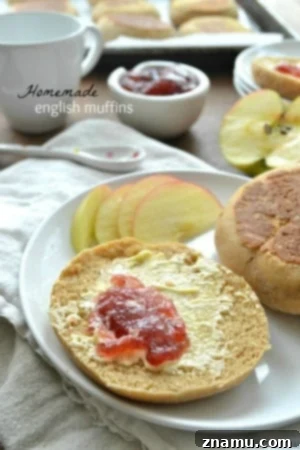
Elevate your breakfast experience! Skip the ordinary store-bought options and dedicate a little extra time to craft these utterly irresistible homemade English muffins. Prepare for an unbelievably soft, chewy interior filled with those coveted nooks and crannies, perfect for soaking up a generous pat of butter and your favorite jam.
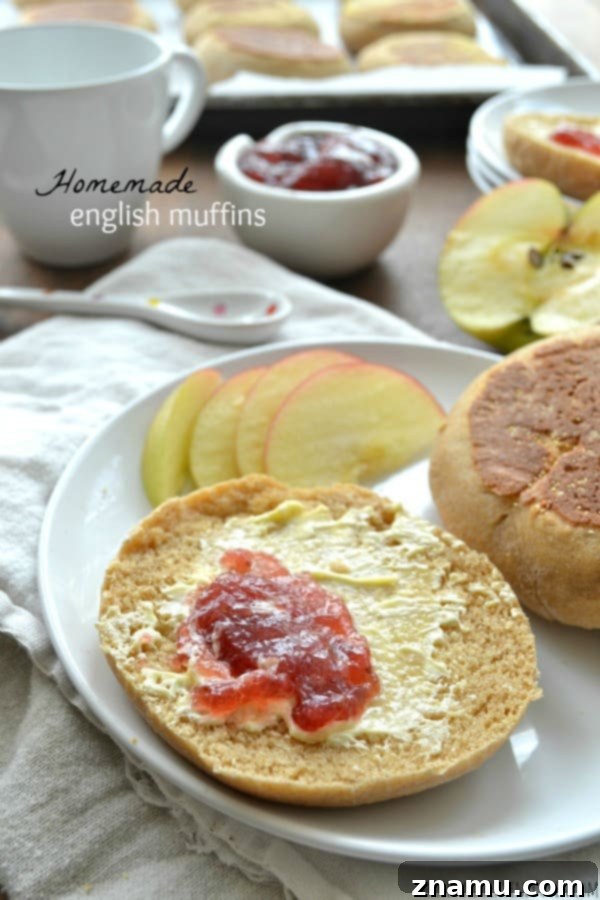
Homemade English Muffins: Mastering the Art of Perfect Nooks & Crannies
There’s a certain magic that happens when you bring a classic breakfast item to life in your own kitchen. And when it comes to English muffins, that magic is truly unparalleled. Forget everything you thought you knew about these humble breakfast staples, because homemade English muffins are an entirely different league of delicious. The moment you pull a batch from your griddle, warm and fragrant, you’ll understand why this recipe is about to become your new favorite weekend project.
For too long, we’ve settled for the factory-made versions, which, while convenient, often lack the soul, the tender chewiness, and most importantly, those iconic, deep “nooks and crannies” that define a truly great English muffin. This guide will walk you through the simple yet rewarding process of baking English muffins from scratch, transforming everyday ingredients into a breakfast masterpiece that will impress everyone at your table.
Why Homemade English Muffins Outshine Store-Bought Varieties
The difference between a store-bought English muffin and a homemade one is night and day. While commercial muffins offer convenience, they often fall short on flavor and texture. Mass-produced versions can be dense, uniform, and lack the distinctive chewiness and open, airy structure that makes English muffins so beloved. They’re acceptable, perhaps, but rarely inspiring.

Homemade English muffins, on the other hand, are a revelation. They boast an incredibly soft interior with a satisfying chew, encased in a lightly crisp crust. The key lies in their irregular, open texture – those famous nooks and crannies – which are simply divine for capturing melted butter, fruit jam, or savory egg yolk. Each bite is a testament to the care and fresh ingredients put into their creation. The satisfaction of baking these yourself, filling your kitchen with the aroma of fresh bread, adds an extra layer of enjoyment that no packaged product can replicate.
The Secret to Those Perfect Nooks and Crannies
The characteristic open texture of an English muffin isn’t accidental; it’s a result of careful dough preparation and a unique cooking method. The yeast-leavened dough is typically softer and wetter than most bread doughs, which contributes to its airy structure. When this dough is cooked on a griddle, the heat causes the trapped air and moisture to expand, creating steam pockets within the muffin. These pockets, along with the gluten development during kneading, form the delightful irregular holes and crannies that are the hallmark of an authentic English muffin.
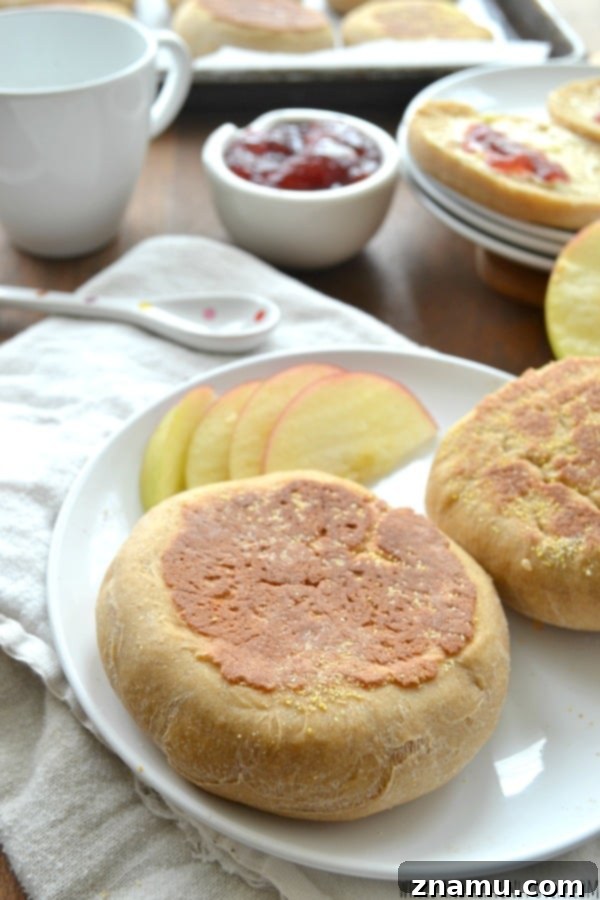
Toasting a perfectly baked English muffin enhances this feature, crisping the exterior and allowing those deep crevices to become golden and ready to absorb every drop of butter or jam you spread on them. This texture is what elevates the English muffin from a simple bread product to an iconic breakfast foundation.
Embarking on Your English Muffin Baking Journey
While the idea of baking from scratch might seem daunting, especially with a yeasted dough, making homemade English muffins is surprisingly straightforward. It does require a bit of time – roughly two hours from start to finish – but the vast majority of this time is inactive, dedicated to the dough rising. This means you can easily fit the process into a leisurely morning, allowing the dough to do its magic while you enjoy a cup of coffee or catch up on other tasks.

The process is deeply satisfying, connecting you to the age-old tradition of bread making. Watching the dough transform, smelling its yeasty aroma, and finally savoring your warm, freshly baked English muffins provides a sense of accomplishment that store-bought simply cannot match. Trust us, the minimal effort is profoundly rewarded with a superior product.
Essential Ingredients You Likely Already Have
One of the beauties of this homemade English muffin recipe is that it calls for very basic, readily available ingredients. You won’t need to hunt for exotic items; most of what you need is likely already in your pantry and refrigerator. We’re talking about kitchen staples like **milk, butter, honey, active dry yeast, salt, eggs, white whole wheat flour, and a touch of cornmeal** for cooking. These simple components combine to create something truly extraordinary, proving that the best food often comes from the most fundamental ingredients.
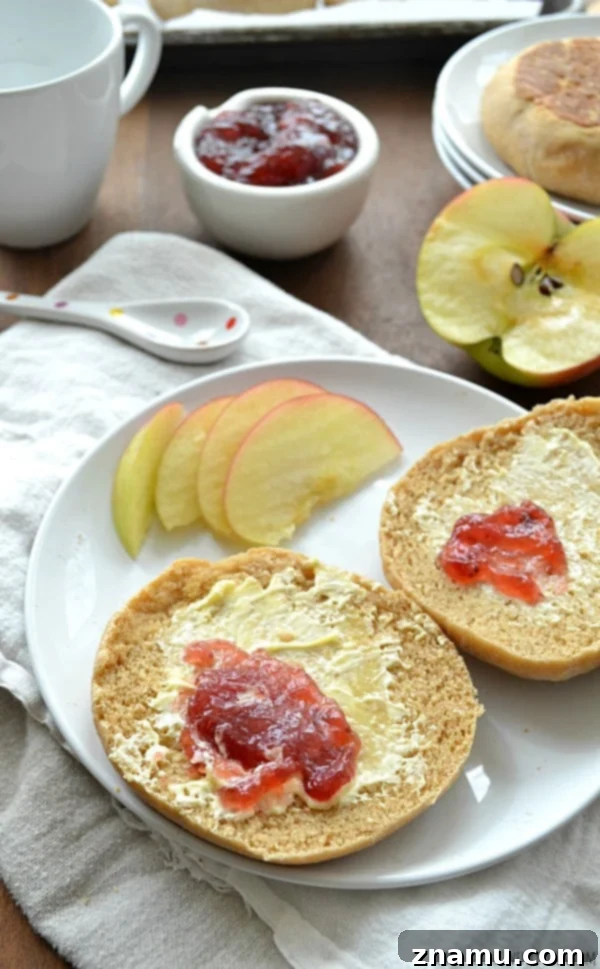
So, there’s truly no reason to delay. Gather these common ingredients, roll up your sleeves, and prepare to be amazed by how simple and rewarding it is to bake your own batch of these delightful breakfast treats. The journey from simple flour and yeast to fluffy, golden English muffins is one you’ll be glad you took.
A Step-by-Step Guide to Baking Perfection
The English muffin making process involves a few key stages: activating the yeast, mixing and kneading the dough, allowing it to rise, shaping the muffins, griddle cooking, and a final oven bake. Each step plays a crucial role in developing the flavor, texture, and rise of your muffins. The initial warm milk mixture is essential for waking up the yeast, which then works its magic to create the airy dough. Kneading ensures proper gluten development, leading to that characteristic chewiness.
The first rise allows the dough to double in size, developing flavor and a light texture. Shaping the dough into discs and then cooking them on a griddle gives them their distinct flat, round shape and lightly browned crust. The final, short bake in the oven is a vital step often overlooked in simplified recipes, but it guarantees that the center of each muffin is perfectly cooked through, preventing any raw doughiness. This multi-stage approach results in the superior quality and taste you crave from an English muffin.
Tips for Success: Achieving the Best Homemade English Muffins
- **Yeast Activation is Key:** Ensure your milk, butter, and honey mixture is precisely 120°F. Too cold, and the yeast won’t activate; too hot, and you’ll kill it. This temperature is crucial for a vigorous rise and fluffy muffins.
- **Don’t Skimp on Kneading:** Kneading develops the gluten, which is essential for the elastic texture and structural integrity of the muffins. It’s what gives them their chew and helps create those wonderful nooks and crannies. Knead until the dough is smooth and springs back when lightly pressed.
- **Let the Dough Rise Properly:** A warm, draft-free environment is ideal for rising. Patience is a virtue here; allow the dough to fully double in size. An under-risen dough will result in dense muffins, while an over-risen one might collapse.
- **The Griddle is Your Friend:** Cooking on a griddle or cast-iron skillet over low heat is what sets English muffins apart. It creates a gentle, even heat that allows the muffins to cook slowly and puff up, forming those internal air pockets. Don’t rush this step or use too high a heat.
- **Cornmeal for Texture:** The cornmeal sprinkled on the griddle and on the muffins adds a subtle crunch and prevents sticking, contributing to the authentic English muffin experience.
- **The Finishing Bake:** Don’t skip the oven bake! While griddle cooking achieves the exterior, the oven ensures the center of your thicker homemade muffins is cooked through, guaranteeing a perfect result every time.

Serving Your Delicious Homemade English Muffins
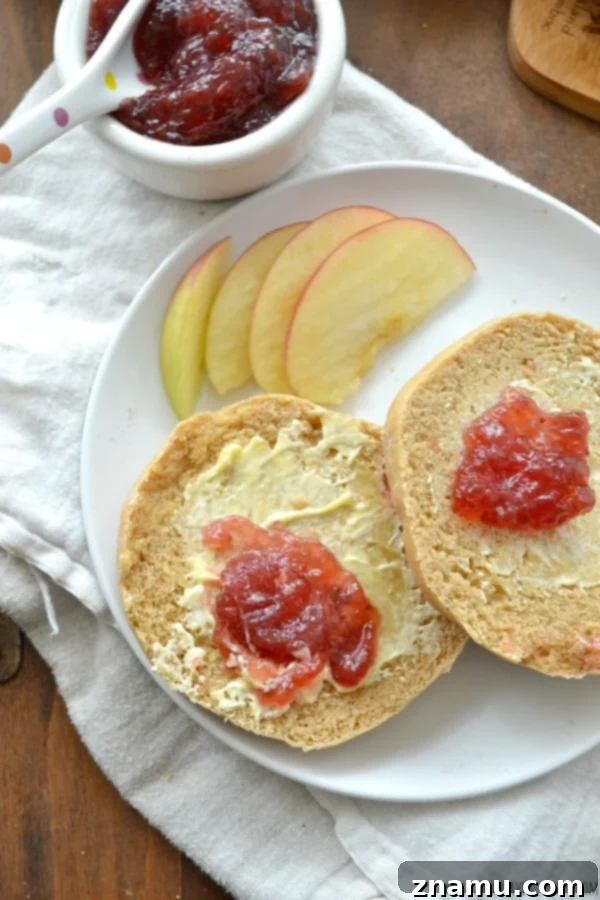
Once you’ve experienced the unparalleled joy of homemade English muffins, you’ll want to make them a regular feature of your breakfast table. The classic way to enjoy them is simply toasted, split open (fork-split, of course, to preserve the craggy interior!), and slathered with softened butter and your favorite fruit jam or marmalade. Strawberry jam is a perennial favorite, but don’t hesitate to experiment with raspberry, apricot, or even a savory bacon jam.
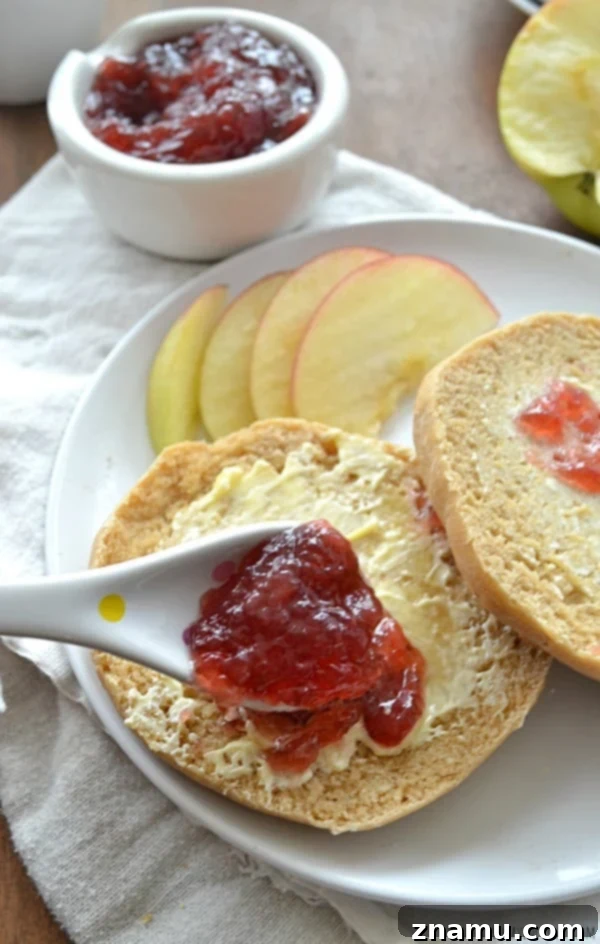
Beyond the traditional, these muffins are incredibly versatile. They form the perfect base for a decadent eggs Benedict, soaking up hollandaise sauce beautifully. They can also be transformed into amazing breakfast sandwiches with eggs, cheese, and your choice of sausage or bacon. Their sturdy yet soft texture makes them ideal for hearty toppings without falling apart.
Beyond Breakfast: Versatile Meal Ideas
While English muffins are undeniably a breakfast icon, their versatility extends far beyond the morning meal. Consider using them as a unique base for mini pizzas or bruschetta during a casual lunch or appetizer spread. Their sturdy structure can hold up to various toppings, from marinara and mozzarella to fresh tomatoes and basil. For a light lunch, they make excellent open-faced sandwiches, topped with avocado and everything bagel seasoning, or smoked salmon and cream cheese. Don’t let their name limit your culinary creativity; homemade English muffins are a delightful canvas for a myriad of flavors and meal occasions.

The Recipe: Homemade English Muffins

Print Recipe
Pin Recipe
Homemade English Muffins
This recipe may included paid links. As an Amazon Associate, I earn a commission from qualifying purchases.
Ingredients
- 1-3/4 cups milk
- 3 tablespoons unsalted butter
- 1 tablespoon honey
- 2-1/2 teaspoons active dry yeast
- 1-1/2 teaspoons salt
- 1 large egg
- 5 to 5-1/2 cups white whole wheat flour
- Cornmeal for sprinkling
Instructions
-
In a medium saucepan over medium heat, combine milk, butter, and honey. Stir occasionally until the mixture reaches 120°F (do not exceed 120°F). Remove from heat and pour into the bowl of a stand mixer fitted with a paddle attachment.
-
Sprinkle the active dry yeast over the warm milk mixture and let it dissolve for 5 minutes. Then, mix in the salt and egg. Add 5 cups of flour and mix on medium speed until the dough begins to pull away from the sides of the bowl (add an additional 1/2 cup flour if the dough remains too sticky). Remove the dough from the bowl and turn it onto a lightly floured surface. Knead until the dough is smooth and elastic.
-
Place the kneaded dough in a lightly greased bowl, turning it once to ensure the top is also greased. Cover the bowl with plastic wrap and let it rise in a warm place until it has doubled in size (approximately 1 hour, depending on room temperature).
-
Once risen, gently punch the dough down to release air. Divide the dough into 12 equal pieces. Roll each portion into a smooth ball and arrange them on parchment paper-lined baking sheets. Use the heel of your hand to gently flatten each ball into a disc shape.
-
Heat a lightly greased skillet or griddle to 275°F (low heat). Sprinkle the griddle with cornmeal to prevent sticking and add texture. Working in batches, cook the English muffin discs on the skillet for 6-7 minutes on each side, flipping only once, until golden brown.
-
After griddle-cooking, return the English muffins to the baking sheets. Bake them in a preheated oven at 350°F for an additional 10 minutes. This crucial step ensures that the centers are thoroughly cooked through.
-
Serve your freshly baked English muffins warm or toasted. They are truly delightful with a generous pat of butter and your favorite jam, or as the base for classic eggs Benedict.
Notes on Storage
Tried this recipe?
Leave a comment and rating below. Feel free to share a picture on Instagram and tag @wholeandheavenlyoven or hashtag it #wholeandheavenlyoven
Conclusion: The Reward of Homemade Baking
Making homemade English muffins is more than just a recipe; it’s an experience. It’s about taking simple ingredients and transforming them into something truly special, something that brings warmth and comfort to your home. From the moment the yeast begins to bubble to the first bite of a perfectly toasted muffin, you’ll appreciate the journey.
These incredibly soft, chewy, and hole-filled delights are a testament to the fact that sometimes, the best things in life take a little effort. But when that effort yields a breakfast so superior to anything you could buy, it’s an effort well spent. So go ahead, embrace the joy of baking from scratch, and treat yourself and your loved ones to the finest English muffins you’ll ever taste.