
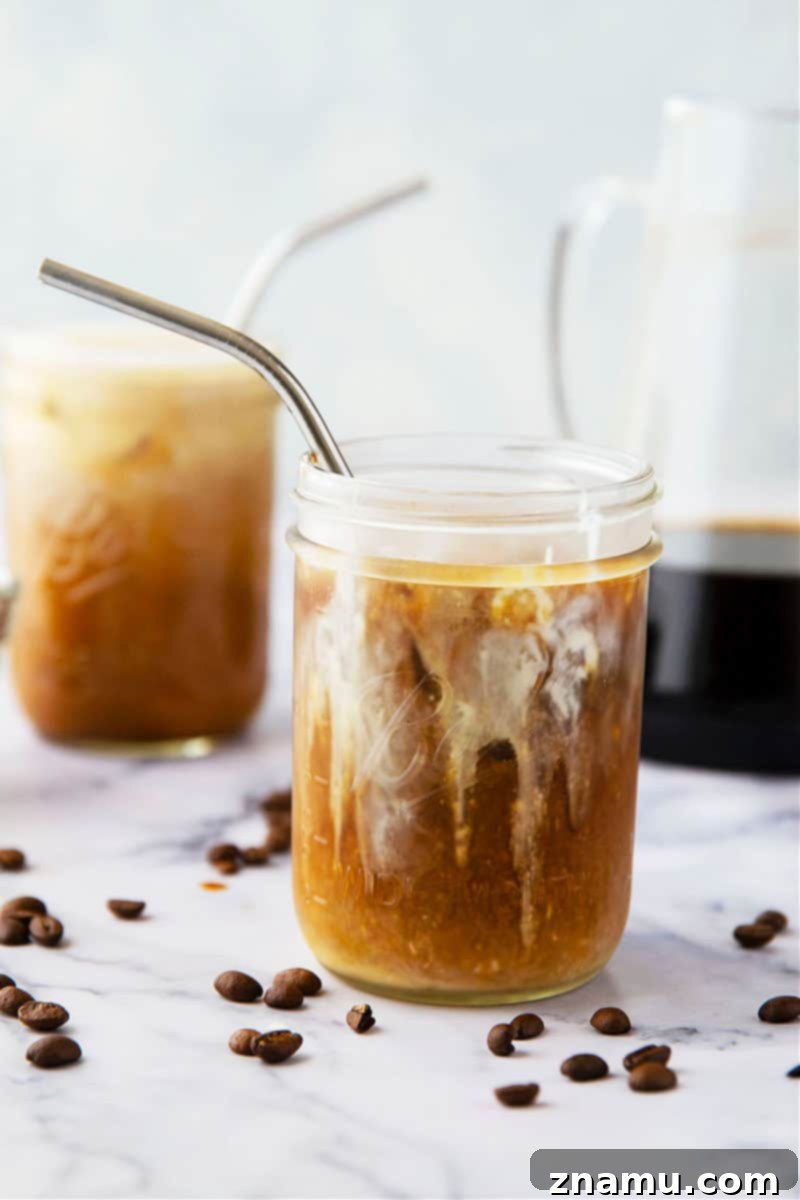
Discover the secret to classic coffee shop-style cold brew coffee, made effortlessly in your own home! This overnight cold brew recipe is so easy and delicious, you’ll never consider buying it again. It’s truly a game-changer for any coffee enthusiast.
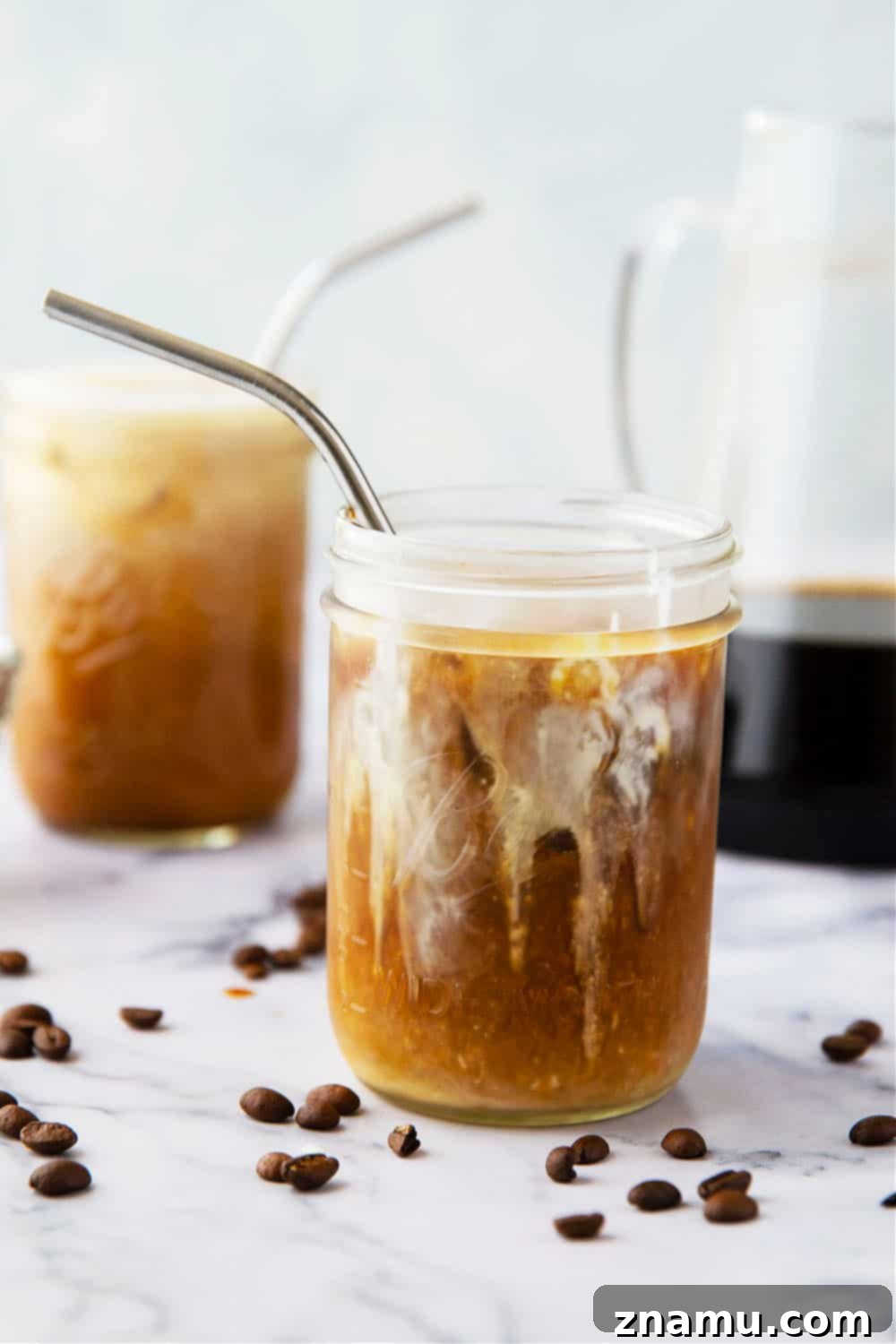
Forget those expensive coffee shop runs and the daily ritual of spending top dollar for your caffeine fix. Today, we’re diving into the incredibly simple world of homemade cold brew coffee, an obsession that’s about to become yours too. Imagine waking up to a ready-to-enjoy, budget-friendly, and infinitely superior cup of coffee, all crafted in your very own kitchen.
The beauty of this cold brew method lies in its simplicity and the remarkable flavor it produces. It’s a revelation that transforms ordinary coffee into an extraordinary experience, proving that the best things in life often require minimal effort.
Why You’ll Love This Overnight Cold Brew Coffee Recipe
Making cold brew at home isn’t just about saving money; it’s about unlocking a whole new dimension of coffee flavor and convenience. This particular recipe stands out for several compelling reasons:
- Unparalleled Smoothness and Richness: Experience an incredibly deep, smooth, and robust coffee flavor with absolutely no bitterness. The cold brewing process naturally extracts less acid, resulting in a remarkably palatable drink.
- No Specialized Equipment Needed: You don’t need a fancy cold brew maker or expensive gadgets. All you require are a couple of large mason jars or pitchers and a fine-mesh sieve, items commonly found in most kitchens.
- Effortless, Hands-Off Preparation: With just about 5 minutes of active prep time, you’ll combine your ingredients and let the refrigerator do all the work overnight. It’s truly a “set it and forget it” method.
- A Versatile Foundation for Creativity: This cold brew acts as the perfect blank canvas for an endless array of delicious iced coffee creations. Customize it exactly to your taste preferences every single day.
- Cost-Effective Coffee Solution: Significantly reduce your daily coffee expenses by brewing a large batch that lasts for days, offering premium quality at a fraction of the price of store-bought alternatives.
Understanding the Magic of Cold Brew
Cold brew coffee is a revelation because it fundamentally changes how coffee is extracted. Unlike traditional hot brewing, which uses heat to quickly pull out flavors (and sometimes undesirable bitter compounds), cold brewing relies on time and cold water. This slow, gentle process extracts the coffee’s rich, chocolatey, and nutty notes while leaving behind much of the acidity and bitterness often associated with hot-brewed coffee. The result is a naturally sweeter, incredibly smooth, and less acidic concentrate that’s easier on the stomach and offers a distinctively clean taste.
Essential Tools for Your Cold Brew Setup
One of the many perks of homemade cold brew is that you likely already own everything you need. Here’s a quick rundown:
- Two Large Jars or Pitchers: A 2-quart mason jar or a similar-sized pitcher is ideal for the brewing process, while a 1-quart jar or pitcher will be perfect for storing the strained concentrate. These need to be large enough to hold your coffee grounds and water, with some headspace.
- A Fine-Mesh Sieve: This is crucial for the initial straining of the coffee grounds. Ensure it’s sturdy and has fine enough mesh to catch most of the larger particles.
- Coffee Filters or Cheesecloth: For a super-smooth, sediment-free cold brew, a secondary straining step using a standard coffee filter (basket or cone type) or several layers of cheesecloth is highly recommended. These will catch the finer sediments that the sieve might miss.
- Quality Coffee Grounds: The star of the show! We’ll discuss choosing the right type and grind size next.
Choosing Your Coffee: Quality vs. Affordability
When it comes to cold brew, you might be surprised to learn that expensive, gourmet beans aren’t strictly necessary for a fantastic result. Because the grounds soak for such an extended period in cold water, the cold brewing process itself naturally smooths out many of the rougher edges typically found in more affordable coffee varieties.
Many cold brew enthusiasts find that even budget-friendly brands like Maxwell House or Folgers yield an unbelievably smooth and rich-flavored cold brew. While you’re always welcome to splurge on a higher-quality coffee if you desire, don’t feel pressured. The long, slow extraction significantly minimizes the bitterness often associated with cheaper coffees, making them perfectly suitable and delicious for this recipe.
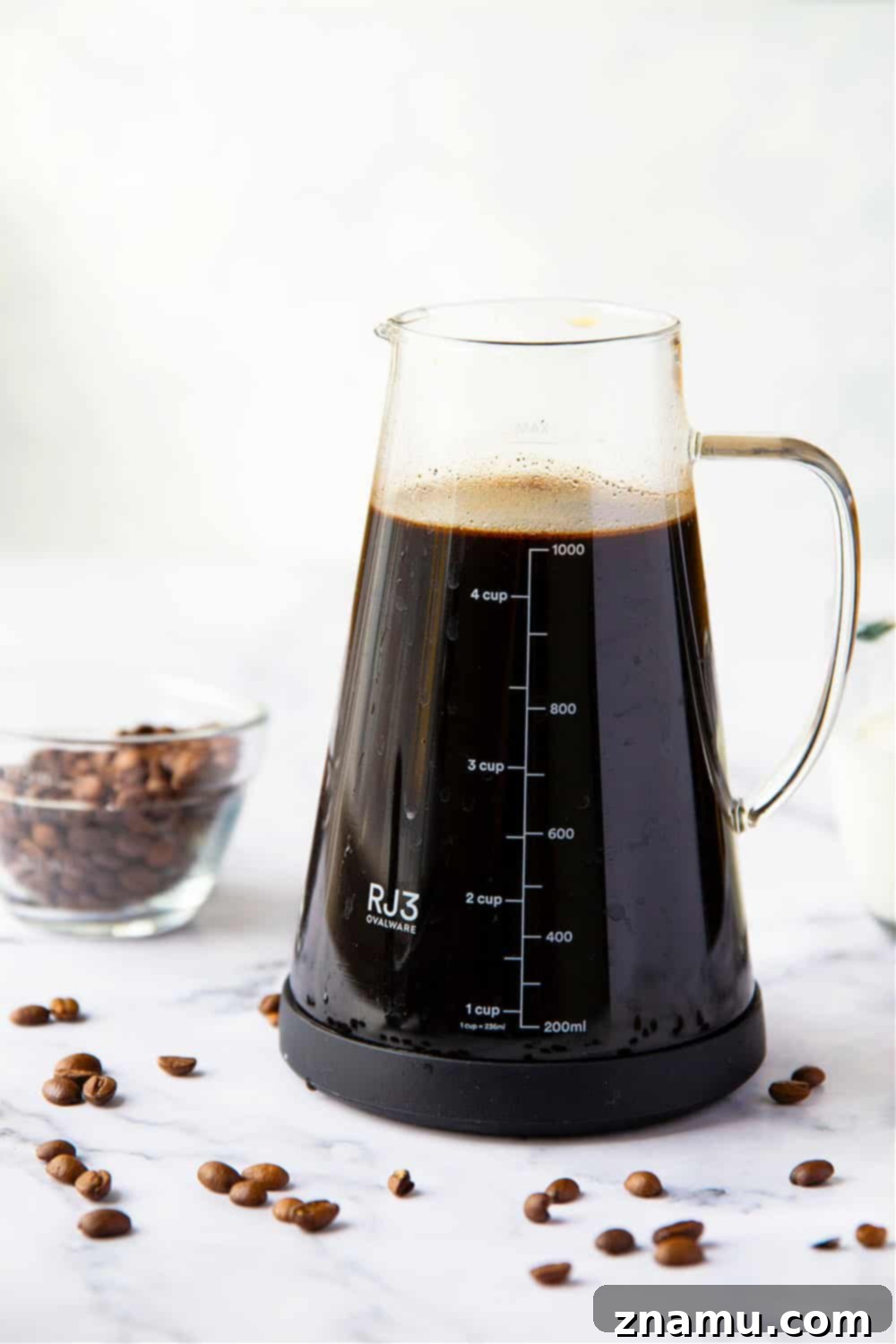
The Importance of Grind Size
For optimal cold brew, coarsely-ground coffee is paramount. This isn’t just a suggestion; it’s a critical factor in achieving that signature smooth, non-bitter taste and avoiding a muddy, over-extracted mess.
Here’s why a coarse grind is essential:
- Prevents Over-Extraction: Finer grounds have more surface area, leading to faster extraction. In cold brewing’s long steep, fine grounds would quickly over-extract, resulting in a bitter, astringent flavor. Coarse grounds slow down this process, allowing for a balanced, gentle extraction.
- Easier Straining: Coarser particles are much easier to filter out. Fine grounds can pass through sieves and filters, leading to a cloudy, gritty cold brew and making the straining process much more difficult and messy.
- Reduced Sediment: By using a coarse grind, you naturally minimize the amount of fine sediment that ends up in your final brew, contributing to a cleaner, clearer cup.
You can often purchase beans already coarsely ground at grocery stores, or you can grind your own. Many grocery stores have grinders available for customer use, or you can use a burr grinder at home set to the coarsest setting. While grinding your own beans just before brewing offers the freshest flavor, it’s not a deal-breaker if you need to use pre-ground coffee, as long as it’s coarse.

Serving and Customizing Your Cold Brew Experience
Once you’ve brewed your perfect batch of cold brew, the possibilities for enjoyment are virtually endless. This concentrate is incredibly versatile and can be tailored to suit any palate:
Delicious Ways to Enjoy Your Cold Brew Coffee
- Classic Black Over Ice: For purists, nothing beats the clean, smooth taste of cold brew served simply over ice. Its inherent sweetness means many find it enjoyable without any additions.
- Creamy & Luxurious: Mix with half-and-half, heavy cream, or your favorite dairy or non-dairy milk (oat, almond, soy) for a rich, creamy texture. Adjust the ratio to your preferred creaminess.
- Sweetened Delights: Add a splash of your favorite coffee creamer or a pump of flavored syrup like vanilla, caramel, hazelnut, or even pumpkin spice for a cafe-style treat.
- Creative Combos: Experiment with a dash of cinnamon, a drizzle of chocolate sauce, or a dollop of whipped cream for an indulgent experience. Cold brew also makes an excellent base for coffee cocktails or smoothies.
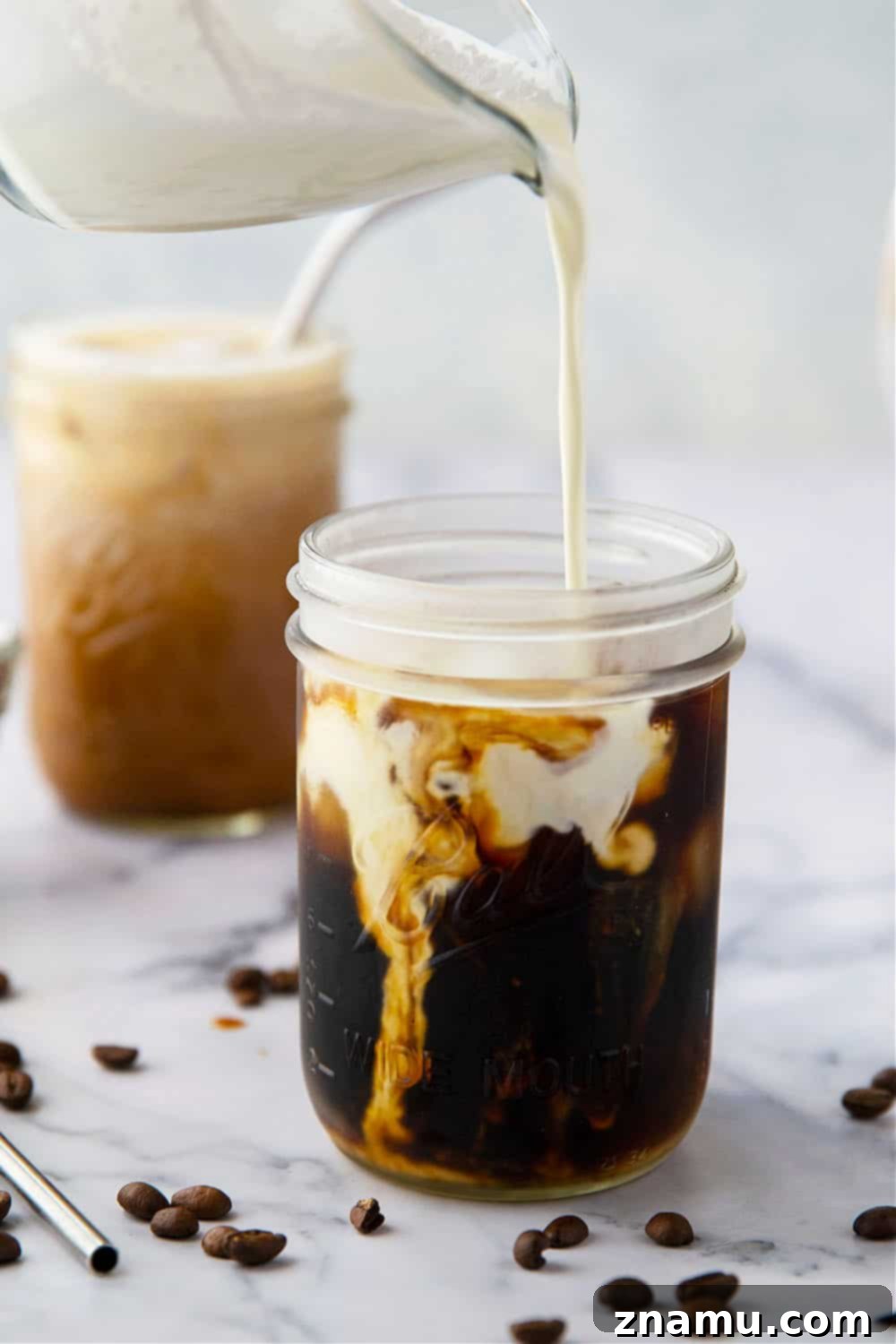
This homemade cold brew coffee concentrate truly rivals, and often surpasses, anything you can buy at a coffee shop. Its perfectly smooth profile, incredibly rich flavor, and versatility will have you wondering why you haven’t been making it at home all along.
Be warned: this recipe is so good, you’ll likely drink more than you anticipate! It’s wise to make a larger batch than you think you’ll need, because a week’s supply can quickly become a few days’ worth.
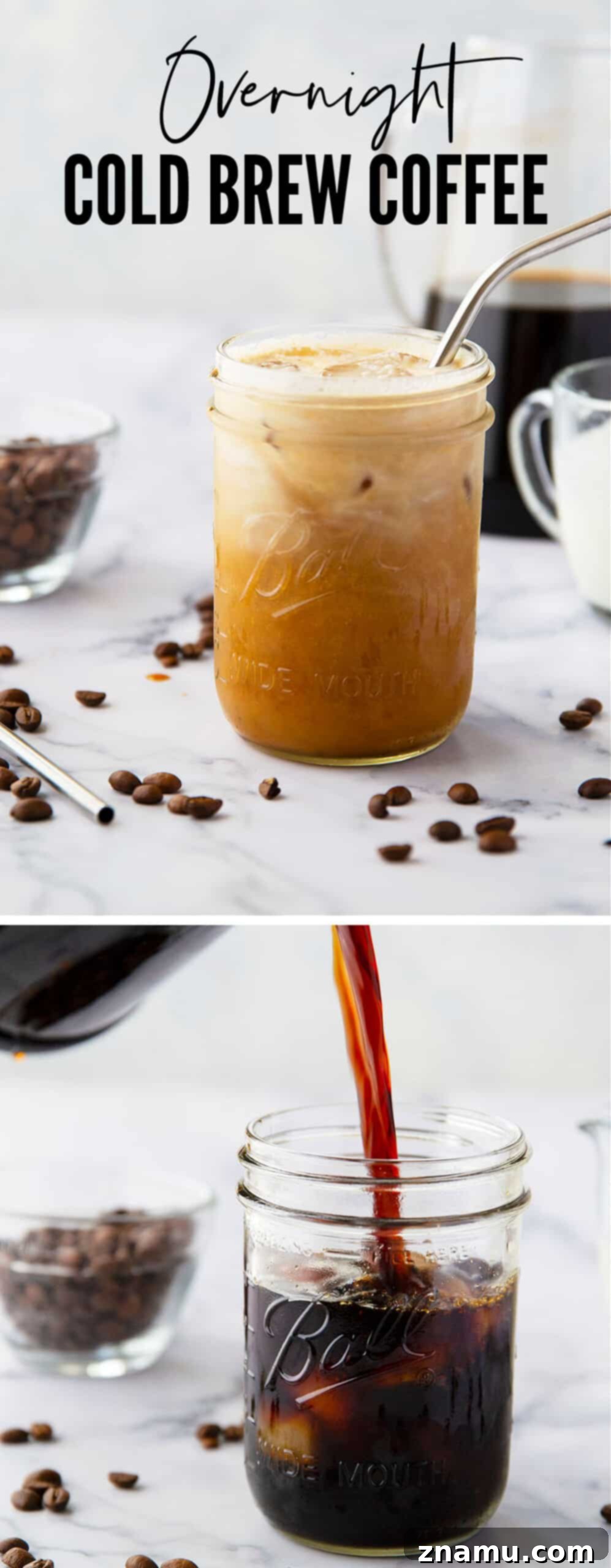
Cold Brew vs. Iced Coffee: What’s the Difference?
While both are served cold, cold brew and iced coffee are fundamentally different beverages, primarily due to their brewing methods. Understanding these differences can help you appreciate why cold brew has become so popular.
- Brewing Method:
- Cold Brew: Coffee grounds are steeped in cold water for an extended period (12-24 hours). This slow process prevents the extraction of bitter oils and acids.
- Iced Coffee: Typically, regular hot coffee that has been cooled down and then poured over ice. Sometimes, it’s brewed double-strength to counteract dilution from the ice.
- Acidity & Flavor Profile:
- Cold Brew: Known for its significantly lower acidity (up to 67% less than hot coffee), resulting in a smoother, sweeter, and less bitter taste. It often has notes of chocolate, nuts, and caramel.
- Iced Coffee: Tends to be more acidic and can taste bitter, especially if not brewed specifically for cold consumption. Cooling hot coffee can sometimes enhance bitterness or result in a flat taste.
- Concentration & Strength:
- Cold Brew: Usually brewed as a concentrate, meaning it’s much stronger than regular coffee and often diluted with water, milk, or creamer before drinking.
- Iced Coffee: Generally similar in strength to regular hot coffee, though some recipes call for brewing extra strong to avoid a watery drink once ice is added.
- Preparation Time:
- Cold Brew: Requires significant steeping time (overnight), but the actual hands-on prep is minimal.
- Iced Coffee: Quick to prepare if you have hot coffee on hand, but requires time for the coffee to cool, or immediate serving over ice (which can dilute it).
For those seeking a less acidic, smoother, and naturally sweeter coffee experience that’s gentle on the stomach, cold brew is the clear winner.
Frequently Asked Questions About Homemade Cold Brew
Here are some common questions you might have as you embark on your cold brew journey:
How long does cold brew last?
Properly stored in an airtight container in the refrigerator, cold brew concentrate can last for up to 7-10 days. For the best flavor, it’s usually recommended to consume it within the first week.
Can I use fine ground coffee?
While technically possible, it’s highly discouraged. Fine grounds will lead to an over-extracted, bitter cold brew and make the straining process incredibly difficult, often resulting in a muddy, gritty final product. Always opt for a coarse grind.
What’s the best water to use for cold brew?
Just like hot coffee, the quality of your water impacts the taste. Filtered water is ideal as it’s free of chlorine and other impurities that can affect the flavor of your cold brew. Tap water is generally fine, but filtered water can make a noticeable difference.
How can I adjust the strength of my cold brew?
The easiest way to adjust strength is by diluting your cold brew concentrate to taste. If it’s too strong, add more water or milk. If it’s too weak, next time you brew, you can try increasing the amount of coffee grounds slightly or extending the brewing time by a few hours (up to 24 hours total).
My cold brew tastes watery. What went wrong?
If your cold brew tastes watery, it might not have steeped long enough, or your coffee-to-water ratio might be off. Ensure you’re using a coarse grind and brewing for at least 12-18 hours. Also, remember that cold brew is a concentrate, so if you’re diluting it too much, it will taste weak. You can always reduce the amount of diluent to your preference.
Coffee pairs well with….more coffee! Try these delightful treats alongside a cup of your freshly brewed cold brew. ♥
- Caramel Macchiato Banana Overnight Oats
- No-Bake Butterscotch Coffee Cheesecake Bars
Watch a step-by-step guide on making this cold brew coffee via Google Web Stories!

Print Recipe |
Pin Recipe
Rating: 5 out of 5 stars from 5 votes
Overnight Cold-Brew Coffee
Classic coffee shop-style cold brew coffee is SO unbelievably easy to make at home you’ll never go back to buying it! This overnight cold brew coffee is a keeper recipe for any coffee lover!
This recipe may included paid links. As an Amazon Associate, I earn a commission from qualifying purchases.
Ingredients
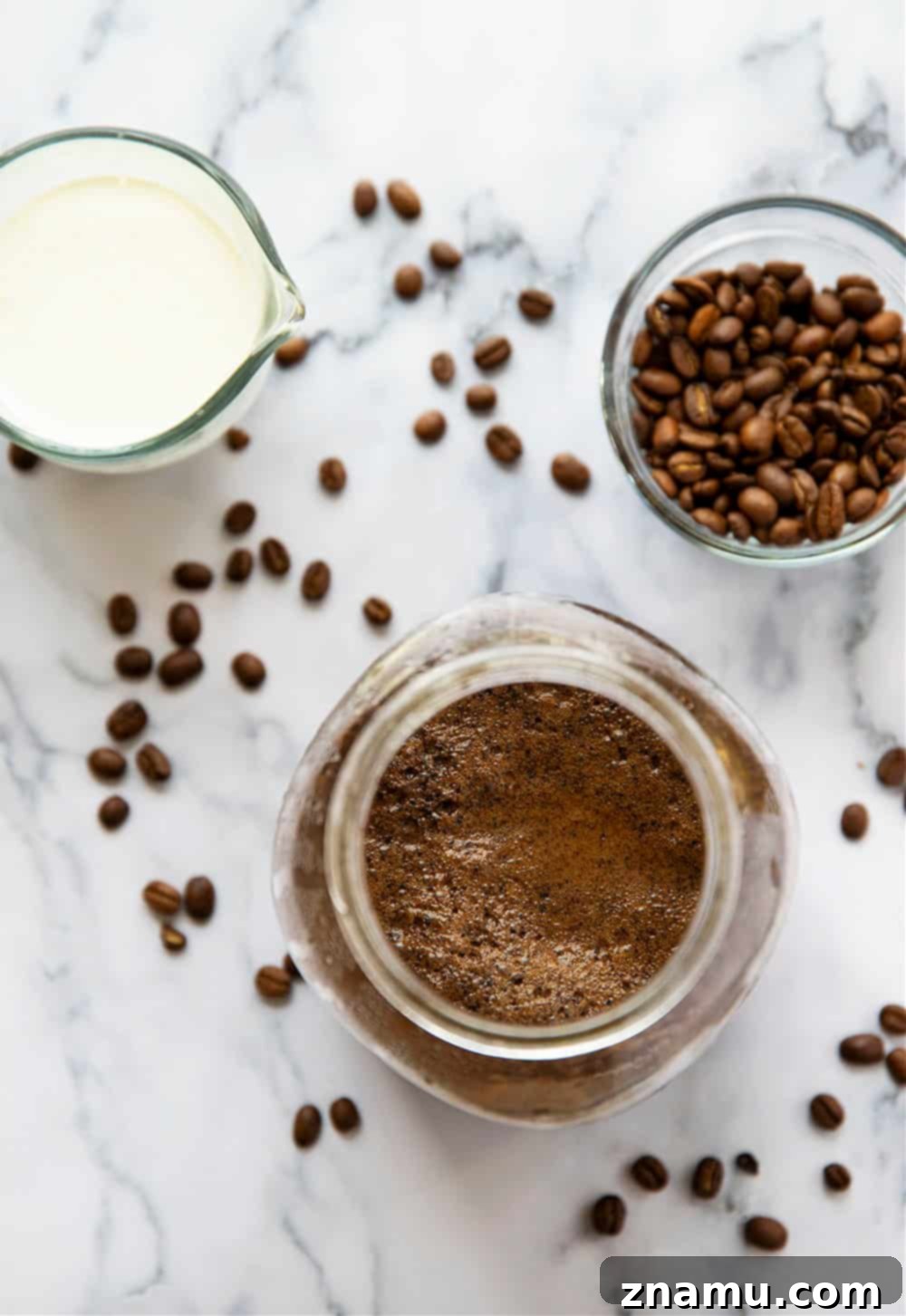
- 1-1/3 cups coffee grounds**
- 4 cups cold water
- Creamer, milk, and ice for serving
Instructions
- Place coffee grounds in the bottom of a 2-quart mason jar or pitcher. Pour cold water on top and use a spoon to stir to completely combine. Screw lid on top of jar or cover with plastic wrap and chill cold brew overnight or at least 12 hours.
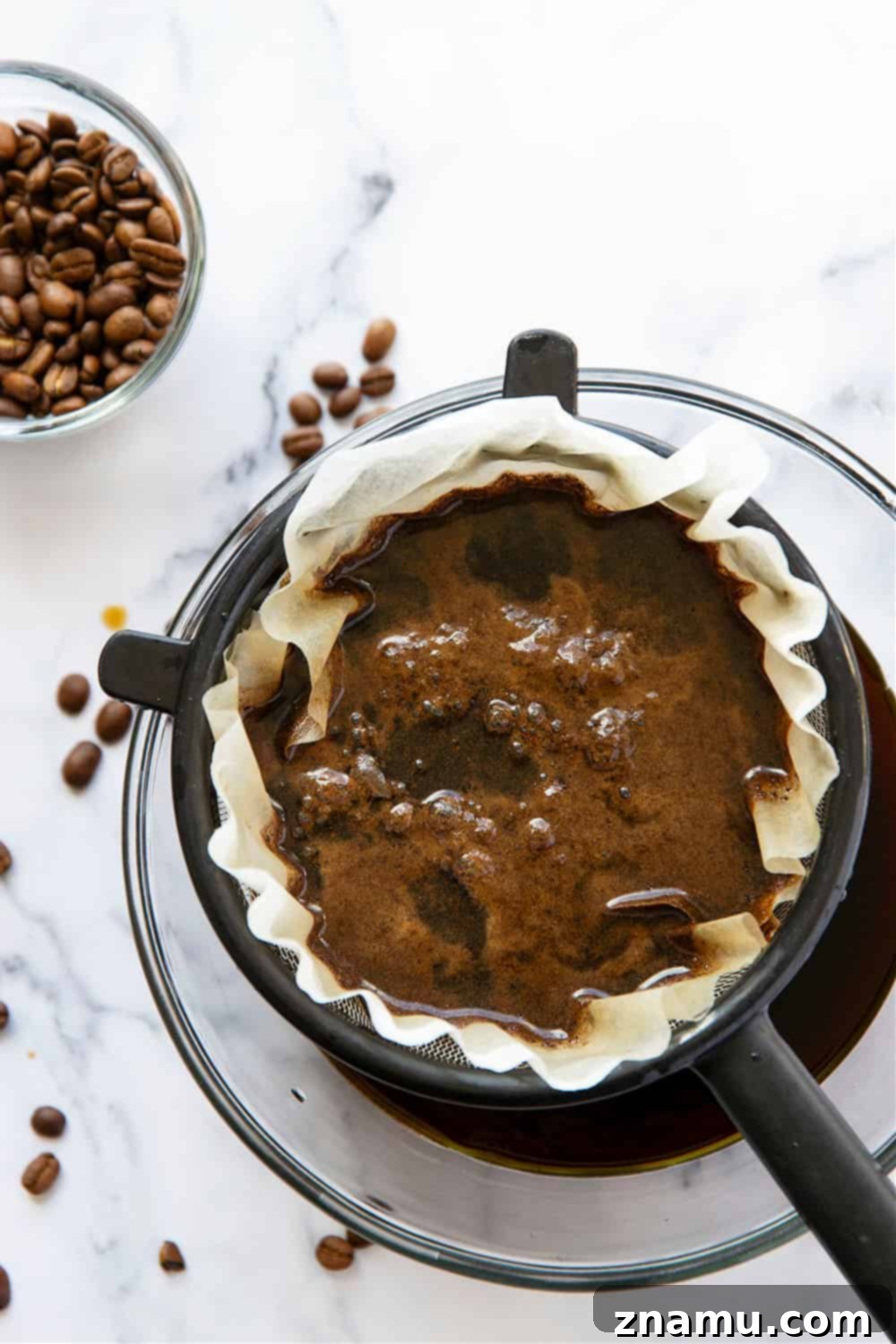
- Set a cheesecloth or coffee filter over a fine-mesh sieve and place sieve over an empty 1-quart mason jar or pitcher. Pour cold brew coffee through strainer, a little bit at a time until all the cold brew coffee is strained. Discard grounds.
- Serve cold brew with creamer/milk, and ice or store in refrigerator up to a week. Enjoy!
For a step-by-step guide to making this recipe, check out the video!
A video guide for this recipe is available on the original blog post or associated platforms.
Notes
*I recommend freshly grinding your own beans for the richest flavor. You can do this in most major grocery stores or use your own grinder. You don’t need to buy fancy expensive beans either!
*Use a coarse grind of beans. You can buy beans ground coarsely ground or grind your own on the coarse setting.
Tried this recipe?
Leave a comment and rating below. Feel free to share a picture on Instagram and tag @wholeandheavenlyoven or hashtag it #wholeandheavenlyoven