
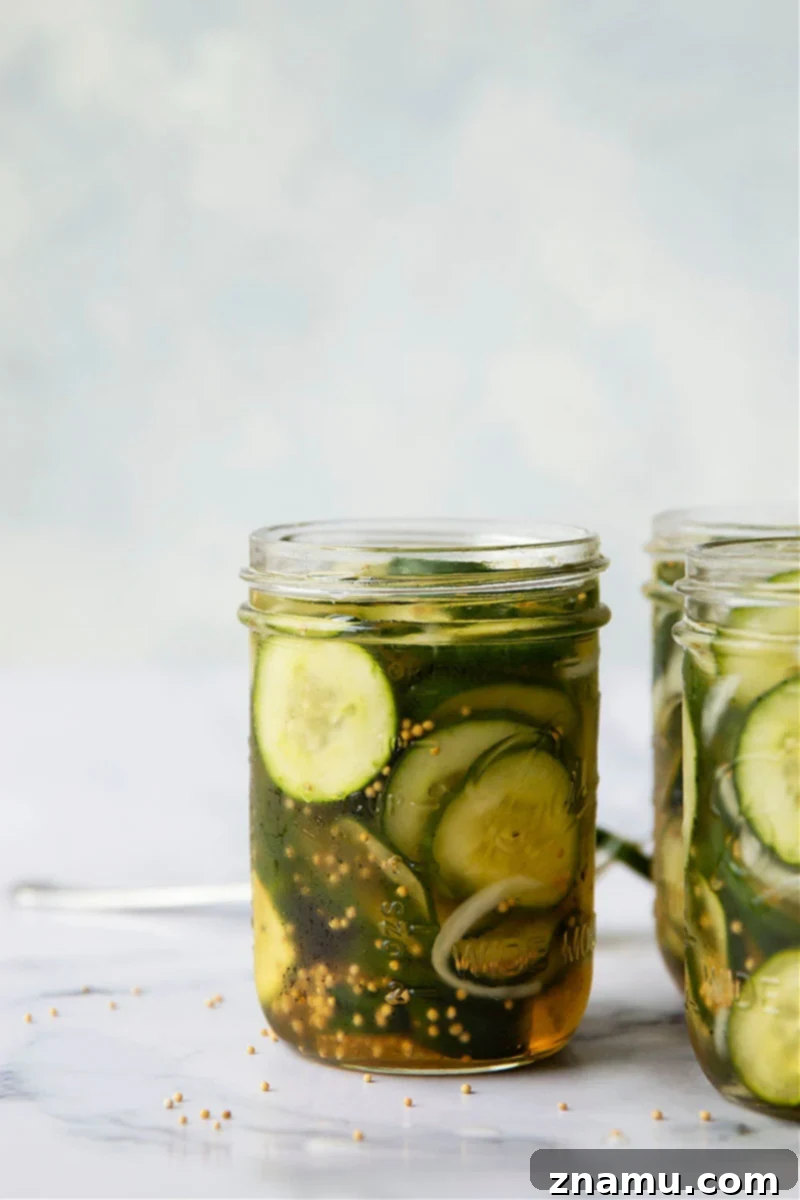
These refrigerator bread and butter pickles are a delight to make and even better to eat. Prepared entirely in the fridge overnight, they offer a perfectly crisp, sweet, and tangy bite – ideal for utilizing your garden’s cucumber bounty!
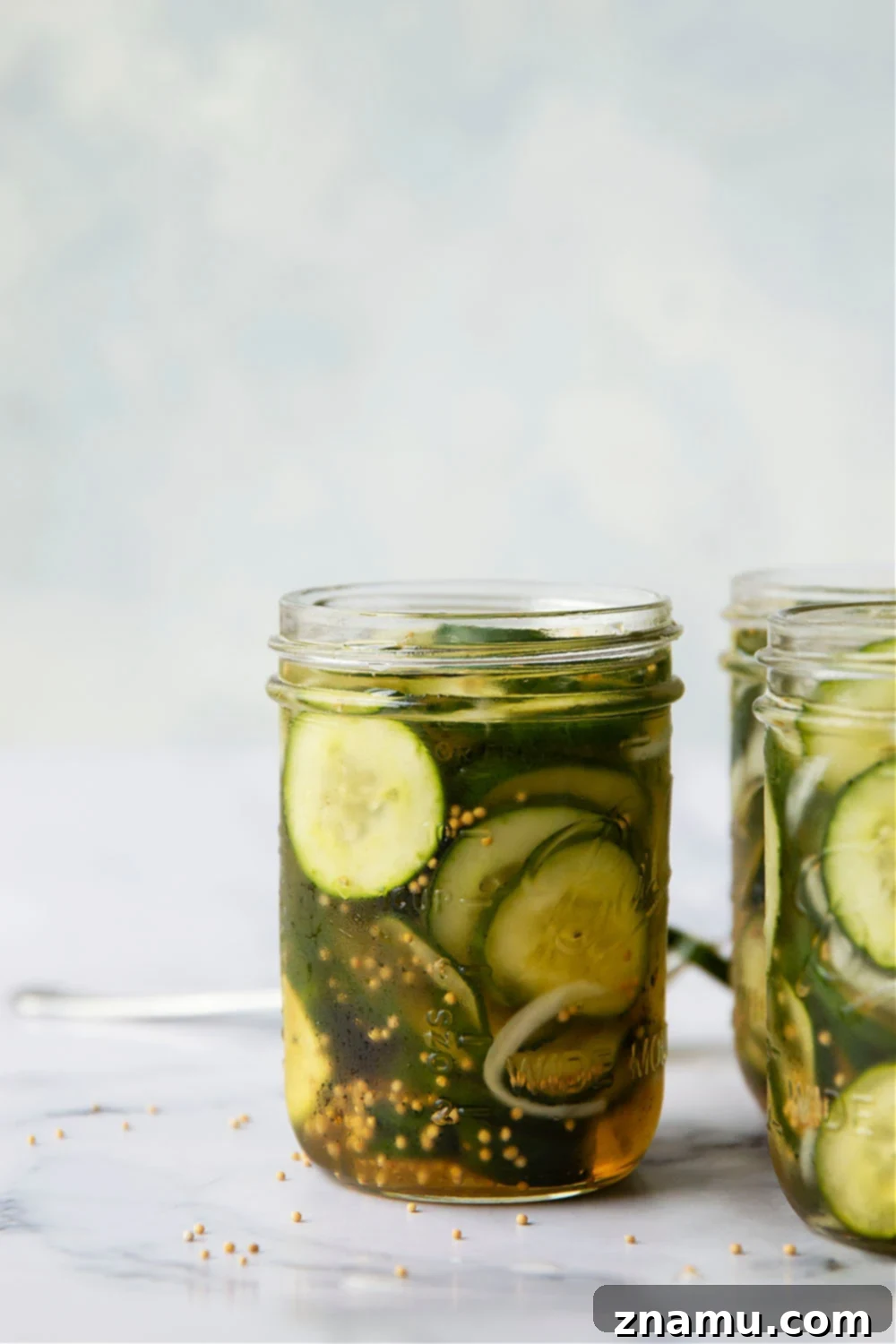
Effortless Refrigerator Bread and Butter Pickles: Your Guide to Sweet, Tangy Perfection
There’s nothing quite like the satisfaction of a homegrown harvest, but sometimes, a bountiful crop of cucumbers can feel like a delicious challenge. This recipe for homemade refrigerator bread and butter pickles comes to you as a direct result of my mother’s garden, which annually explodes with more cucumbers than one family could ever reasonably consume. For a while, it felt like the cucumbers were winning the battle for garden supremacy, but then these incredible bread and butter pickles came into existence, and we swiftly pulled ahead!
Now, the real race is on: to eat all these delectable pickles as fast as humanly possible. Trust me, once you taste these, you’ll understand. They are utterly irresistible. For all bread and butter pickle aficionados, prepare yourselves, because you’re about to discover a recipe that’s nothing short of pickle magic. These aren’t just any pickles; they’re an experience – a sweet, tangy, and incredibly crisp revelation that will become a staple in your kitchen.
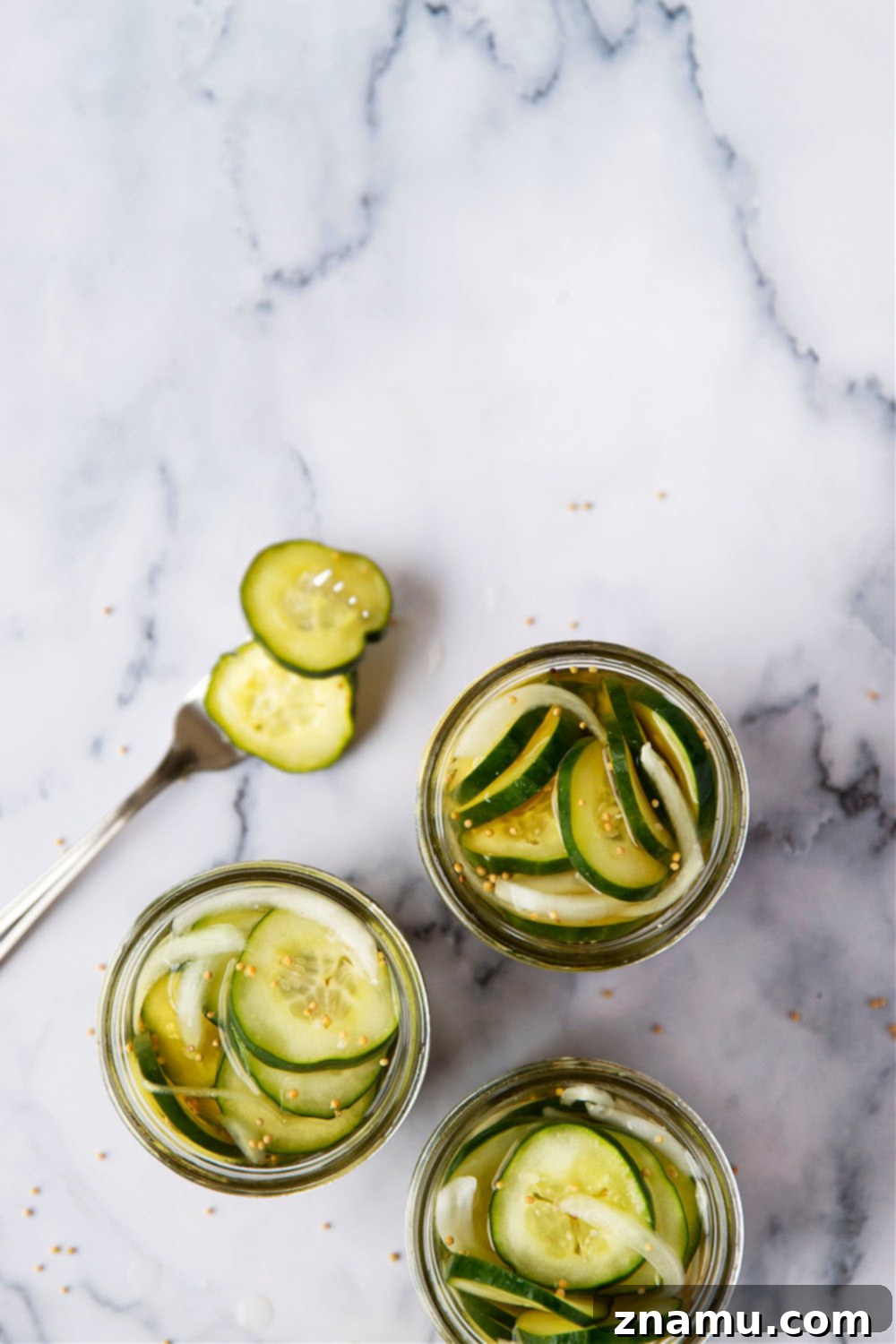
Why These Refrigerator Bread and Butter Pickles Stand Out
Our recipe for homemade bread and butter pickles offers a fantastic blend of flavor and simplicity. Here’s what makes them an absolute must-try:
- A perfectly crisp texture that satisfies with every bite.
- Authentic sweet and tangy bread and butter pickle flavor, beautifully balanced.
- Requires only 7 simple ingredients, readily available in any grocery store.
- Absolutely no complicated canning involved – your refrigerator does all the hard work!
- An excellent solution for utilizing a large harvest of cucumbers.
- A quick and easy process, ideal for beginners and seasoned picklers alike.
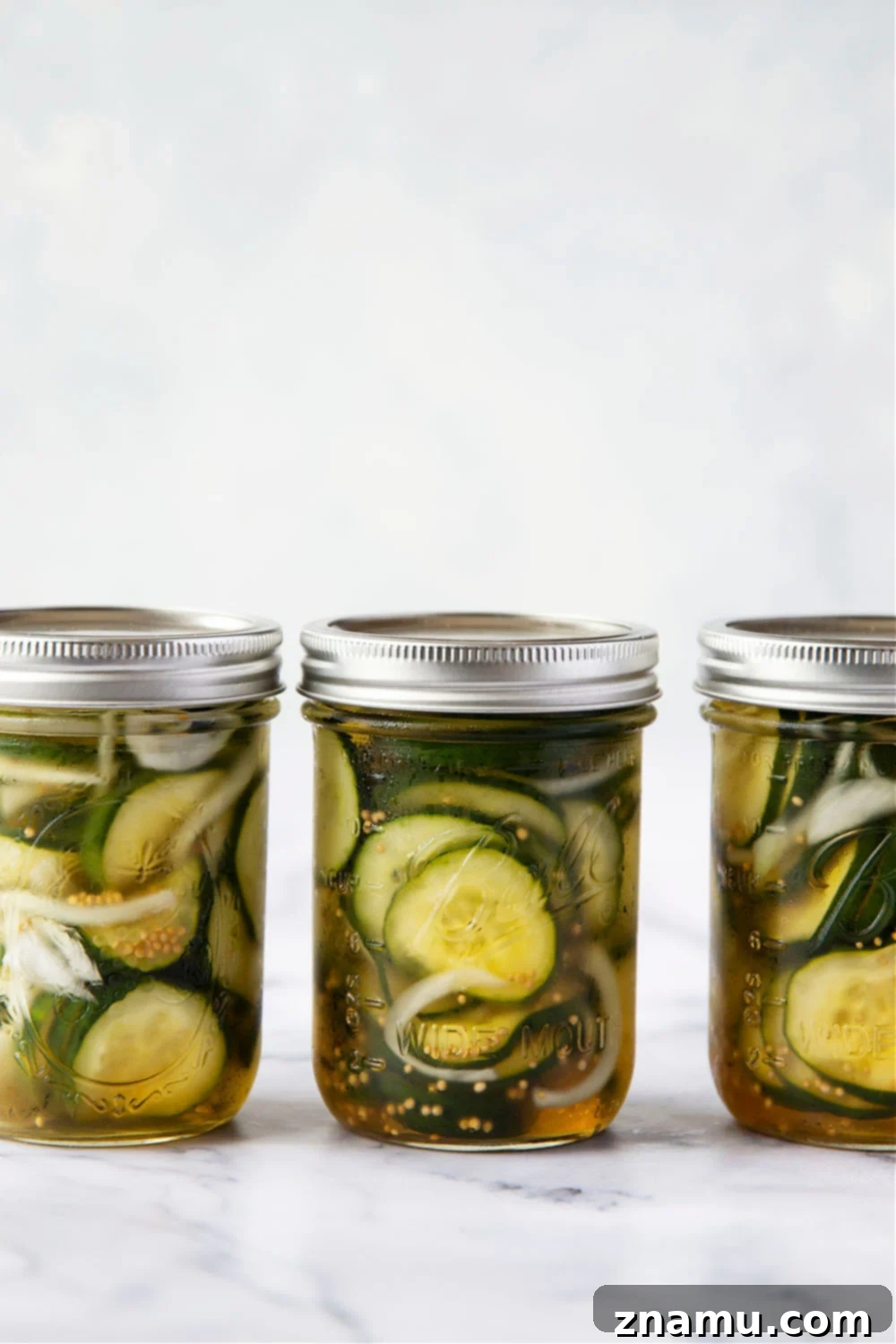
Mastering Your Homemade Bread and Butter Pickles
Making these delightful pickles is surprisingly straightforward. The key lies in a few simple steps and quality ingredients, culminating in a batch of pickles that will rival any store-bought variety. While the full recipe details are below, let’s walk through the process and crucial components.
Essential Ingredients You’ll Need for Flavorful Pickles
The magic of these refrigerator bread and butter pickles comes from a harmonious blend of common pantry staples. Each ingredient plays a vital role in achieving that signature sweet and tangy profile and crisp texture:
- Cucumbers: The star of the show. Fresh, firm cucumbers are essential for crisp pickles.
- Sweet onion: Adds a subtle, mild sweetness and aromatic depth that complements the cucumbers.
- Kosher salt: Crucial for drawing out excess water from the cucumbers, ensuring crispness and enhancing flavor.
- Granulated sugar: Provides the primary sweetness, characteristic of bread and butter pickles.
- Light brown sugar (or coconut sugar): Adds a deeper, molasses-like note to the sweetness, enriching the brine.
- Apple cider vinegar: Delivers the tangy kick and acts as the primary preservative for refrigerator pickles.
- Mustard seeds: These tiny seeds impart the classic, slightly pungent, and warm spice that defines bread and butter pickles.
Choosing and Preparing Your Cucumbers for Ultimate Crispness
The success of your homemade pickles largely depends on the cucumbers you choose and how you prepare them. Both seed-in and seedless cucumber varieties will work wonderfully for this recipe. However, for the best results and a uniform, one-bite sized pickle, try to select medium-sized cucumbers. This ensures consistency in thickness and texture once sliced.
We typically recommend using around six medium cucumbers for this recipe, which usually yields approximately 8-10 cups of thinly sliced cucumbers. Quantity can be adjusted slightly based on the size of your cucumbers and desired batch size.
When it comes to slicing, aim for your cucumbers to be as thin as possible. This is not just a suggestion; it’s a secret to achieving that coveted crispy pickle. Thinner slices allow the brine to penetrate more effectively and quickly, resulting in a more tender-crisp texture. A sharp knife can work, but for truly uniform and razor-thin slices, a mandoline slicer is your best friend. Always exercise caution when using a mandoline to prevent injuries.
Expert Tips for Achieving Perfect Refrigerator Pickles Every Time
While this recipe is incredibly forgiving, a few key steps and tips will elevate your refrigerator bread and butter pickles from good to absolutely outstanding:
- The Essential Salt Soak for Crispness: Begin by combining your thinly sliced cucumbers and onions with 3 tablespoons of kosher salt. This mixture should then chill in the refrigerator for about 1 hour. The salt soak is a critical step; it actively draws out excess water from the cucumbers, preventing soggy pickles and concentrating their natural flavor. After the hour, it’s crucial to rinse the cucumbers and onions thoroughly with cold water multiple times to remove the excess salt. This ensures your pickles aren’t overly salty and are perfectly seasoned by the brine.
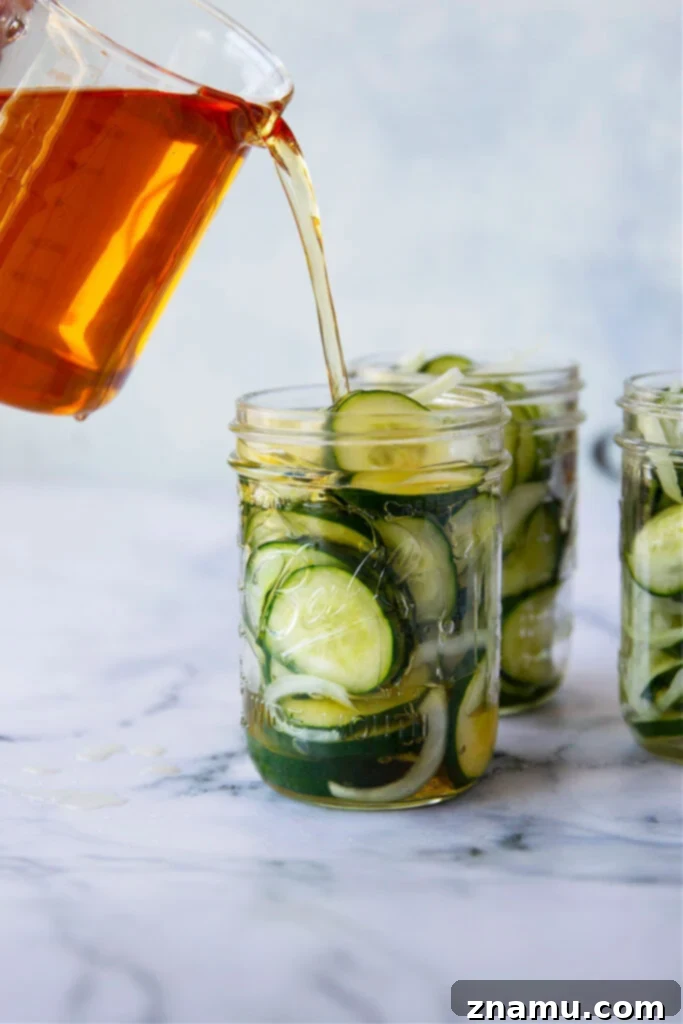
- Prepare the Brine and Allow it to Cool: The flavorful brine is composed of apple cider vinegar, granulated sugar, brown sugar, and mustard seeds. This mixture needs to be gently heated on the stove, just until all the sugars are completely dissolved, creating a smooth, cohesive liquid. It is imperative that you allow the brine to cool down for at least 30 minutes before pouring it over your prepared cucumbers. Pouring hot brine over the cucumbers can cause them to soften, compromising that desired crisp texture.
- Proper Jarring for Optimal Brining: Once your cucumbers are rinsed and drained, divide them evenly among your chosen jars. You can use one half-gallon jar or several pint jars, depending on your preference and storage space. Pour the cooled brine directly over the cucumbers, ensuring they are fully submerged in the liquid. This ensures even flavor distribution and proper preservation. Screw the lids on tightly and transfer them to the refrigerator.
- Don’t Skimp on the Chill Time: Patience is a virtue, especially when it comes to developing the signature bread and butter flavor. These pickles require a minimum of 12 hours of refrigeration to allow the flavors from the brine to meld beautifully with the cucumbers. While they’ll be good after 12 hours, waiting 24 hours or even longer will deepen their taste profile, making them even more delicious.
Storing Your Homemade Bread and Butter Pickles Safely
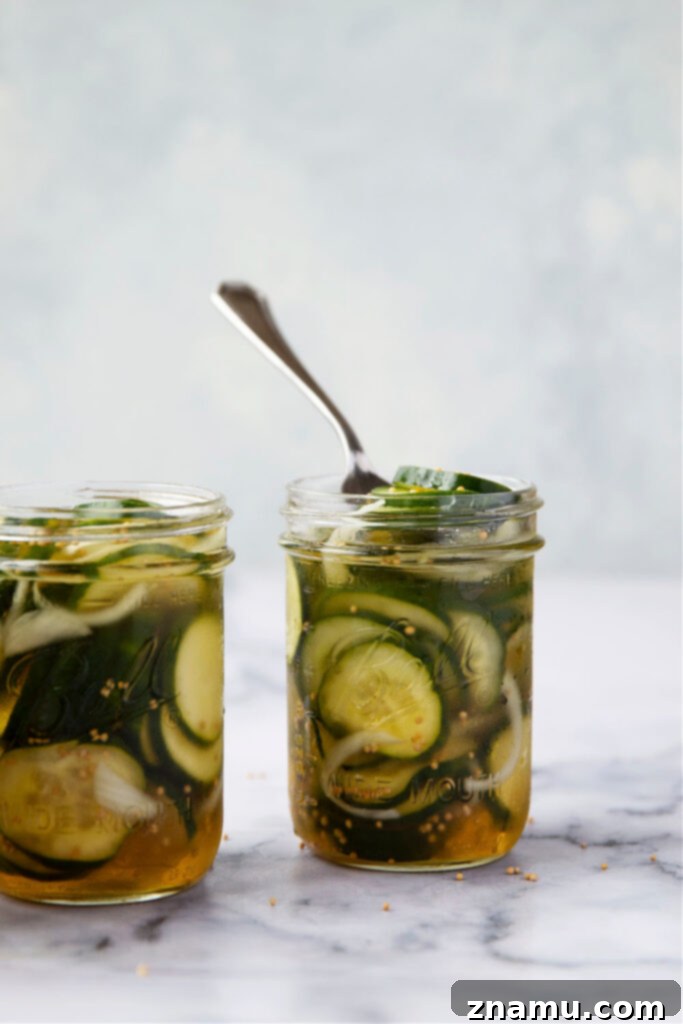
One of the many advantages of refrigerator pickles is their ease of storage. We highly recommend storing these delicious pickles in mason jars. Not only do they look charming, but mason jars also provide an airtight seal, perfect for maintaining freshness and for convenient serving. Your homemade refrigerator bread and butter pickles will keep exceptionally well in the refrigerator for up to 1 month. To ensure they retain their vibrant flavor and crisp texture, always make sure the cucumbers remain submerged in their brining liquid.
Can This Refrigerator Pickle Recipe Be Canned for Longer Storage?
This is one of the most frequently asked questions regarding refrigerator pickle recipes, and it’s a valid one! The short answer is: this specific recipe, as written, is designed for refrigerator storage and has not been officially tested for traditional hot-water bath canning. While some readers have reported success when adapting this recipe for canning, it’s crucial to understand the differences.
Traditional canning requires precise acidification levels and processing times to ensure food safety and prevent spoilage. Refrigeration provides a safe environment for these pickles due to the cold temperature, but canning requires a much more controlled environment to kill harmful bacteria. If you are interested in trying to can this recipe, we strongly advise you to consult reputable canning resources. Organizations like the National Center for Home Food Preservation provide comprehensive guides and tested recipes for safe canning practices. Always prioritize food safety when attempting to can, as improper canning can lead to serious health risks.
Serving Suggestions and Culinary Pairings for Your Pickles
These sweet, tangy, and incredibly crispy pickles are so good, you’ll find yourself eating them straight out of the jar – trust me, the pickle addiction is real! But beyond direct-from-the-jar snacking, these refrigerator bread and butter pickles are incredibly versatile and can elevate countless dishes. They are an absolute game-changer for:
- Sandwiches and Burgers: Their bright flavor cuts through rich meats and cheeses, adding a refreshing crunch.
- Hot Dogs and Sausages: A classic pairing that instantly upgrades your cookout fare.
- Charcuterie Boards: The tangy sweetness provides a perfect counterpoint to savory meats and sharp cheeses.
- Salads: Chop them up and toss them into potato salad, tuna salad, chicken salad, or even a simple green salad for an extra zing.
- Side Dish: Serve them alongside any meal that needs a burst of flavor and texture.
- Gifts: Pack them in decorative mason jars with a ribbon, and you have a thoughtful, delicious homemade gift for friends and family, especially in the summer.
We absolutely adore giving these pickles as gifts, but we always make sure to keep at least one jar on hand in our fridge. Priorities, folks!
Frequently Asked Questions (FAQ) About Refrigerator Pickles
Q: Why aren’t my pickles crisp?
A: The most common reasons for soggy pickles are not soaking them in salt long enough (or rinsing them thoroughly), slicing them too thick, or pouring hot brine over the cucumbers. Ensure cucumbers are thinly sliced, fully soaked, rinsed, and the brine is completely cooled before combining.
Q: Can I use a different type of vinegar?
A: Apple cider vinegar gives bread and butter pickles their characteristic flavor. While white vinegar can be used, it will result in a sharper, less nuanced taste. Other vinegars like rice vinegar or white wine vinegar may alter the flavor profile significantly.
Q: Can I reduce the amount of sugar in the recipe?
A: You can slightly adjust the sugar to your preference, but keep in mind that “bread and butter” pickles are inherently sweet. Reducing sugar too much will change their classic flavor and may also impact the texture slightly. For refrigerator pickles, the sugar contributes to both taste and texture, aiding in preservation within the fridge environment.
Q: What kind of cucumbers are best for pickling?
A: English cucumbers, Kirby cucumbers, or Persian cucumbers are excellent choices due to their thinner skin and smaller seeds. Any fresh, firm cucumber will work, but these varieties tend to yield the crispiest results.
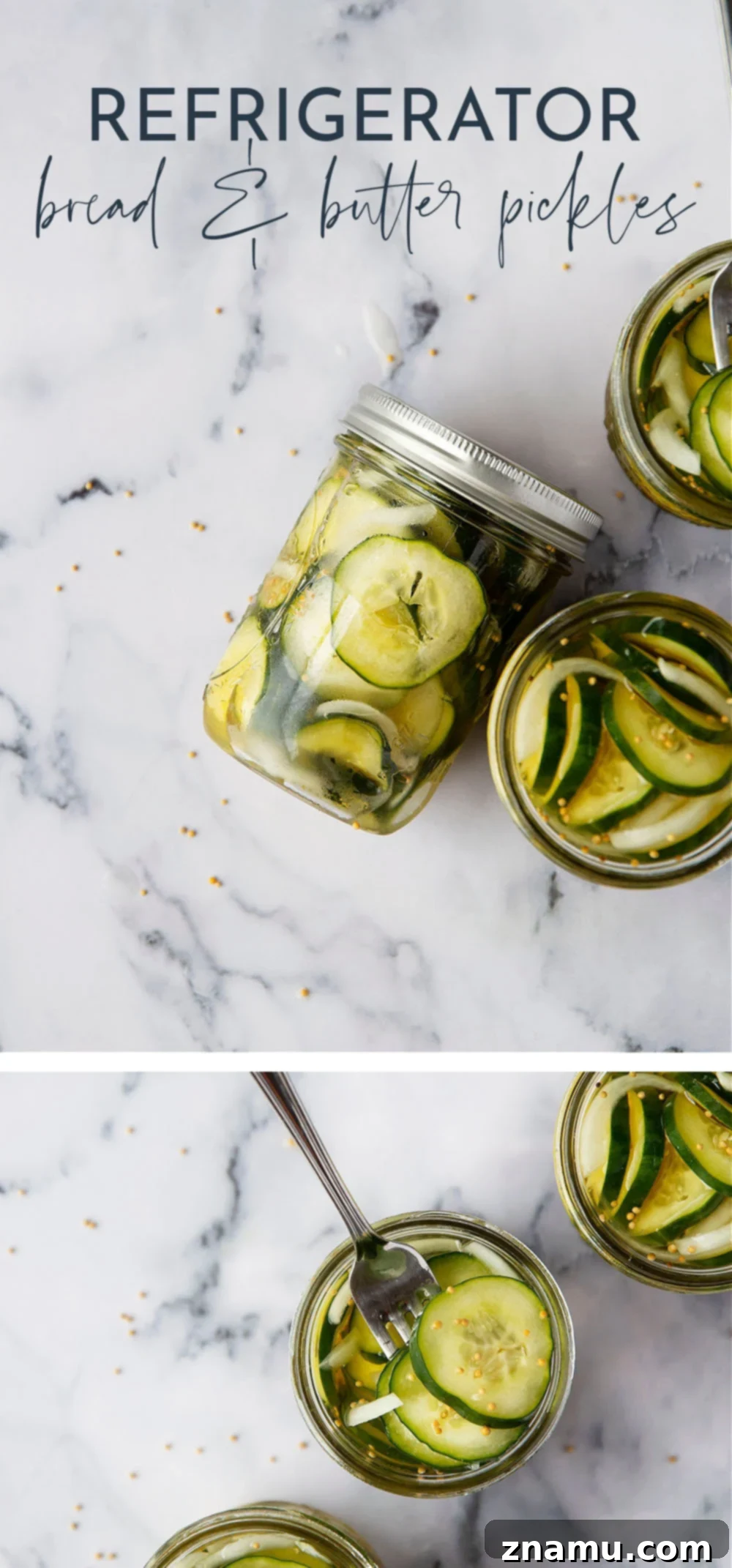
You can watch these pickles made step-by-step on Google Web Stories!
More Delicious Recipes to Pair with Your Pickles
Looking for some fantastic grilling inspiration to serve alongside your new favorite pickles? Try these out!
- Grilled Flat Iron Steak with Roasted Red Pepper Pesto
- Beer Marinated Chicken Kabobs with Spicy Pimento Cheese Dip

Overnight Refrigerator Bread and Butter Pickles Recipe
These overnight refrigerator bread and butter pickles are made entirely in the fridge and develop an amazing sweet, tangy, and crisp flavor. Make a big batch to enjoy for weeks!
This recipe may include paid links. As an Amazon Associate, I earn a commission from qualifying purchases.
Prep Time: 40 minutes
Chill Time: 12-24 hours
Total Time: Approximately 13 hours 40 minutes (including minimum chill time)
Yields: 1 quart of pickles
Ingredients
- 6 medium cucumbers, thinly sliced (about 8-10 cups)
- 1 medium sweet onion, thinly sliced
- 3 tablespoons kosher salt
- 1-1/2 cups granulated sugar
- 1/4 cup light brown sugar (or coconut sugar)
- 2 cups apple cider vinegar
- 3 teaspoons mustard seeds
Instructions
- In a large bowl, combine the thinly sliced cucumbers and onion with the kosher salt. Toss well to ensure everything is evenly coated. Place the bowl in the refrigerator and chill for 1 hour. This crucial step draws out excess water from the vegetables, promoting a crisp texture.
- After 1 hour, remove the cucumbers and onion from the refrigerator. Rinse them thoroughly with cold water several times under running water to remove all excess salt. Drain them very well, pressing gently to remove as much liquid as possible without crushing the slices. Divide the drained cucumbers and onion evenly among several pint jars (or one half-gallon jar).
- In a medium saucepan, combine the granulated sugar, light brown sugar, apple cider vinegar, and mustard seeds. Place the saucepan over medium heat, stirring continuously until all the sugars are completely dissolved and the mixture is smooth. Once dissolved, remove the saucepan from the heat and allow the brine to cool for at least 30 minutes. It’s essential that the brine is cool to prevent softening the cucumbers.
- Carefully pour an equal amount of the cooled brining liquid over the cucumbers and onions in each jar. Ensure that the vegetables are fully submerged in the brine. Screw the lids tightly onto the jars.
- Transfer the sealed jars to the refrigerator and chill overnight, for a minimum of 12 hours. This extended chill time allows the flavors to fully develop and the cucumbers to absorb the sweet and tangy brine, resulting in perfectly flavored, crisp pickles. Enjoy your homemade bread and butter pickles!
For a visual, step-by-step guide to making this recipe, consider checking out any accompanying video content if available on the original site.
Notes
Storing Instructions: These delightful refrigerator bread and butter pickles can be stored in an airtight container or mason jars in the refrigerator for up to 1 month. Always ensure the pickles remain submerged in their brine to maintain their flavor and texture.
Please refer to the detailed notes in the blog post above for comprehensive information and important considerations regarding traditional canning methods for this recipe, emphasizing food safety.
Tried this recipe? We’d love to hear from you! Leave a comment and rating below. Feel free to share a picture on Instagram and tag @wholeandheavenlyoven or hashtag it #wholeandheavenlyoven so we can see your delicious creations!
This recipe was updated with new photos and tips on June 30, 2021.