
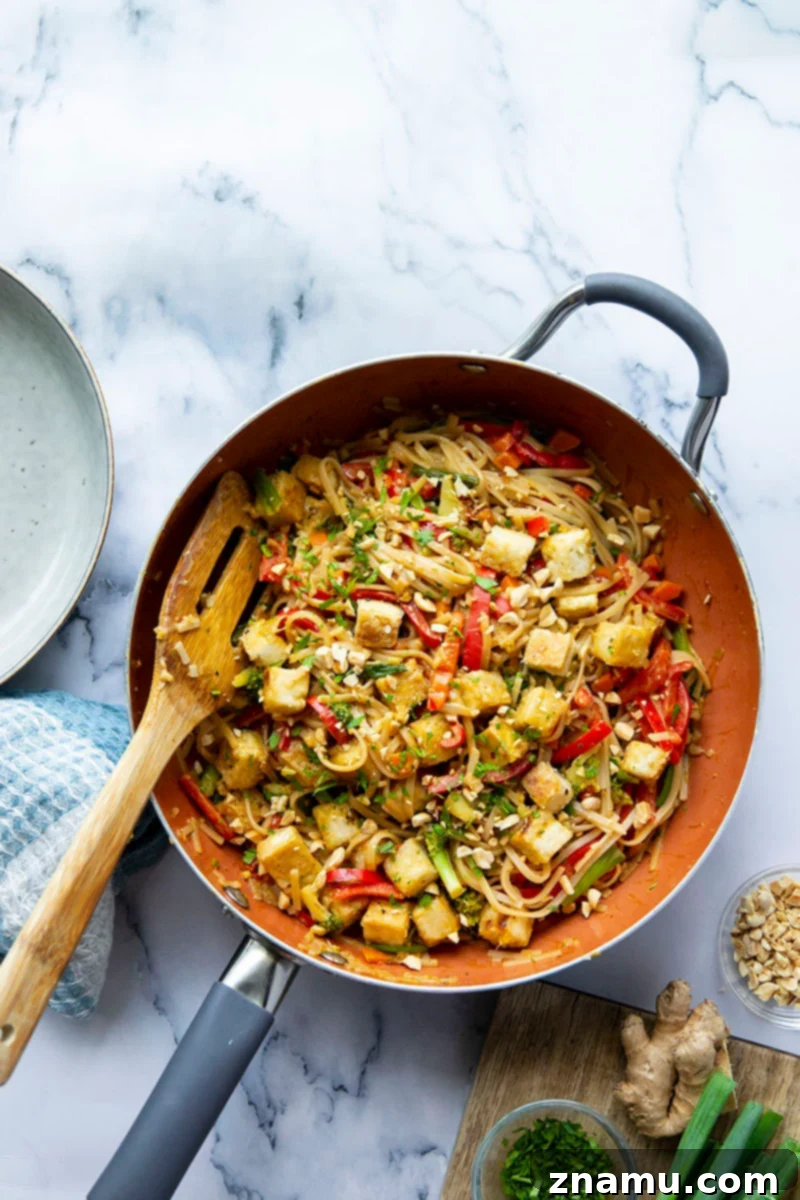
Irresistible Peanut Satay Noodles with Crispy Tofu
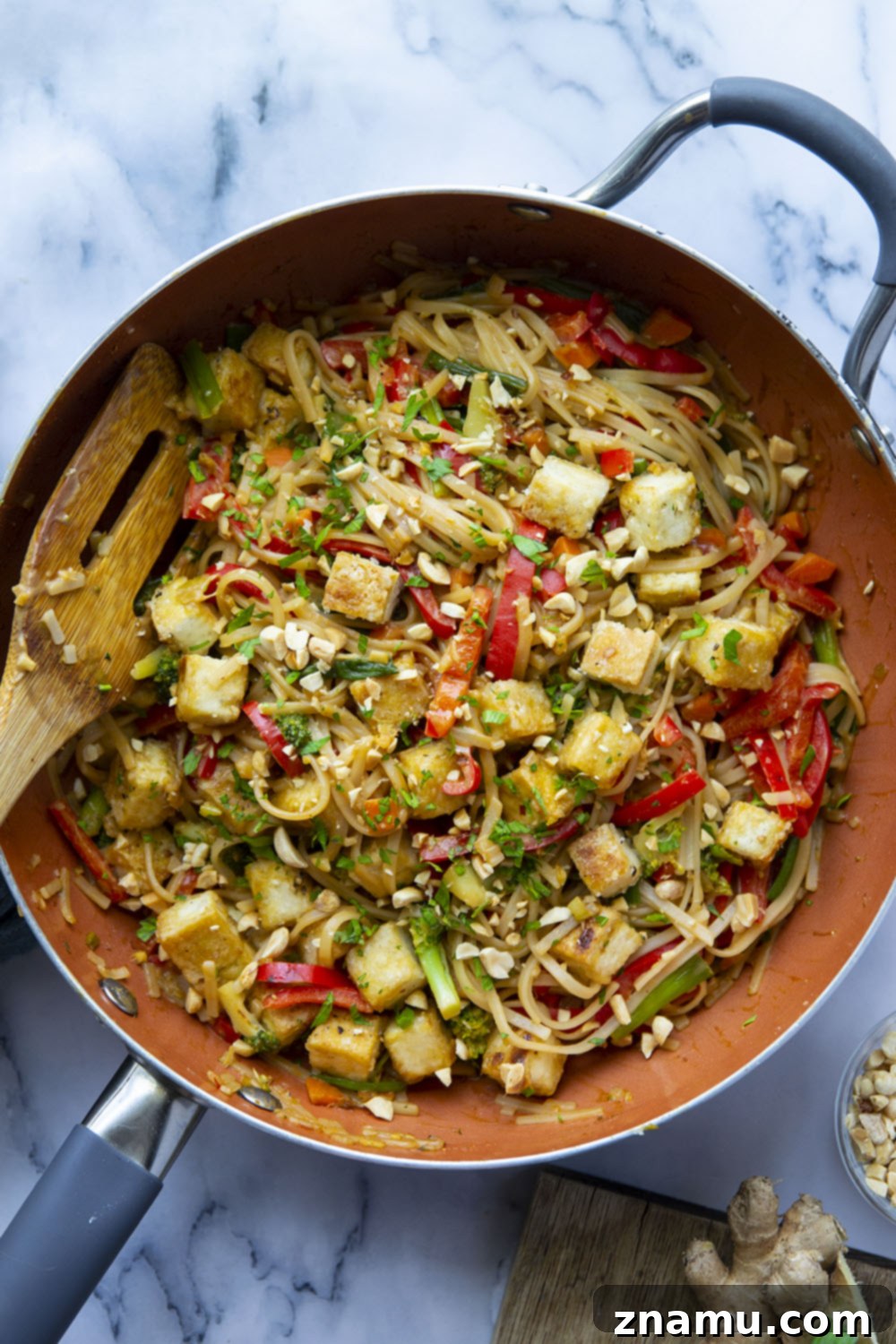
Indulge in these incredibly flavorful peanut satay noodles, generously packed with perfectly crispy tofu, a vibrant array of fresh vegetables, and tender noodles, all bathed in a rich, creamy, and irresistible peanut sauce.
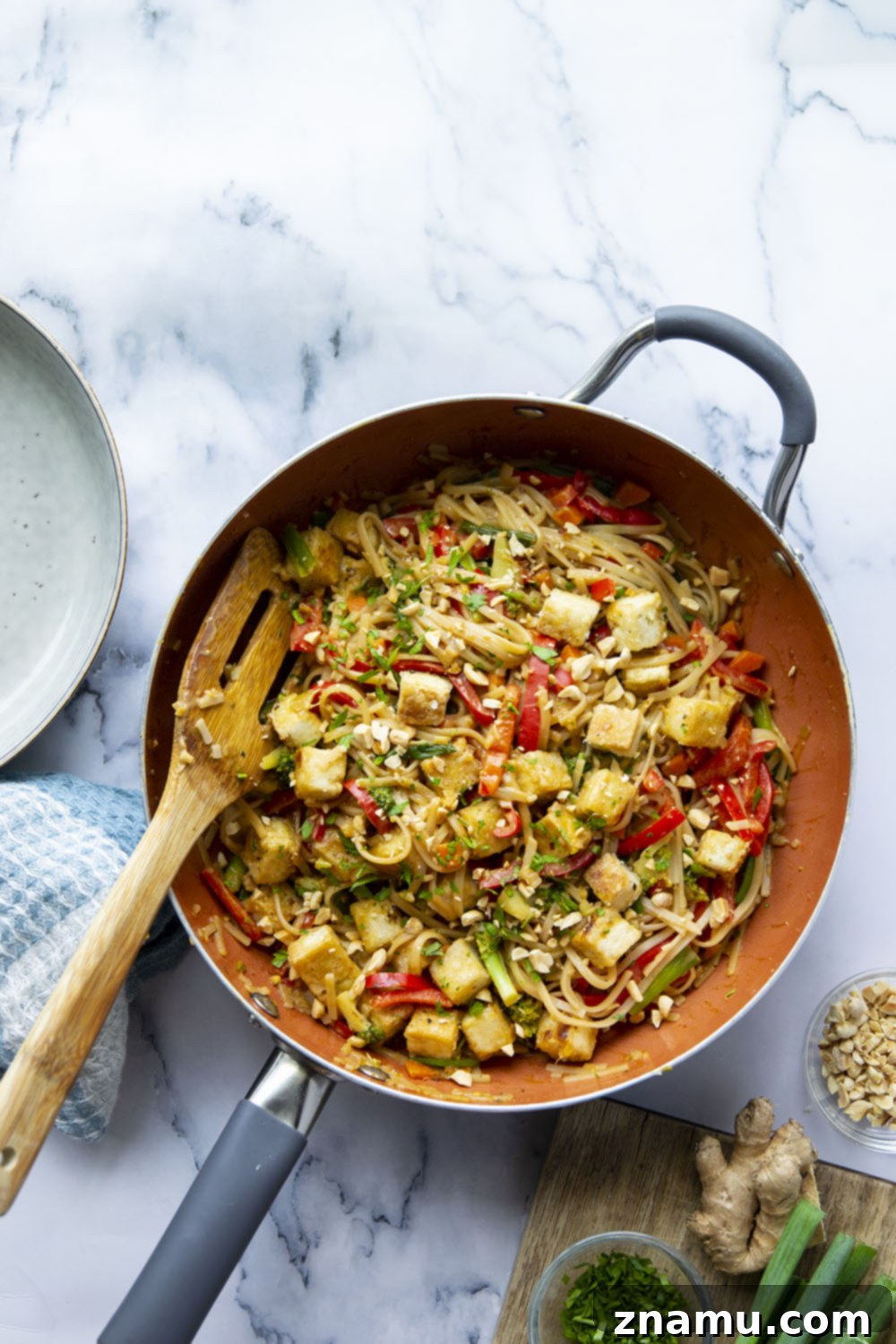
Imagine starting your week with a generous pan of these vibrant and deeply satisfying Peanut Satay Noodles. This dish isn’t just a meal; it’s a celebration of textures and flavors, ready to bring an explosion of joy to your dinner table. We’re talking about a vivid rainbow of perfectly sautéed vegetables, an abundance of slurpable noodles, and a satisfying amount of golden-brown crispy tofu that might just become your new favorite way to enjoy this versatile protein. Get ready to embrace your best skillet dinner life – where every bite is an adventure, and leftovers (if there are any!) are a welcome treat.
And yes, if the craving strikes, demolishing this deliciousness straight from the skillet with a fork is not only permitted but highly encouraged. Some meals are simply meant to be devoured with abandon, and these Peanut Satay Noodles undoubtedly fall into that category.
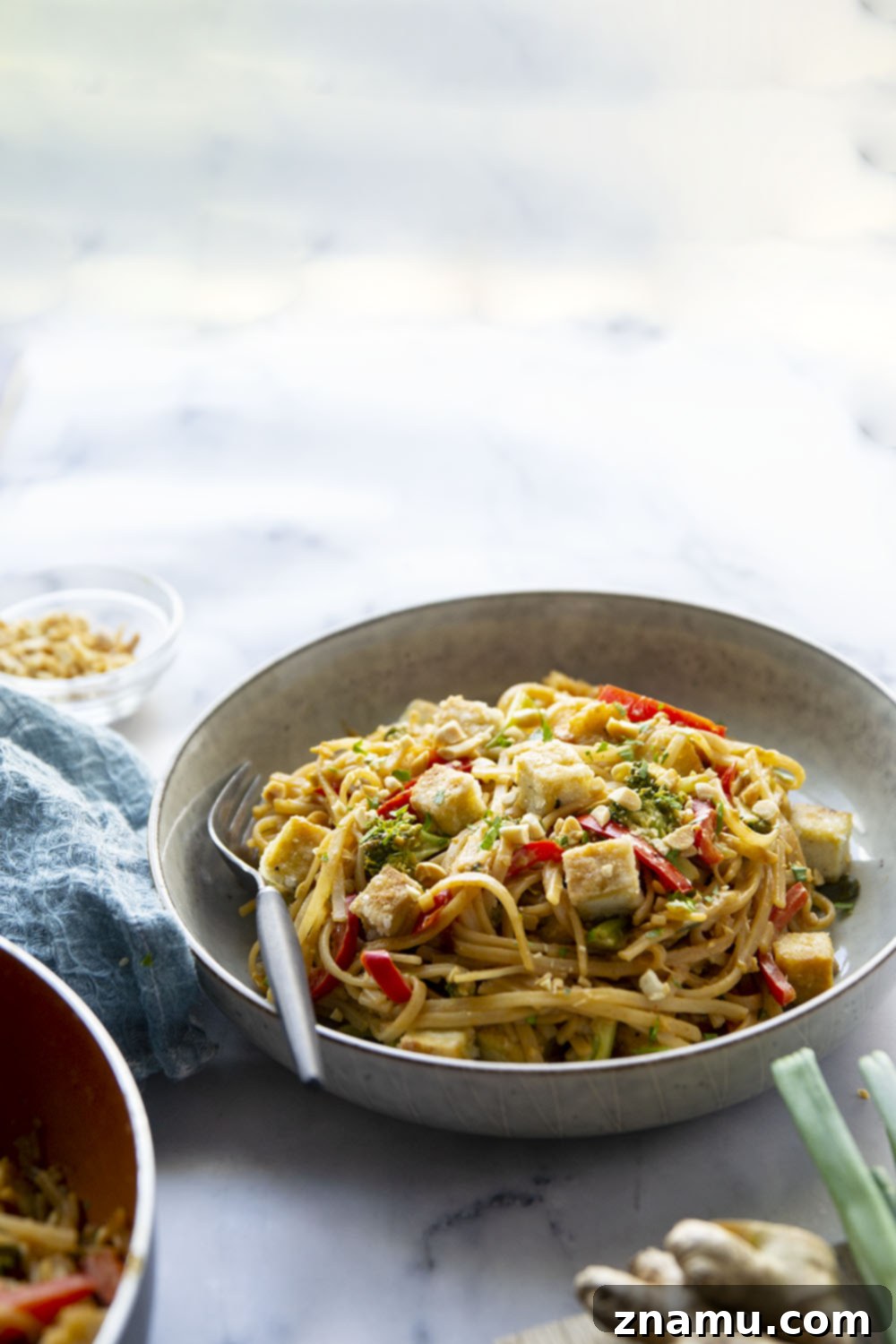
Even if you’ve been skeptical about tofu in the past, prepare to have your mind changed. The magic of this recipe lies in its ability to transform humble tofu into incredibly crispy, flavorful bites that perfectly complement the creamy peanut satay sauce. These noodles are genuinely hard to argue with, and perhaps even harder to resist reaching for a second, or even a third, helping.
Why These Peanut Satay Noodles Will Become Your New Favorite
This dish elevates classic Asian-inspired flavors to a whole new level, offering a symphony of tastes and textures that are both comforting and exciting. Here’s what makes our Peanut Satay Noodles truly shine:
- Silky Smooth & Flavor-Packed Peanut Satay Sauce: The heart of this dish is its perfectly balanced sauce – a harmonious blend of sweet, savory, tangy, and a touch of heat, coating every strand of tender pad Thai noodles.
- A Kaleidoscope of Sautéed Vegetables: Enjoy the vibrant colors and fresh crunch of beautifully cooked veggies, adding essential nutrients and a delightful crisp-tender bite.
- Addictively Crispy Pan-Fried Tofu: Say goodbye to bland tofu! Our method ensures each piece is golden, firm, and wonderfully crispy on the outside, providing a satisfying contrast to the soft noodles and creamy sauce.
- Quick & Easy Skillet Preparation: Designed for busy weeknights, this recipe comes together in one pan, minimizing cleanup and maximizing flavor.
Mastering Your Peanut Satay Noodles
Crafting these delicious noodles is simpler than you might think, especially when you break it down into a few key steps. From preparing the tofu to whisking the perfect sauce and combining all the elements, we’ll guide you through creating a dish that’s bursting with authentic satay flavor. (For the complete, printable recipe card with precise measurements, please scroll to the bottom of this page).
Essential Ingredients for Your Pantry
To embark on this culinary journey, gather these fresh and pantry staples:
- For the Crispy Tofu: Extra-firm tofu, cornstarch, vegetable oil, salt, and pepper.
- For the Irresistible Peanut Satay Sauce: Creamy peanut butter, low-sodium soy sauce, rice wine vinegar, agave nectar (or maple syrup), fresh grated ginger, minced garlic, and sriracha. A splash of water helps achieve the perfect consistency.
- For the Vibrant Noodles & Veggies: Pad Thai noodles, carrots, green onions, sweet bell pepper, broccoli, fresh cilantro, and chopped roasted peanuts for garnish.
The Art of Crispy Tofu: A Step-by-Step Guide
The secret to truly excellent pan-fried tofu lies in one crucial step: pressing. Even extra-firm tofu comes packed in water, and removing this excess moisture is key to achieving that desirable crispy, golden exterior. Don’t skip this part!
How to Perfectly Press Tofu: Begin by carefully slicing your block of extra-firm tofu horizontally into two even slabs. Arrange these slabs in a single layer on a clean kitchen towel. Place another clean kitchen towel on top of the tofu. Now, for the pressing: find something heavy – a large can of soup, a stack of cookbooks, or even a cast-iron skillet – and place it directly on top of the towels and tofu. Allow this setup to sit for a minimum of 30 minutes, ideally 60 minutes, to extract as much liquid as possible. The longer you press, the crispier your tofu will be!
Why Pressing Matters: Pressing not only allows the tofu to crisp up beautifully when fried but also creates a denser texture that absorbs flavors more effectively. Once pressed, your tofu is ready to be diced into bite-sized cubes, seasoned, and coated for its journey to crispy perfection.
Coating for Maximum Crunch: After pressing and dicing, a light coating of cornstarch is your best friend. This starchy layer creates a barrier that helps the tofu achieve a remarkably crunchy crust when it hits the hot oil. A simple toss in a bowl with cornstarch, a pinch of salt, and a dash of pepper is all it takes to prepare your tofu for its delicious transformation.
Expert Tips for Unforgettable Peanut Satay Noodles
Achieving restaurant-quality Peanut Satay Noodles at home is easier than you think with these expert tips:
- Cornstarch is Your Crispy Tofu Secret: As mentioned, don’t underestimate the power of cornstarch. A generous coating creates an incredibly satisfying crispy exterior on your pan-fried tofu, making it a textural highlight of the dish.
- Achieve Perfect Peanut Sauce Consistency: The peanut sauce needs to be smooth and pourable. Adding water, gradually, is key to thinning out the thick peanut butter into a luxuriously creamy and flavorful sauce that evenly coats every ingredient. Whisk until perfectly emulsified.
- Rinse Your Noodles for Success: After cooking your pad Thai noodles according to package directions, immediately rinse them thoroughly under cold water. This crucial step halts the cooking process, removes excess starch, and prevents the noodles from sticking together, ensuring a beautifully tender and separate texture.
- Sauté Vegetables to Crisp-Tender Perfection: You want your vegetables bright, colorful, and with a slight bite – not mushy. Sauté them briefly until they are just crisp-tender, as they will continue to cook slightly when combined with the hot sauce and noodles. This preserves their texture and nutrient content.
- Garnish Generously for Flavor and Crunch: The final touches make all the difference! A sprinkling of fresh minced cilantro adds a burst of herbaceous freshness, while chopped roasted peanuts provide an extra layer of nutty flavor and a delightful crunch, elevating the overall experience. Don’t skip these toppings!
Customizing Your Noodles: Endless Possibilities
One of the best things about these Peanut Satay Noodles is their versatility. Feel free to experiment and make them your own!
- Pasta Alternatives: While pad Thai noodles are classic, you can easily substitute them with other varieties. Try regular wheat pasta (like linguine or spaghetti), hearty lo mein noodles, or even thinner rice vermicelli for a different mouthfeel.
- Vegetable Swaps: Don’t limit yourself to just carrots, broccoli, and peppers. Shredded cabbage, sliced mushrooms, zucchini, summer squash, snow peas, or baby corn would all be excellent additions, allowing you to use seasonal produce.
- Add a Protein Boost: For those who enjoy meat, shredded chicken, thinly sliced steak, or shrimp would be fantastic additions. Cook them separately before combining with the sauce and noodles.
- Spice It Up: If you crave more heat, don’t hesitate to increase the amount of sriracha in the sauce. For a truly fiery kick, mince a serrano or habanero pepper and add it with the garlic and ginger.
Storing and Reheating Your Delicious Noodles
These Peanut Satay Noodles are perfect for meal prepping! They store wonderfully in the refrigerator for up to 6 days. Keep in mind that while the flavors will meld beautifully, the tofu won’t retain its initial crispiness after refrigeration. However, it will still be incredibly delicious and tender, having absorbed even more of that rich peanut sauce.
To reheat, simply microwave individual portions for 2-3 minutes, stirring at 30-second intervals, until the noodles are steaming hot. For an added boost of freshness and crunch, top your reheated bowl with some extra minced cilantro and a sprinkle of fresh roasted peanuts.
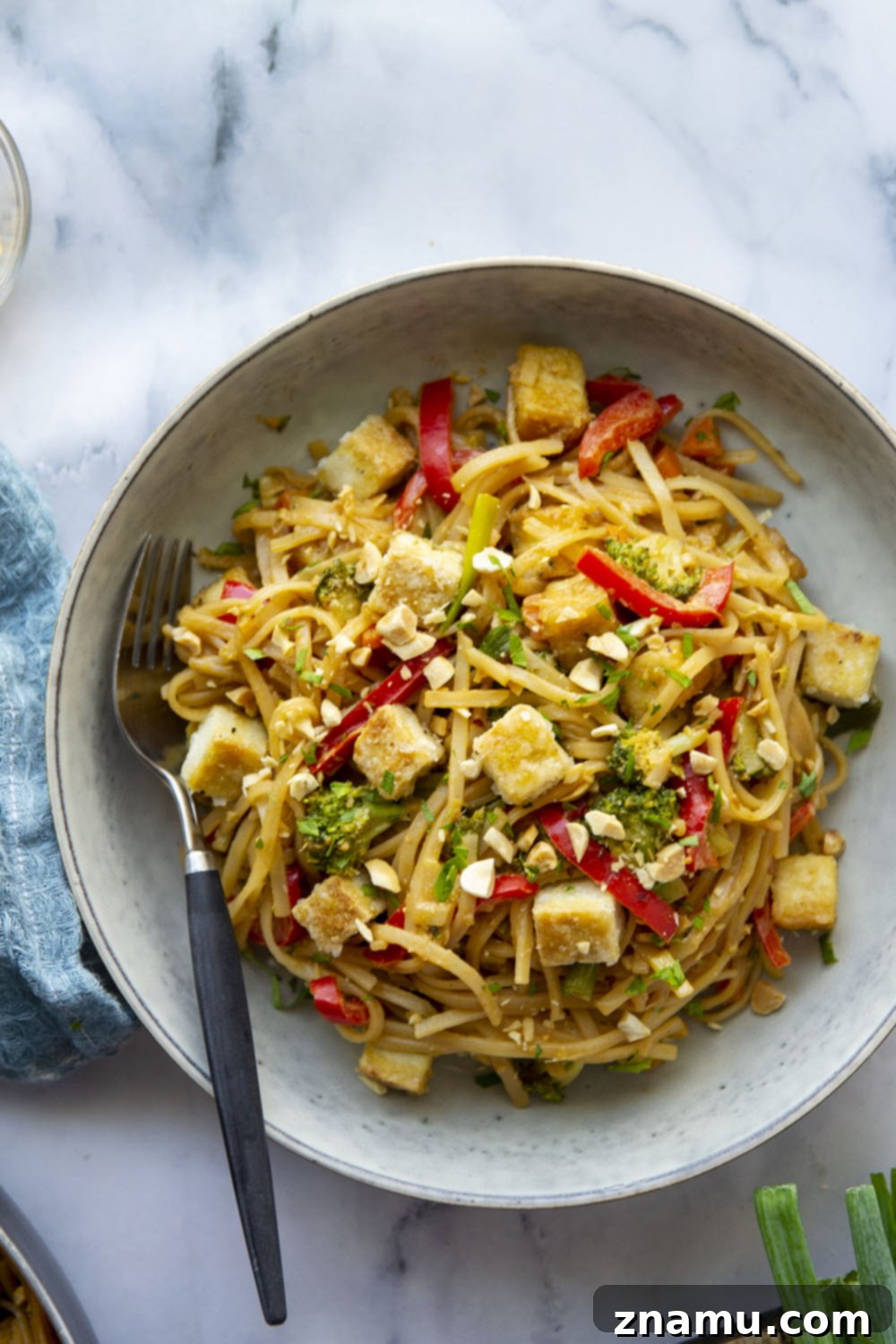
These noodles truly deliver an incredible spectrum of textures and flavors in every forkful. The satisfying crunch of the crispy tofu, combined with the luxurious creaminess of the peanut sauce and the tender snap of fresh vegetables, creates a harmonious culinary experience. You might just find these Peanut Satay Noodles replacing your usual takeout order – they’re simply too good, too easy, and too satisfying to resist.
If you give this recipe a try, we’d love to hear from you! Please leave a comment and a star rating below to share your experience. Don’t forget to snap a photo and tag it on Instagram with #wholeandheavenlyoven so we can see your amazing creations!
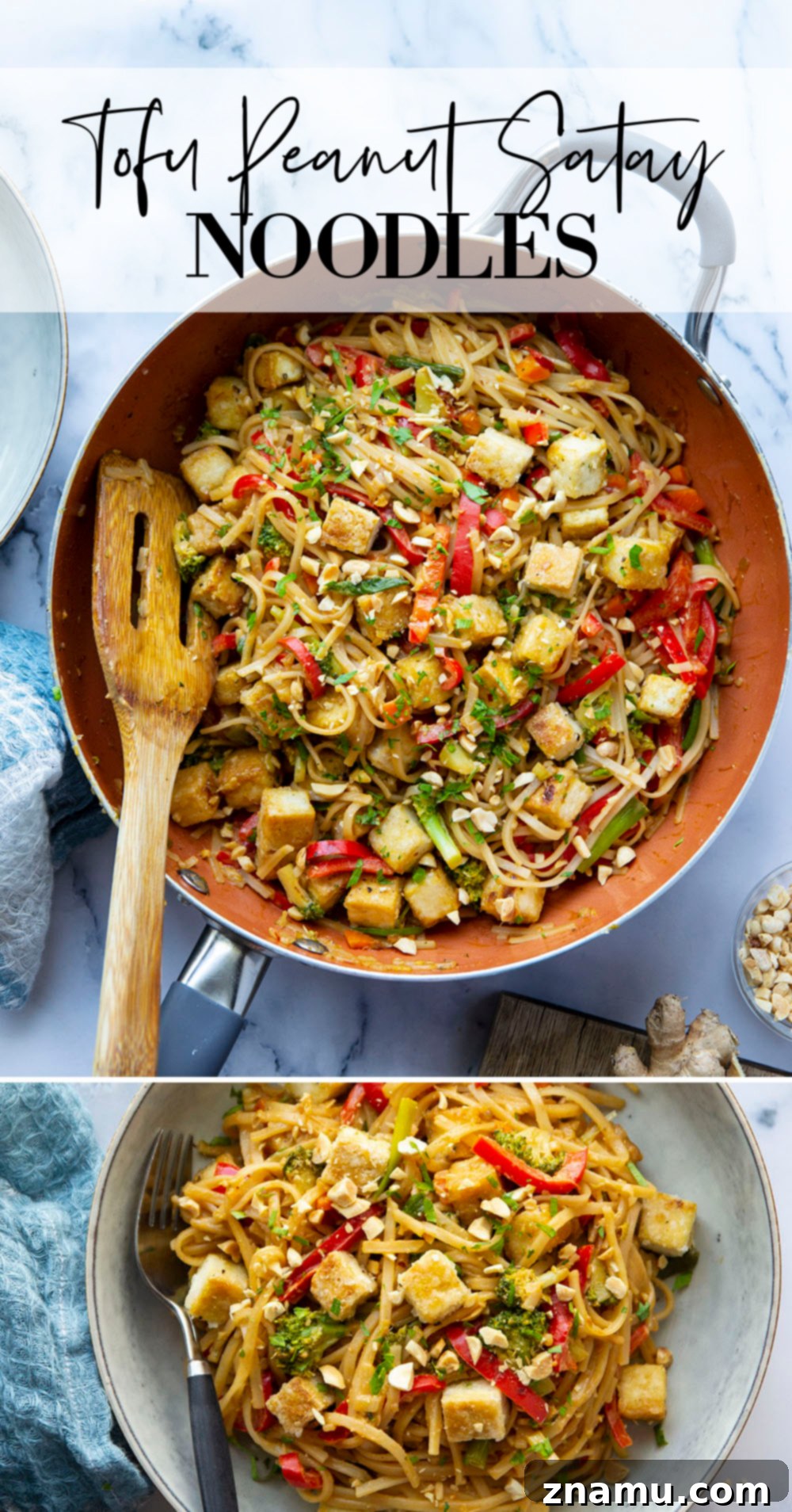
Discover more delicious skillet noodle dishes to inspire your next meal:
- Skillet Spicy Peanut Noodles
- Vegan Thai Drunken Noodles
- Garlic Sweet Pepper Steak Lo Mein
Print
Pin
Tofu Peanut Satay Noodles
This recipe may included paid links. As an Amazon Associate, I earn a commission from qualifying purchases.
Prep Time 20 minutes
Cook Time 20 minutes
Total Time 40 minutes
Servings 6 servings
Calories 373kcal
Ingredients
Peanut Sauce
- 1/4 cup creamy peanut butter
- 1/4 cup low-sodium soy sauce
- 2 tablespoons rice wine vinegar
- 1/3 cup water
- 2 tablespoons agave nectar or maple syrup
- 2 teaspoons grated fresh ginger
- 2 medium cloves garlic, minced
- 1-2 teaspoons sriracha hot sauce
Noodles
- 1 brick (12 oz) extra-firm tofu, pressed for 30-60 min and cut into 1/2-in cubes
- 1/4 cup cornstarch
- Salt and pepper to taste
- 3 tablespoons vegetable oil
- 1 medium carrot, finely diced
- 1 cup finely-chopped broccoli florets
- 1 medium sweet pepper, cut into 1/2-in strips
- 1 bunch green onions, green parts cut into 1-in pieces and white parts finely chopped
- 8 oz pad thai noodles, cooked according to package instructions
- 2 tablespoons minced fresh cilantro
- 2 tablespoons chopped roasted peanuts
Instructions
Peanut Sauce
-
In a small bowl, combine the creamy peanut butter, low-sodium soy sauce, rice wine vinegar, agave nectar (or maple syrup), grated fresh ginger, minced garlic, and sriracha hot sauce. Whisk vigorously until all ingredients are thoroughly combined and the sauce is smooth and creamy. Set this delectable sauce aside while you prepare the other components of your dish.
Noodles
-
After pressing your extra-firm tofu (as described in the “How to Press Tofu” section above), cut it into uniform 1/2-inch cubes. In a medium bowl, gently toss the tofu cubes with the cornstarch, 1/2 teaspoon of salt, and 1/4 teaspoon of black pepper until each piece is evenly coated. This coating is crucial for achieving that desirable crispy texture.
-
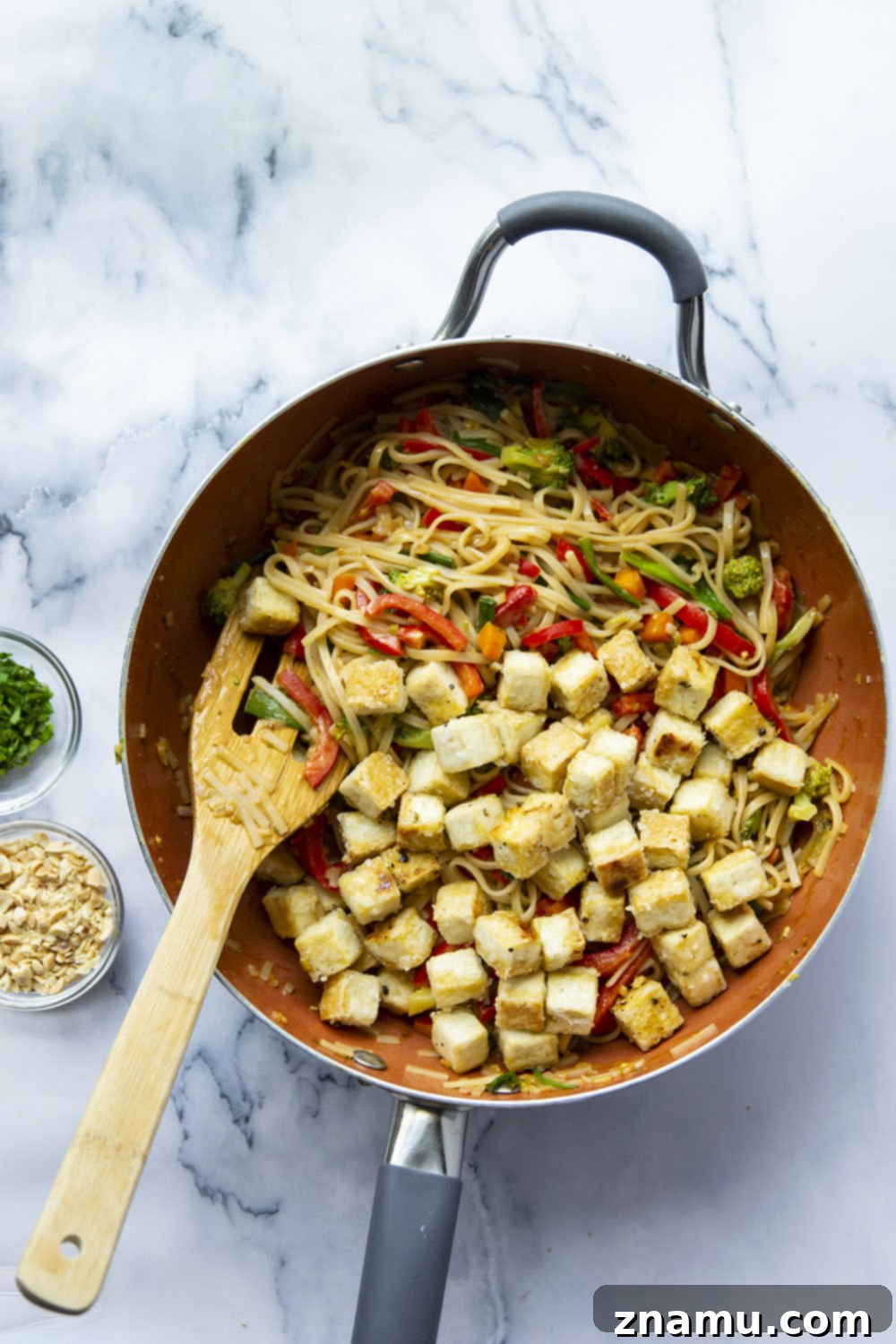
Heat 2 tablespoons of vegetable oil in a large nonstick skillet or wok over medium-high heat until shimmering. Carefully add the coated tofu cubes in a single layer, ensuring not to overcrowd the pan (cook in batches if necessary). Sear the tofu for several minutes on each side, turning occasionally, until all sides are beautifully golden-brown and crispy. Once cooked, transfer the crispy tofu to a plate lined with paper towels to drain any excess oil.
-
Add the remaining 1 tablespoon of vegetable oil to the same skillet. Once hot, add the finely diced carrots, finely-chopped broccoli florets, sweet bell pepper strips, and the white parts of the green onions. Sauté these vibrant vegetables for several minutes, stirring frequently, until they are crisp-tender – retaining a slight bite but softened. Then, stir in the green parts of the green onions and cook for an additional minute or two until they are slightly wilted.
-
Pour your prepared peanut satay sauce into the skillet with the sautéed vegetables. Add the cooked and rinsed pad Thai noodles. Toss everything together thoroughly, ensuring the noodles and vegetables are fully coated in the luscious sauce. Cook for several minutes, stirring gently, until the sauce is bubbly and the noodles are heated through. Finally, fold in the crispy tofu, minced fresh cilantro, and chopped roasted peanuts. Stir well to combine all the wonderful textures and flavors.
-
Taste the noodles and adjust seasoning with additional salt and pepper as needed. Serve your Peanut Satay Noodles immediately, while warm and fresh, to best enjoy the crispy tofu and tender vegetables. Enjoy your flavorful creation!
Notes
Store any leftover Peanut Satay Noodles in an airtight container in the refrigerator for up to 6 days. While the tofu may lose some of its crispiness upon refrigeration, the flavors will continue to meld and deepen, making for delicious leftovers.
Nutrition
Tried this recipe?Leave a comment and rating below. Feel free to share a picture on Instagram and tag @wholeandheavenlyoven or hashtag it #wholeandheavenlyoven