
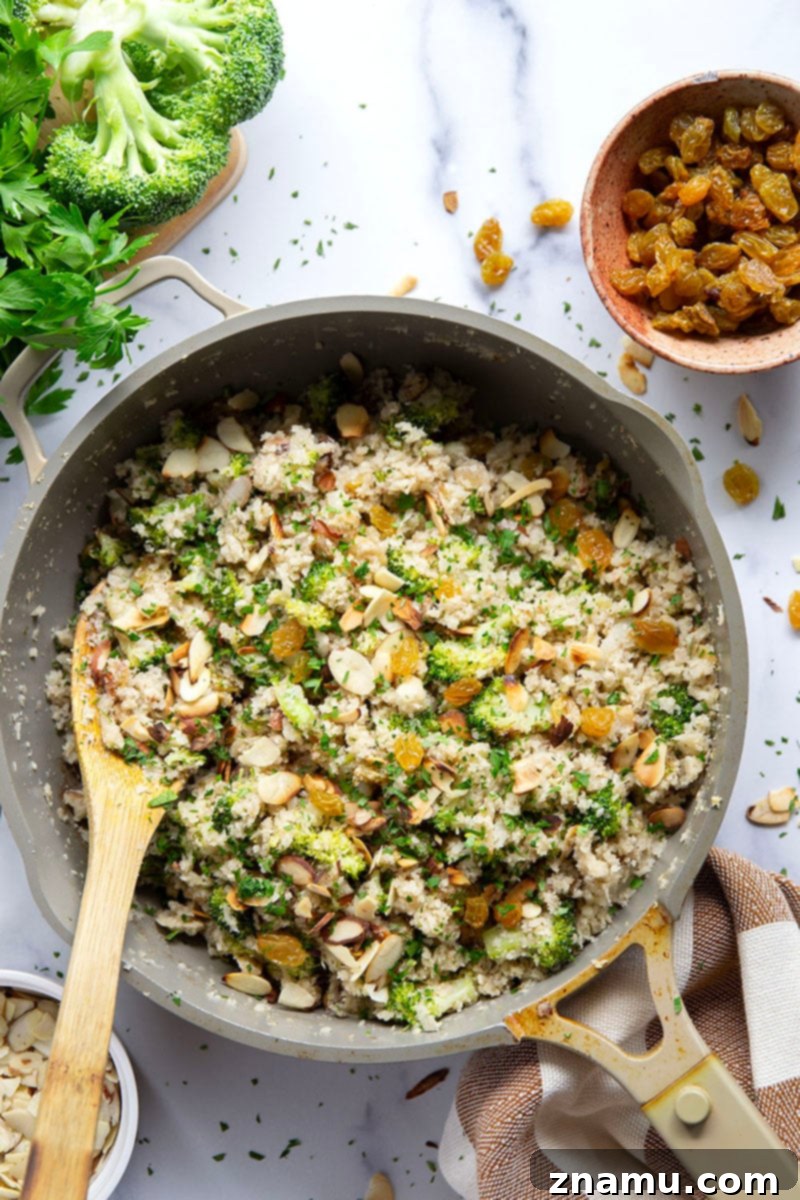
Discover the ultimate low-carb side dish with this incredible Cauliflower Rice Pilaf! Made entirely from finely riced cauliflower, it’s unbelievably fluffy and bursting with flavor from tender broccoli florets, crunchy toasted almonds, and sweet golden raisins. Prepare to be amazed by this healthy, vibrant alternative to traditional rice pilaf.
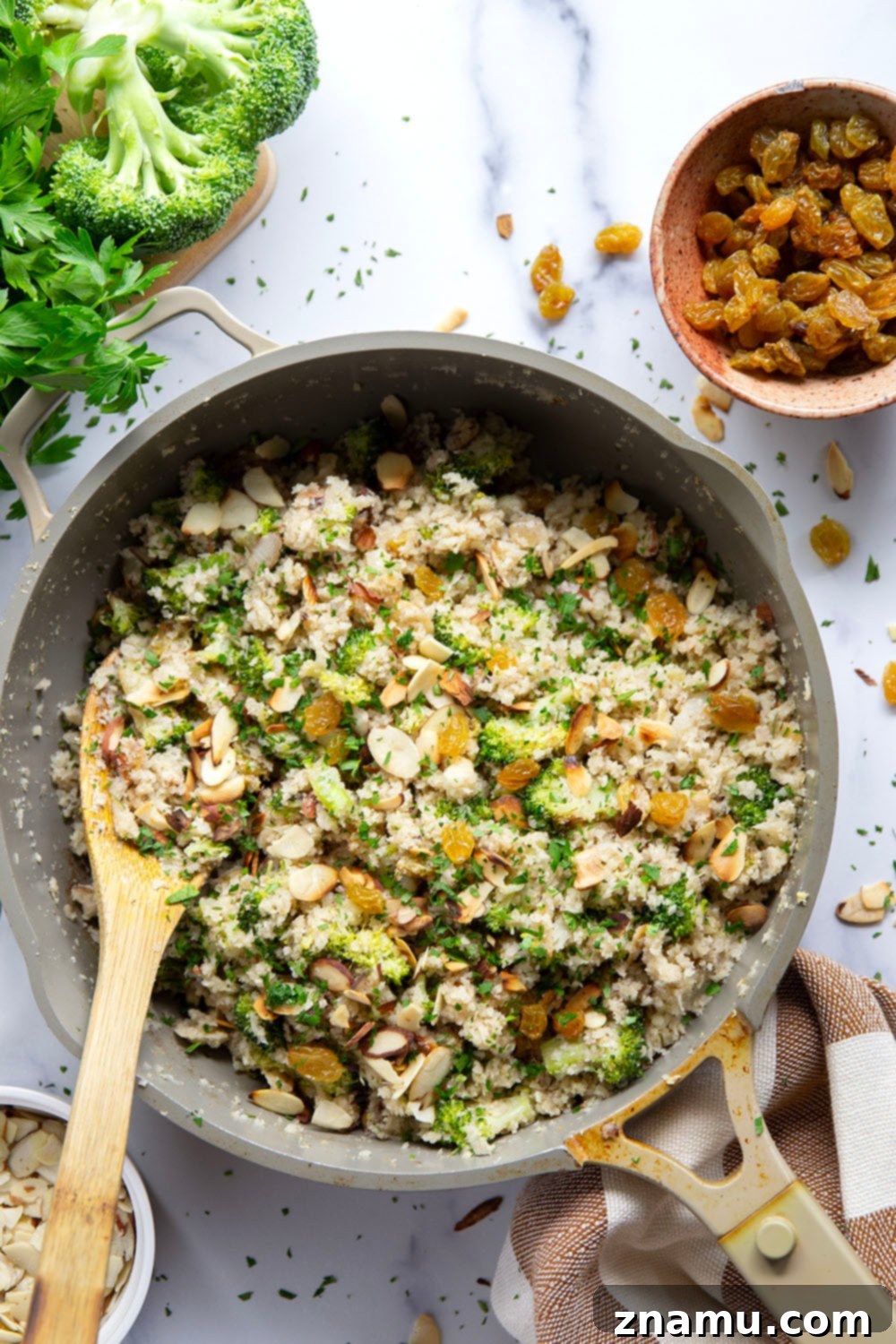
Transform your dinner table with a side dish that not only looks like a golden pan of rice but delivers on flavor and health benefits without the extra carbs. This isn’t just a clever substitute; it’s a culinary revelation that will quickly become a household favorite. This healthy cauliflower pilaf promises to be a versatile and satisfying addition to any meal, proving that nutritious eating can be incredibly delicious.
As you might suspect, the “rice” in this delightful pilaf is ingeniously crafted from cauliflower. Fresh cauliflower florets are expertly ground into rice-shaped pieces, creating a convincing and delicious base. It’s a testament to the versatility of this humble vegetable, performing its role so convincingly that you’ll barely notice the difference from traditional grain-based pilaf. This low-carb cauliflower rice pilaf is not just a healthy swap; it’s a flavorful experience that stands proudly on its own, offering a nutritious and satisfying addition to any meal.
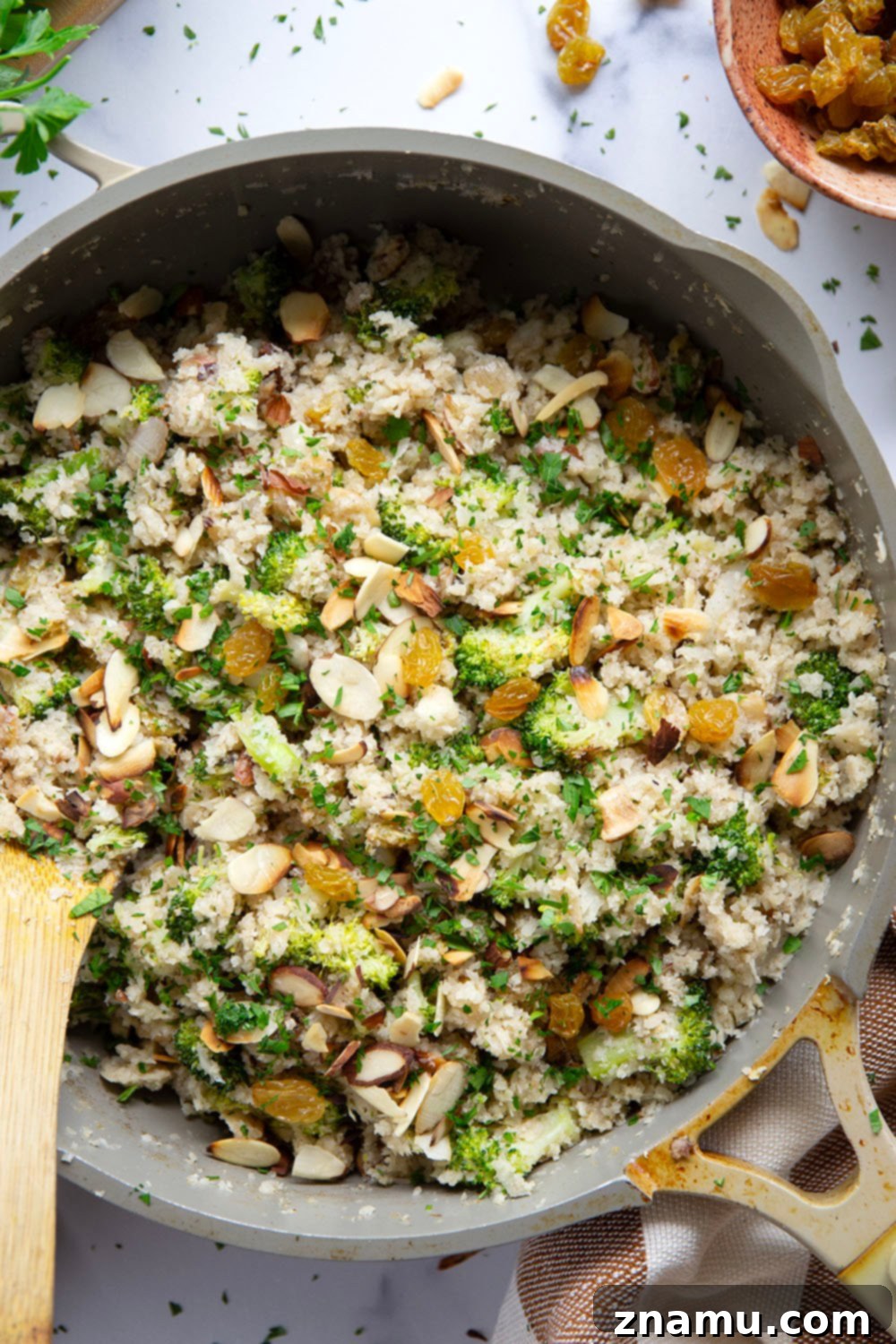
Cauliflower has truly mastered the art of culinary disguise, and you are going to absolutely love its ingenious “sneakiness” in this recipe, trust us. It offers a light yet satisfying texture, making it an ideal canvas for the vibrant flavors we’re about to introduce. This recipe maximizes cauliflower’s potential, turning it into a healthy side dish that’s both wholesome and incredibly appealing. Say goodbye to heavy, carb-laden sides and hello to a fresh, nutritious alternative that doesn’t compromise on taste or texture.
Why You’ll Love This Cauliflower Rice Pilaf
This cauliflower rice pilaf isn’t just a dish; it’s a testament to how healthy eating can be incredibly delicious and accessible. Whether you’re aiming for a low-carb diet, reducing gluten intake, or simply looking for a fresh and flavorful side, this healthy cauliflower pilaf recipe ticks all the boxes. Here’s what makes this pilaf an absolute must-try for your next meal:
- Perfectly Tender, Homemade Cauliflower Rice: Forget bland, frozen cauliflower rice! Our recipe utilizes fresh cauliflower, riced at home to achieve an incredibly fluffy, tender, and authentic rice-like texture. This homemade approach ensures a superior flavor and consistency, forming the wholesome and delicious foundation of our pilaf, perfectly absorbing all the wonderful flavors it’s cooked with. It’s a game-changer for anyone seeking a true low-carb rice alternative.
- Vibrant Sautéed Broccoli and Shallot: Fresh broccoli florets are finely chopped and sautéed to a tender-crisp perfection alongside fragrant shallots. This dynamic duo adds a beautiful pop of color, essential vitamins and minerals, and a delicate oniony sweetness to the dish. The sautéing process enhances their natural flavors, contributing to a wonderfully balanced and nutritious broccoli cauliflower pilaf.
- Delightful Crunchy Toasted Almonds: A handful of perfectly toasted sliced almonds introduces a craveable crunch and a rich, earthy depth to the pilaf. These healthy fats not only add incredible texture but also contribute to the dish’s satisfying nature, making every bite an exciting blend of soft and crisp. Toasting them highlights their natural nutty flavor, elevating the entire dish.
- Sweet and Soft Golden Raisins: Golden raisins bring a burst of natural sweetness and a lovely chewiness, balancing the savory elements of the pilaf. Their soft texture and mild fruitiness complement the other ingredients beautifully, adding an unexpected but welcome layer of flavor complexity that will tantalize your taste buds.
- Ready in Only 30 Minutes: Time is precious, and this low-carb cauliflower pilaf respects that! The entire dish comes together in approximately 30 minutes, from prep to plate. This makes it an ideal option for busy weeknights, last-minute gatherings, or whenever you need a speedy yet impressive and healthy side dish.
- Made with a Handful of Simple Ingredients: You don’t need exotic items to create culinary magic. This recipe relies on a handful of readily available, wholesome ingredients to create a sophisticated and healthy pilaf. Each component plays a crucial role, contributing to a symphony of flavors without unnecessary complexity, ensuring a delicious and straightforward cooking experience.
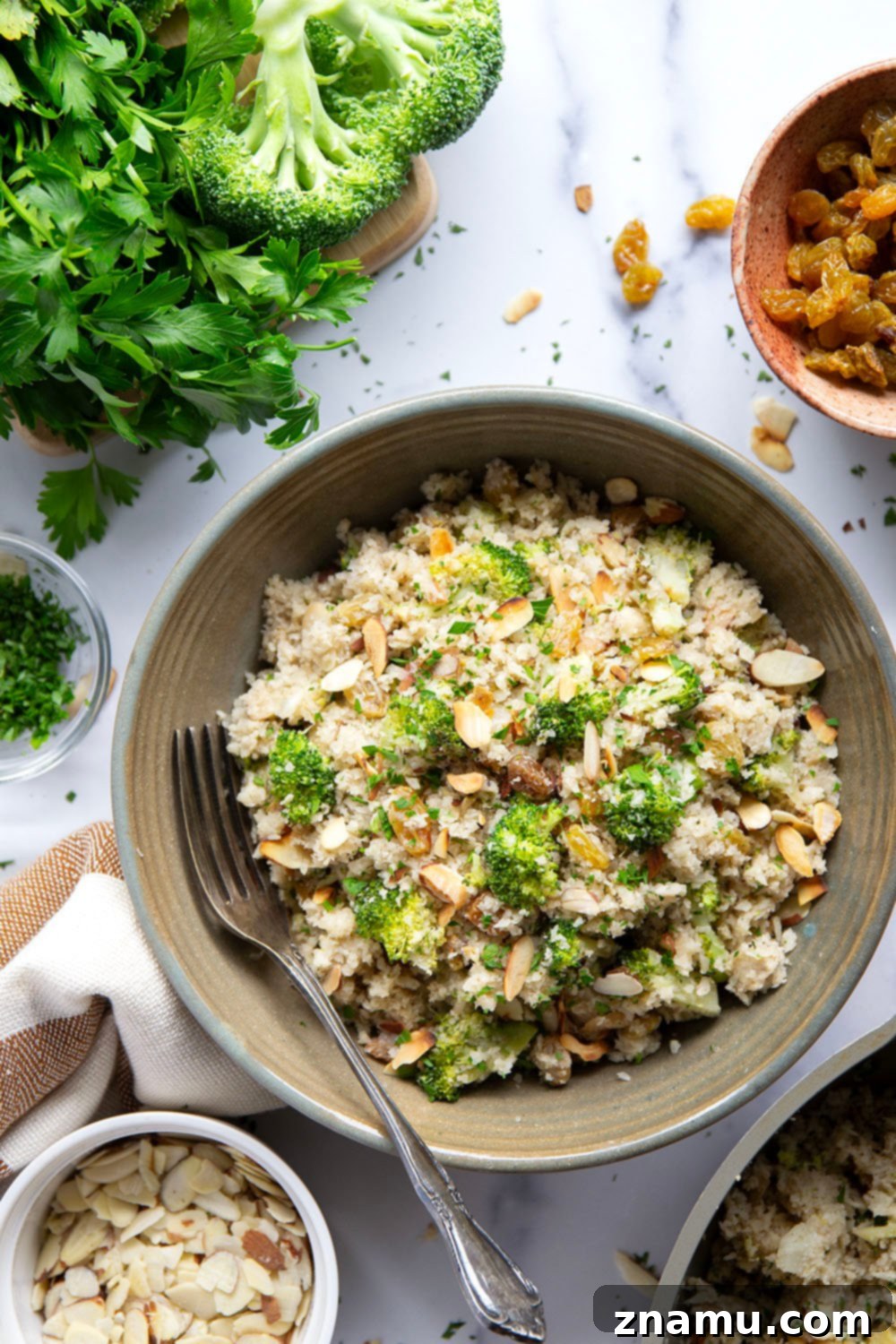
Crafting Your Cauliflower Rice Pilaf: A Step-by-Step Guide
Creating this flavorful cauliflower rice pilaf is a straightforward process, ensuring a delicious outcome even for novice cooks. We’ll walk you through each stage, from preparing your cauliflower to achieving the perfect blend of textures and tastes. This detailed guide ensures you get a perfectly cooked, healthy side dish every time. (For the complete, printable recipe card with exact measurements, please scroll to the bottom of this post).
Essential Ingredients for Your Healthy Pilaf
Gathering your ingredients ahead of time makes the cooking process smooth and enjoyable. Here’s a detailed look at what you’ll need to create this exceptional low-carb cauliflower rice pilaf:
- Cauliflower: The undeniable star of our pilaf, providing the nutritious and low-carb “rice” base. Opt for a firm, fresh head of cauliflower for the best results.
- Unsalted Butter: Essential for sautéing and adding a rich, luxurious flavor that perfectly complements the vegetables and the riced cauliflower. Using unsalted butter allows you to control the overall saltiness of the dish.
- Shallot: Offers a delicate, sweet onion flavor that is milder and more refined than regular onions, contributing a subtle aromatic depth without overpowering other ingredients.
- Broccoli: Adds vibrant green color, a pleasant tender-crisp texture, and a significant boost of essential vitamins and antioxidants to our broccoli cauliflower pilaf.
- Garlic: A foundational aromatic that infuses the entire pilaf with its pungent, savory depth, enhancing all the other flavors.
- Almonds (Toasted & Sliced): These are crucial for adding a delightful crunch and a distinct nutty flavor that contrasts beautifully with the softer elements of the pilaf. Toasting them intensifies their flavor and aroma.
- Golden Raisins: Provide a burst of natural sweetness and a lovely soft, chewy texture. Their mild fruitiness acts as a wonderful counterpoint to the savory components.
- Fresh Parsley: A bright, herbaceous finish that adds a touch of fresh flavor and a beautiful splash of green, making the dish visually appealing.
- Salt and Pepper: Fundamental seasonings to enhance and balance all the flavors in the pilaf. Always season to taste for the perfect finish.
Mastering the Art of Cauliflower Ricing
Making homemade riced cauliflower is surprisingly simple and yields the best texture for this low-carb pilaf, far superior to store-bought versions. All you need is a food processor to transform fresh cauliflower florets into perfect rice-like grains.
- Prepare the Cauliflower: Start by washing and thoroughly drying your head of cauliflower. Remove any green leaves and the tough core. Cut the cauliflower into medium-sized florets. It’s important to keep the florets relatively uniform in size for even processing in the food processor.
- Process in Batches: Place about 1-2 cups of cauliflower florets into your food processor bowl. Be careful not to overcrowd the bowl, as this can lead to uneven ricing. Secure the lid.
- Pulse to Rice Consistency: Pulse the florets several times using short bursts (typically 10-15 pulses, depending on your processor). The goal is to grind the cauliflower into fine, rice-sized pieces, resembling couscous or fine rice grains. Avoid over-processing, which can turn it into a purée or a mushy consistency. Check the texture frequently. Repeat with remaining cauliflower until all is riced.
Pro Tip: Prepare Ahead! Riced cauliflower is a fantastic ingredient for meal prep. Once riced, it can be stored in an airtight container in the refrigerator for up to 4 days. This makes subsequent cooking incredibly efficient and ensures this healthy cauliflower pilaf can come together even faster on a busy weeknight.
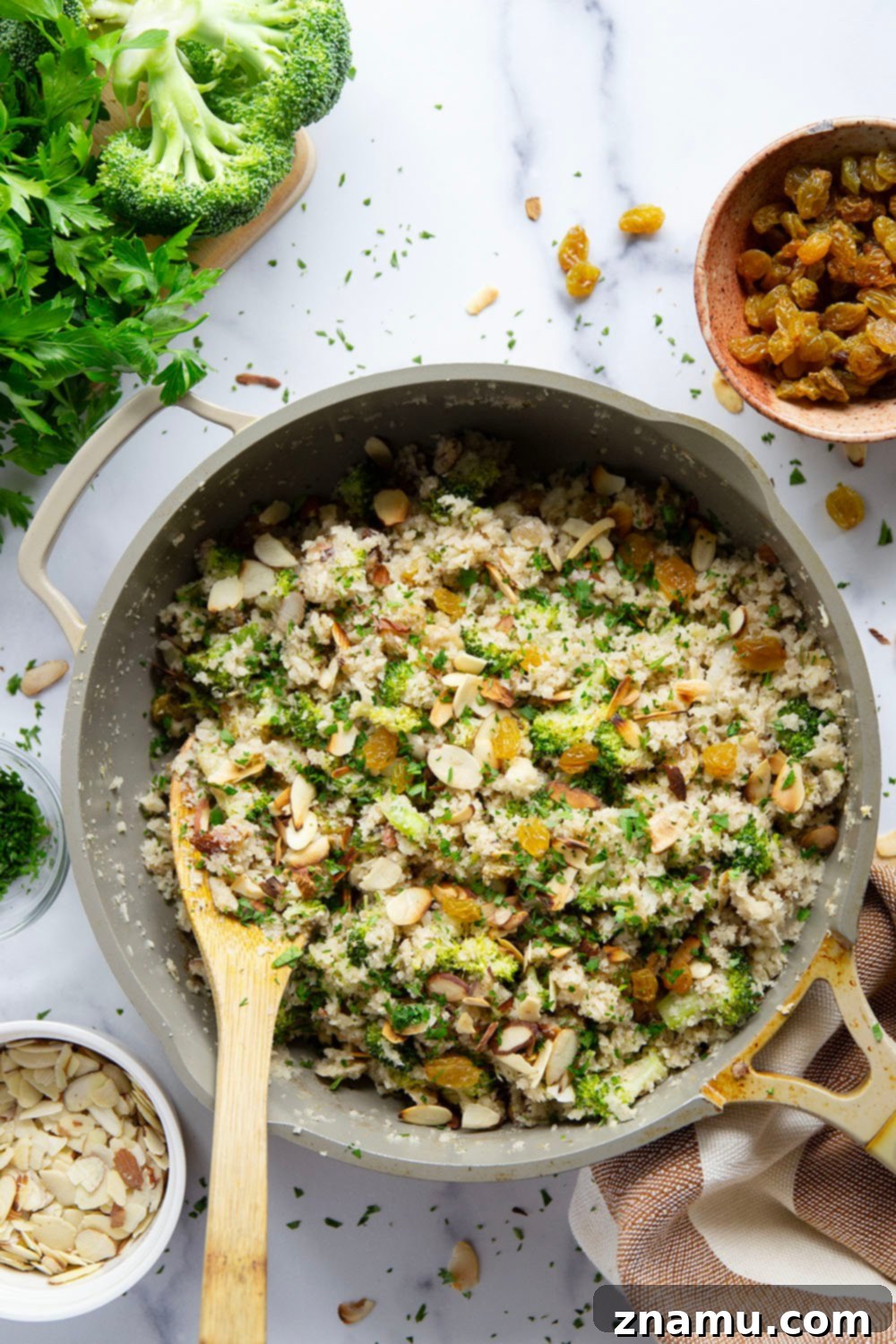
Expert Tips for the Most Flavorful Cauliflower Pilaf
Achieving a restaurant-quality cauliflower rice pilaf is all about paying attention to a few simple yet crucial details. These tips will help you unlock the best flavors and textures, ensuring your pilaf is fluffy, crunchy, and absolutely delicious every time you prepare this healthy side dish.
- Finely Chop Your Broccoli for Even Cooking: For an optimal cook time and to ensure the broccoli blends seamlessly into the pilaf’s texture, it’s essential to chop it finely. Smaller, uniform pieces will cook more quickly and evenly, becoming tender-crisp without overpowering the delicate cauliflower. This also helps distribute the vibrant green color and valuable nutrients throughout the dish, making every spoonful a balanced bite.
- Don’t Skip Toasting the Almonds for Enhanced Flavor: This step is an absolute game-changer for enhancing both flavor and texture. Spread your sliced almonds in a single layer in a dry, nonstick pan over medium heat. Toast them gently, stirring frequently, until they turn a light golden brown and release a fragrant, nutty aroma. This process amplifies their natural flavor and gives them a satisfying, irresistible crunch that contrasts beautifully with the soft pilaf base.
- Sauté the Riced Cauliflower to Perfection: The secret to fluffy, tender cauliflower rice that truly mimics traditional grains is a quick and efficient sauté on the stovetop. Cook the riced cauliflower over medium-high heat, stirring occasionally, until it softens and loses its raw crispness. This brief cooking period is key to developing its desired texture and allows it to absorb the savory flavors of the butter, shallots, and garlic, making it incredibly flavorful and light. Be careful not to overcook, as it can become mushy.
- Season Generously and Taste as You Go: Cauliflower rice, being neutral in flavor, benefits greatly from proper seasoning. Add salt and freshly ground black pepper throughout the cooking process and especially at the end. Taste and adjust as needed. A well-seasoned pilaf makes all the difference in highlighting the natural goodness of the ingredients and ensuring a truly delicious experience.
- Avoid Overcrowding the Pan: When sautéing the broccoli and cauliflower, make sure not to overcrowd your skillet. Cooking in batches if necessary will ensure the vegetables properly sauté and brown, rather than steam, leading to better flavor and texture.
Creative Recipe Variations to Explore
This cauliflower rice pilaf is wonderfully versatile, serving as an excellent base for various flavor modifications. Feel free to get creative and customize this healthy side dish to your taste preferences or what you have on hand. Here are some inspiring ideas to put a different twist on this classic low-carb cauliflower pilaf:
- Experiment with Different Dried Fruits: While golden raisins provide a delightful sweetness, other dried fruits can offer unique flavor profiles and textures. Try chopped dried apricots for a tangy and chewy addition, regular dark raisins for a richer sweetness, or dried cranberries for a tart counterpoint that also adds a beautiful splash of color. Figs or dates, finely diced, could also offer a more intense, caramelized sweetness.
- Swap Out the Nuts for Variety: Almonds provide a fantastic crunch, but other toasted nuts can bring different textures and flavors to your pilaf. Toasted walnuts offer an earthy, robust taste; pecans add a buttery richness; and pine nuts contribute a delicate, slightly sweet note. For an even more exotic twist, try pistachios or cashews. Remember to toast them lightly for the best flavor and aroma.
- Incorporate More Vibrant Veggies: Boost the nutritional content and add even more color and texture with additional vegetables. Quick-cooking options like frozen peas (added at the very end), finely diced sweet bell pepper (red, yellow, or orange), or fresh corn kernels (cut from the cob or frozen) can be stirred in during the last few minutes of cooking for a fresh burst. Leafy greens like spinach or kale can also be wilted in at the end for extra vitamins.
- Add a Citrusy Zing: A generous squeeze of fresh lemon or lime juice or a sprinkle of their zest at the very end can brighten up the entire dish, adding a refreshing counterpoint to the rich flavors and lifting the overall profile.
- Introduce Herbs and Spices for Global Flavors: Fresh dill, mint, or cilantro can add a distinct herbaceous note and freshness. For a Middle Eastern twist, consider a pinch of ground cumin, turmeric, or a touch of cinnamon. A sprinkle of red pepper flakes can introduce a subtle heat, while a dash of smoked paprika can add a smoky depth.
- Make it a Meal: Transform this side dish into a main course by adding cooked protein. Shredded chicken, chickpeas, crumbled feta cheese, or even sautéed shrimp would complement the flavors beautifully.
Storing and Reheating Your Cauliflower Pilaf
This cauliflower rice pilaf is excellent for meal prep as it reheats beautifully, allowing you to enjoy leftovers for several days. Properly stored, it maintains its delightful flavor and texture, making it a convenient healthy side dish option.
- Storing Leftovers: Allow the cauliflower rice pilaf to cool completely to room temperature before transferring it to an airtight container. This helps prevent condensation and maintains freshness. It can be safely stored in the refrigerator for up to 6 days, making it a perfect make-ahead option for healthy lunches or quick dinners throughout the week.
- Reheating Instructions:
- Stovetop (Recommended for Best Texture): For larger servings, gently reheat the pilaf in a large skillet or non-stick pan over medium heat. To prevent sticking and help restore some moisture, you may add a tiny splash of water or vegetable broth. Stir occasionally until the pilaf is thoroughly heated through. This method helps maintain its fluffy texture.
- Microwave (for Individual Portions): For smaller, individual portions, place the pilaf in a microwave-safe dish. Heat on high for 1-2 minutes, stirring halfway through, until it is thoroughly warm. If it appears a bit dry, a very small sprinkle of water before microwaving can help.
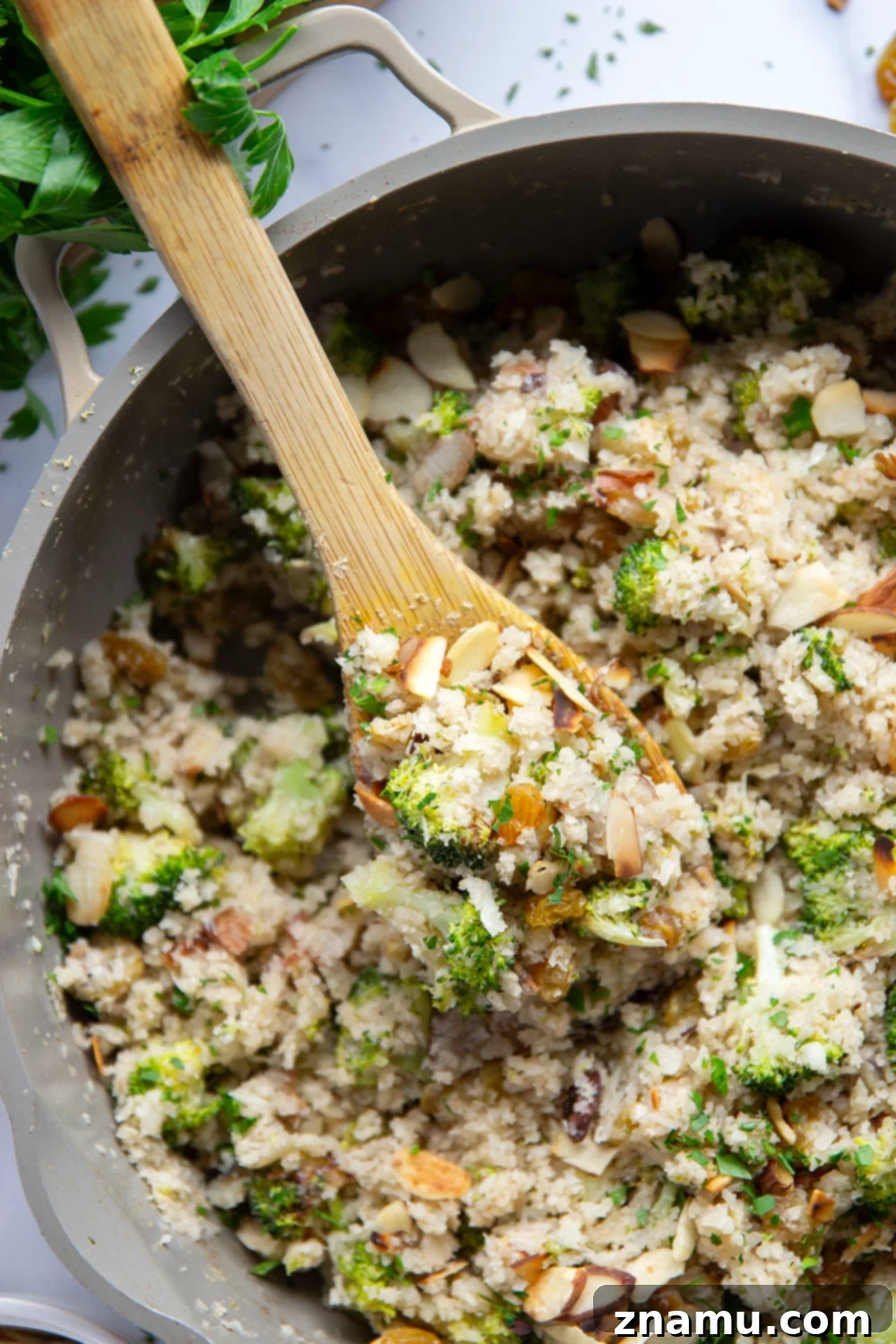
Who knew cauliflower could be so sneakily incredible? This low-carb cauliflower rice pilaf is an explosion of flavor and texture, from the satisfying crunch of toasted almonds to the sweet chewiness of golden raisins. And the fluffiness of the riced cauliflower itself? It’s truly remarkable, delivering a light and satisfying base that defies expectations and offers a genuinely healthy alternative.
Say hello to your new go-to healthy side dish, perfect for any and every occasion, whether it’s a casual weeknight dinner, a festive holiday gathering, or a meal prep staple. It’s simple, quick, undeniably delicious, and incredibly good for you!
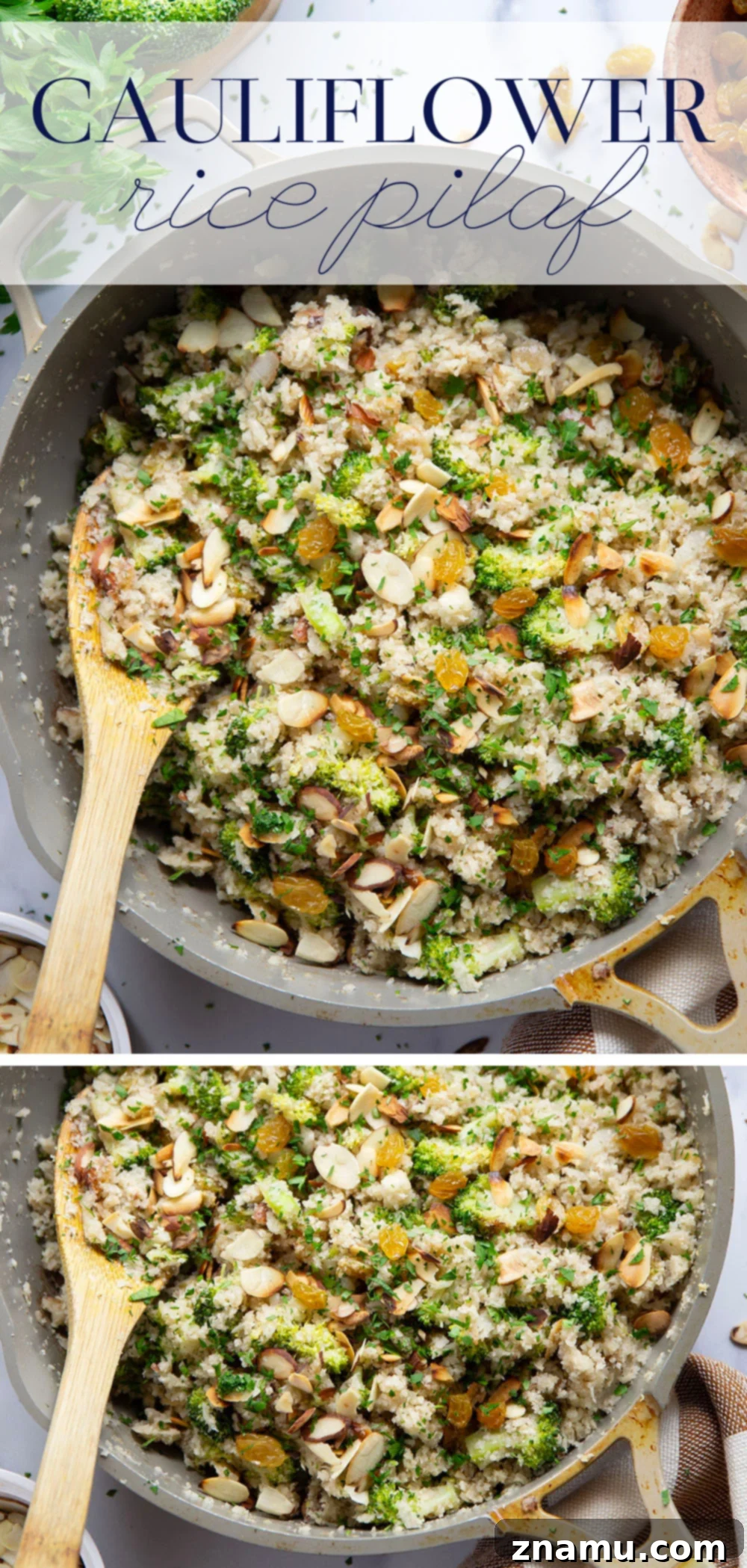
More Delicious & Healthy Side Dishes to Try Next!
If you loved this healthy cauliflower rice pilaf, you’ll be thrilled to explore these other fantastic side dish recipes that are equally flavorful and wholesome. Expand your culinary repertoire with these fresh ideas and continue your journey of delicious, nutritious eating:
- Lemon Couscous with Roasted Broccoli and Chickpeas
- Warm Sweet Potato Salad with Bacon Dressing
- Lemon Dill Smashed Fingerling Potatoes
Print
Pin
Cauliflower Rice Pilaf
This recipe may include paid links. As an Amazon Associate, I earn a commission from qualifying purchases.
Prep Time 15 minutes
Cook Time 15 minutes
Total Time 30 minutes
Servings 6 servings
Calories 171kcal
Ingredients
- 6 cups chopped fresh cauliflower florets
- 3 tablespoons unsalted butter, divided
- 1 small shallot, minced
- 2 cups finely-chopped fresh broccoli
- 2 medium cloves garlic, minced
- 1/2 cup toasted sliced almonds
- 1/2 cup golden raisins
- 2 tablespoons minced fresh parsley
- Salt and pepper to taste
Instructions
-
Place chopped cauliflower florets in a food processor. Pulse several times until cauliflower is ground up into tiny rice-like pieces, resembling couscous or fine rice grains. Be careful not to over-process to avoid a mushy texture.
-
Melt 2 tablespoons of unsalted butter in a large skillet or non-stick pan over medium-high heat. Add the minced shallot and finely-chopped broccoli. Sauté for 4-6 minutes, stirring occasionally, until the broccoli is tender-crisp and the shallot is fragrant and translucent.
-
Add the remaining 1 tablespoon of butter to the skillet and swirl until completely melted. Introduce the riced cauliflower to the pan and continue to sauté for an additional 4-6 minutes, or until the cauliflower becomes tender and slightly fluffy. Stir in the minced garlic and cook for 1 additional minute until it releases its aromatic fragrance.
-
Remove the pilaf from the heat. Gently stir in the toasted sliced almonds, golden raisins, and fresh minced parsley. Season the pilaf generously with salt and freshly ground black pepper to taste. Serve warm and enjoy this incredibly flavorful and healthy side dish!
Notes
Store any leftover pilaf in an airtight container in the refrigerator for up to 6 days. Reheat gently on the stovetop or in the microwave as described above.
Nutrition
Tried this recipe?Leave a comment and rating below. Feel free to share a picture on Instagram and tag @wholeandheavenlyoven or hashtag it #wholeandheavenlyoven
This post was updated with new recipe adjustments and photos on 9/5/25.