
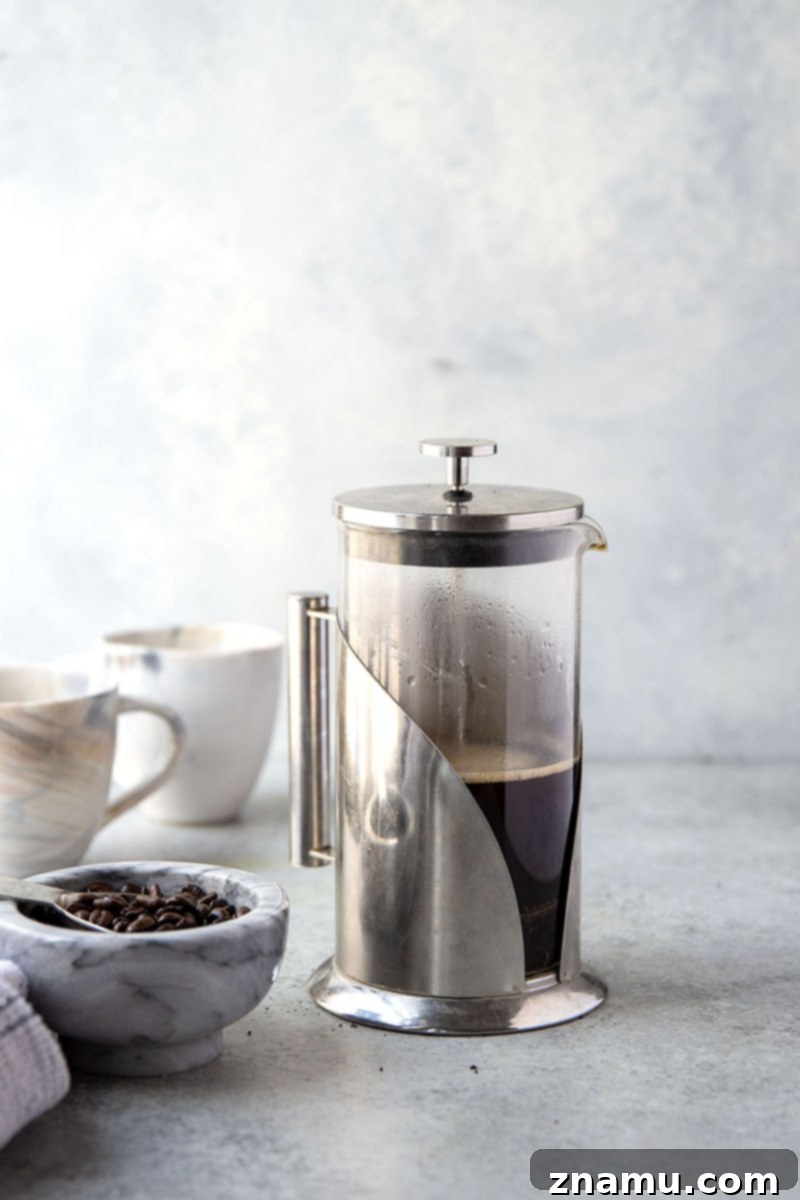
Unlock the secrets to brewing the perfect cup of French press coffee with this comprehensive, step-by-step guide! Ideal for crafting a single serving or enough for a crowd, it’s an effortless addition to your morning ritual.
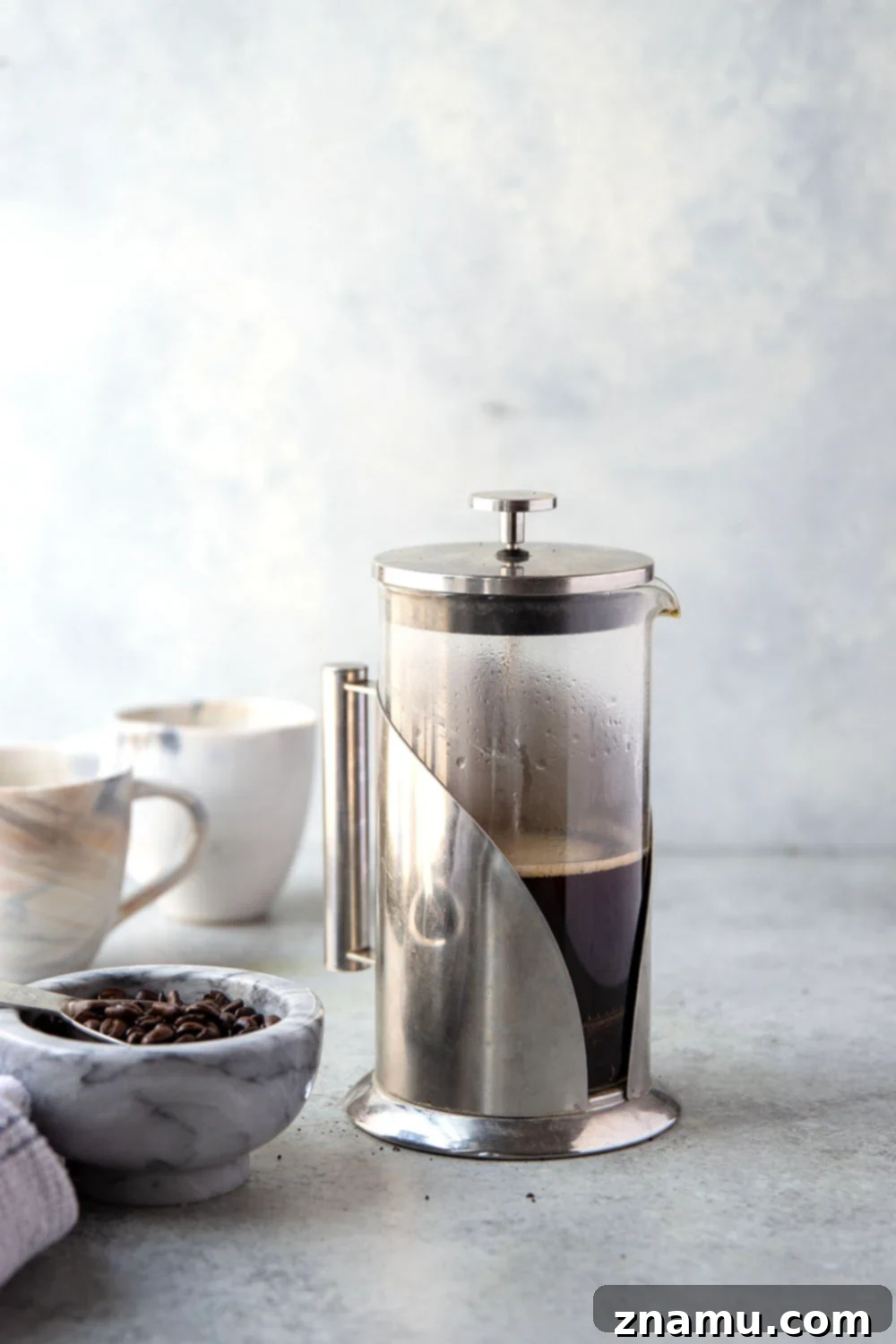
There’s a universally acknowledged truth among coffee enthusiasts: a truly great day often begins with an exceptional cup of coffee. If your quest for that ideal brew has led you to the French press, you’ve arrived at the right destination. This ultimate guide will walk you through every nuance of French press brewing, accompanied by insightful tips and a touch of coffee wisdom to elevate your daily ritual.
The French press method, also known as a cafetière, coffee press, or coffee plunger, is celebrated for producing a full-bodied, rich, and aromatic cup that many argue surpasses traditional drip coffee. Its simplicity belies the depth of flavor it can extract, making it a favorite for home brewers seeking quality without complexity. Once you experience the unparalleled taste of a perfectly brewed French press, you might find yourself delightfully embracing “the dark side” of coffee making – a place where flavor reigns supreme and convenience meets craftsmanship.
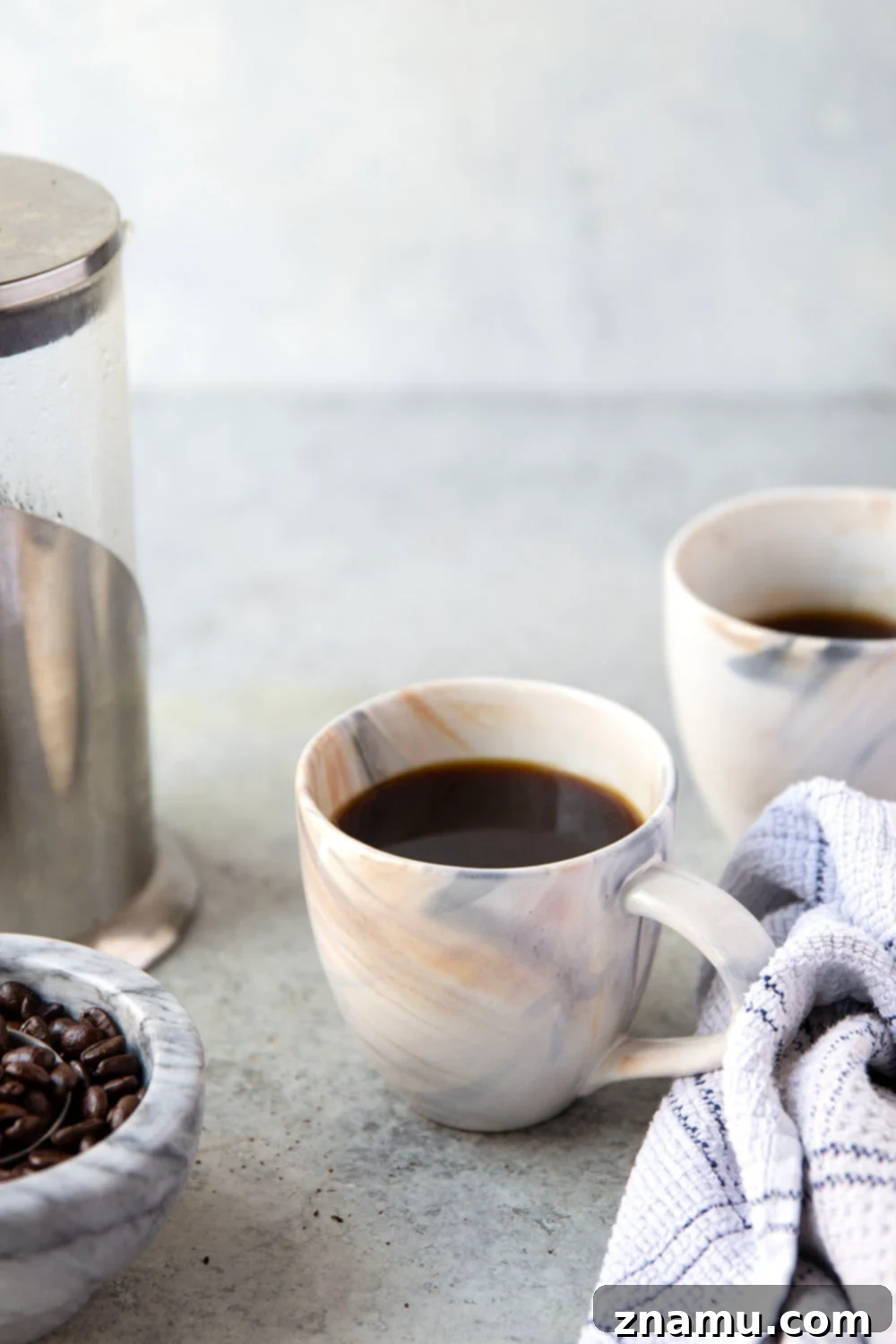
For discerning coffee lovers, mastering the French press technique isn’t just about making coffee; it’s about crafting an experience. So, grab your favorite mug, settle in, and prepare to absorb a wealth of knowledge that will transform your morning coffee routine forever. We’ll delve into everything from selecting the right beans to the optimal water temperature, ensuring every sip is a testament to perfect brewing.
Why Choose French Press Coffee?
The French press coffee method stands out for several compelling reasons, offering a superior brewing experience for many coffee lovers:
- A remarkably smooth and rich brew that often tastes superior to offerings from many coffeehouses. This is due to its unique full immersion brewing method, which allows water to saturate coffee grounds completely, extracting a broader range of flavors and oils without the filtering out essential components.
- Quick and easy preparation in under 10 minutes, making it a highly convenient yet sophisticated morning coffee routine. The straightforward process means less fuss and more time to enjoy your perfectly brewed cup.
- The flexibility to prepare either a single-serve portion or multiple servings, perfectly adapting to your needs whether you’re enjoying a quiet morning alone or entertaining guests.
- It allows for full immersion of coffee grounds, extracting more soluble solids, oils, and fine sediment. This contributes to a bolder, more complex flavor profile and a luxurious, velvety mouthfeel that is distinct from other brewing methods.
- The absence of paper filters means that no essential coffee oils are absorbed. These oils are crucial for carrying the coffee’s aromatic compounds, preserving the coffee’s authentic, robust taste and its natural body.
- French press brewing offers exceptional control over the brewing variables, from grind size and water temperature to steep time, empowering you to customize your coffee precisely to your taste.
Essential Equipment for French Press Brewing
Before diving into the brewing process, ensure you have the right tools. High-quality equipment doesn’t just simplify the process; it significantly enhances the final taste of your French press coffee, setting the stage for an extraordinary brew.
- French Press Device: This is, of course, the star of the show. French presses are available in various sizes, typically ranging from 12 oz (for single servings) to 34 oz (for 2-3 servings) and 51 oz (for larger groups). Choose one that comfortably fits your typical serving needs. While glass carafes with stainless steel plungers are most common, insulated stainless steel models are excellent for keeping your coffee hotter for longer, which can be a significant advantage.
- High-Quality Coffee Beans: The foundation of any great cup. Always opt for freshly roasted whole beans. The roast level—light, medium, or dark—is a matter of personal preference, but many find that a medium to dark roast truly shines in a French press, offering deep, robust, and chocolatey flavors that are beautifully extracted. Look for beans roasted within the last few weeks for optimal freshness.
- Coffee Grinder: A burr grinder is highly recommended and truly a game-changer for French press coffee. It provides a consistent, coarse grind which is absolutely essential for this method. An even coarse grind prevents both over-extraction (which leads to bitterness) and the creation of fine particles (which result in a sludgy, gritty cup). While blade grinders are cheaper, they produce an inconsistent particle size, negatively impacting flavor and texture.
- Digital Kitchen Scale: For unparalleled precision, a digital kitchen scale is indispensable. It allows you to accurately measure both your coffee beans and your water in grams, ensuring that you adhere to your preferred coffee-to-water ratio every single time. This consistency is key to replicating your perfect brew and fine-tuning it over time.
- Kettle: A standard electric or stovetop kettle is perfectly adequate for heating your water. However, for those seeking more control, a gooseneck kettle offers a precise pour. This can be particularly beneficial during the “blooming” phase, allowing you to saturate the grounds evenly without agitation.
- Timer: Essential for monitoring steep times. Precise timing ensures optimal extraction, preventing your coffee from becoming either under-extracted (weak and sour) or over-extracted (bitter). A kitchen timer or even your phone’s timer will suffice.
- Filtered Water: The quality of your water directly impacts the taste of your coffee. Filtered water is always preferred over tap water, which can contain chlorine, minerals, or other impurities that can impart off-flavors and mask the delicate nuances of your coffee beans.
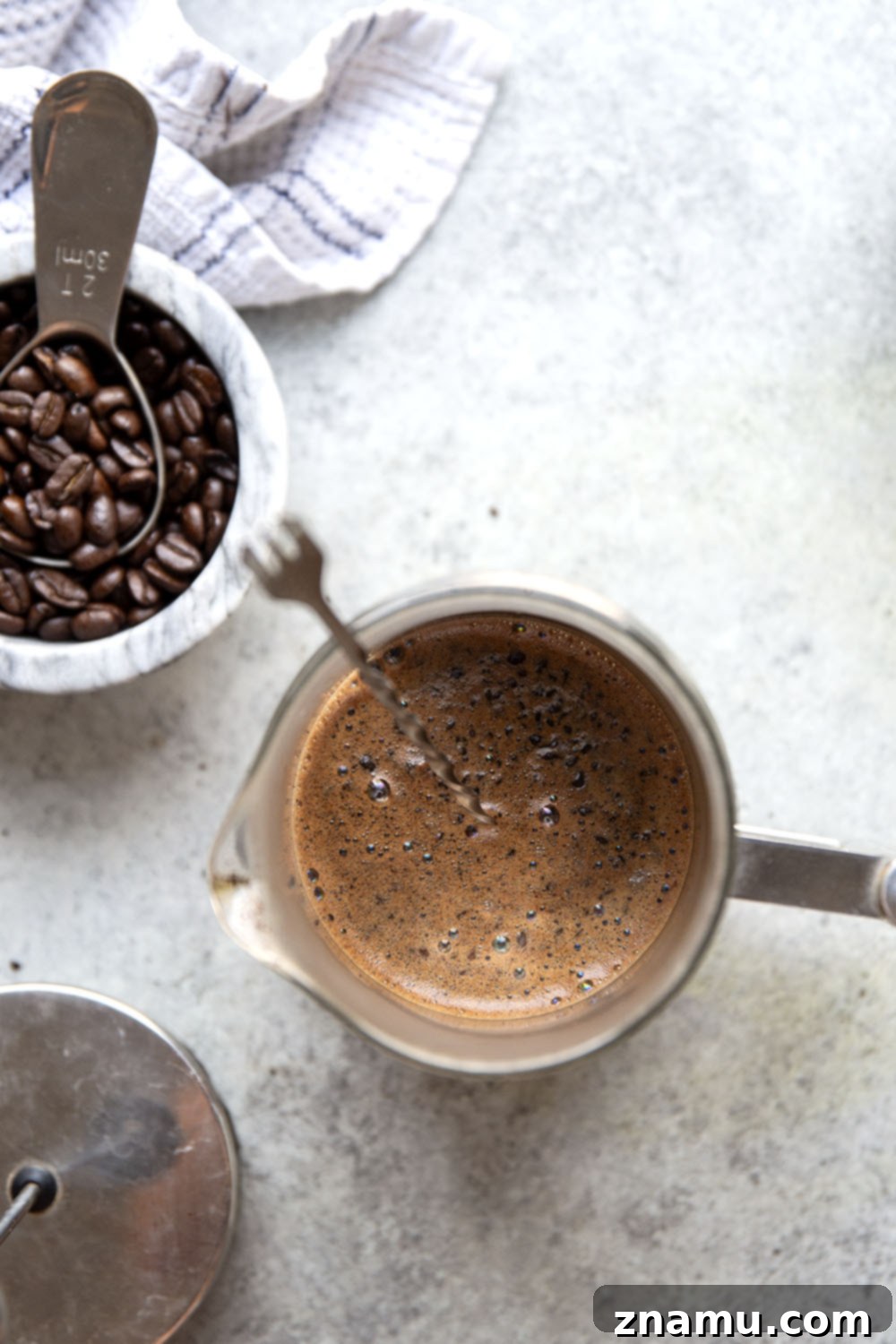
Mastering the French Press Coffee Method
(For a complete, printable recipe card with specific measurements, please scroll to the bottom of this article.)
The Golden Coffee to Water Ratio: Finding Your Perfect Strength
Achieving your preferred coffee strength is fundamental to an enjoyable French press experience. While personal taste is king, a widely accepted and excellent starting point is a 1:15 ratio. This means for every 1 gram of coffee, you will use 15 grams of water. Using a digital kitchen scale to measure both your coffee beans and water ensures unparalleled accuracy and consistency in your brewing, allowing you to truly understand and control your brew’s strength.
To help you put this ratio into practice, here are practical examples for various serving sizes:
- For 1 (8 oz) serving: You will use 14 grams of whole coffee beans to 210 grams (approximately 8 fluid ounces) of hot water.
- For 2 (8 oz) servings: Double your ingredients to 28 grams of coffee beans and 420 grams (approximately 16 fluid ounces) of hot water.
- For 4 (8 oz) servings: For a larger batch, use 56 grams of coffee beans and 840 grams (approximately 32 fluid ounces) of hot water.
Remember, French press coffee naturally yields a slightly bolder and more concentrated brew compared to average drip coffee. Don’t hesitate to experiment with these ratios to find what truly suits your palate. If you find the brew too strong, incrementally increase the amount of water (e.g., move to a 1:16 or 1:17 ratio). Conversely, if you desire a more intense, robust cup, use a bit more coffee (e.g., a 1:14 or 1:13 ratio) until you discover your ideal balance of strength and flavor.
Whole Beans vs. Pre-Ground: Why the Grind Matters Immensely
The journey to a perfect cup of coffee begins with selecting high-quality beans, but the magic of French press brewing lies significantly in the grind. If you have access to a coffee grinder, we strongly advocate for grinding whole beans yourself just before brewing. This allows you to precisely control the grind size, which is paramount for French press coffee, and ensures maximum freshness and flavor.
Freshly ground coffee retains its volatile aromatic compounds much better than pre-ground coffee. These compounds are responsible for the complex, nuanced, and inviting aromas and flavors that define a truly great cup. Grinding just moments before brewing means you unlock these delicate flavors at their peak, resulting in a vibrant, rich, and intensely flavorful brew that simply cannot be matched by pre-ground alternatives.
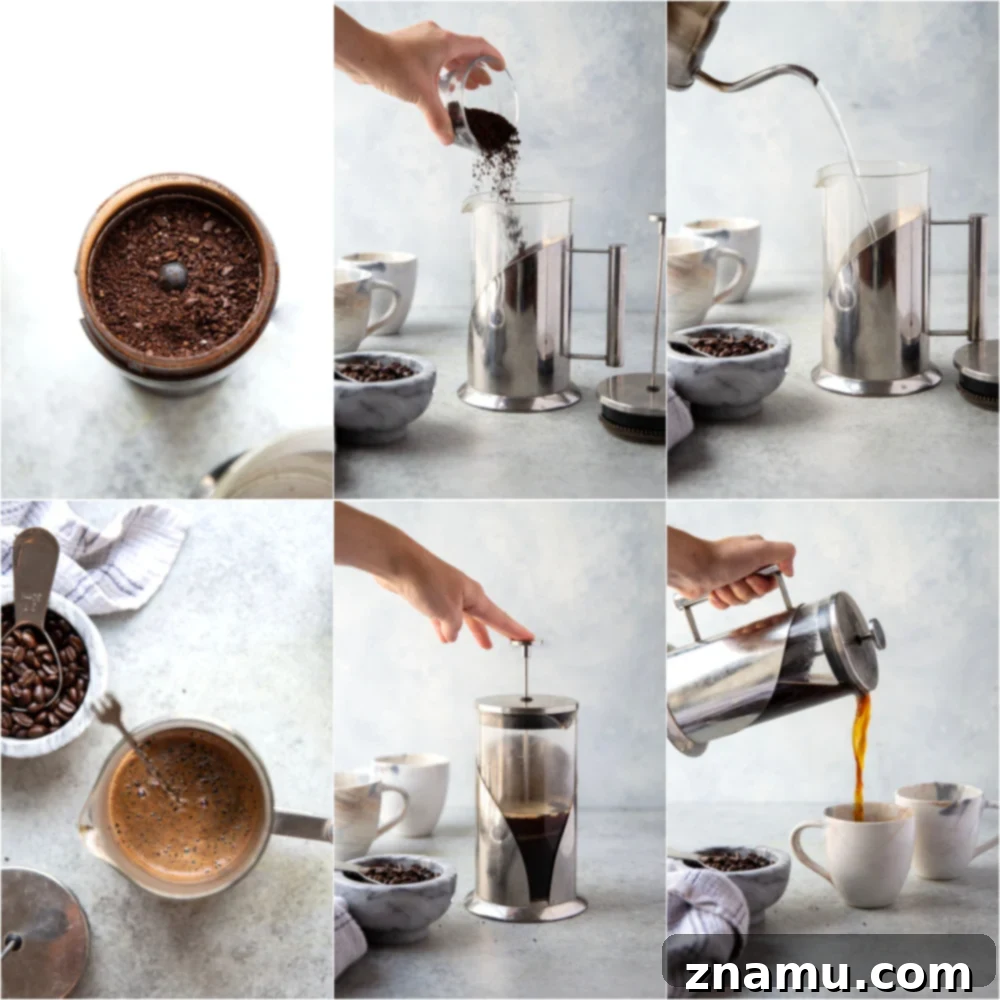
For French press, a coarse and uniform grind is absolutely crucial. The ideal consistency should resemble large breadcrumbs, rock salt, or coarse sea salt. If the grind is too fine (like espresso or drip coffee grounds), it will lead to over-extraction, resulting in a bitter, astringent taste and a sludgy texture that is difficult to plunge. On the other hand, if the grind is too coarse, the coffee may be under-extracted, producing a weak, sour, or watery cup.
If pre-ground coffee is your only option, don’t despair! You can still achieve a very satisfying cup of French press. However, be aware that most pre-ground coffee is designed for drip machines, meaning it’s often too fine for French press. If using pre-ground, specifically look for options labeled “coarse grind” if available. If you’re using a standard “all-purpose” or “drip” grind, you might need to adjust your steep time slightly shorter (e.g., 3 minutes instead of 4) to mitigate over-extraction and bitterness. The key is to minimize the time fine particles spend in contact with hot water.
Water Quality and Temperature: The Unsung Heroes of Brewing
Often overlooked, the quality and temperature of your water are critical components that can make or break your French press coffee. Given that coffee is over 98% water, it makes sense that the water’s characteristics will profoundly influence the final taste.
Firstly, regarding water quality, filtered water is always preferred. Tap water can contain various impurities such as chlorine, fluoride, and dissolved minerals, all of which can impart off-flavors to your brew. These unwanted tastes can mask the delicate and complex nuances of your carefully selected coffee beans. Using filtered water ensures a clean, neutral base that allows the true character of your coffee to shine through, resulting in a purer and more enjoyable cup.
Secondly, water temperature is equally vital. The ideal brewing temperature range for coffee is universally accepted to be between 195°F and 205°F (90-96°C). Boiling water, which measures 212°F (100°C) at sea level, is simply too hot for brewing coffee. Water that is too hot can “scorch” or “burn” the coffee grounds, extracting undesirable bitter compounds and leading to a harsh, acrid taste. Conversely, water that is too cool will result in under-extraction, producing a weak, sour, and unappealing cup.
The best practice is to bring your filtered water to a full boil, then remove it from the heat and let it sit for approximately 60 seconds (one minute). This brief cooling period allows the temperature to drop into the optimal brewing range, ensuring a smooth, balanced extraction without scorching the delicate coffee flavors. If you have a temperature-controlled kettle, you can set it directly to 200°F (93°C) for perfect accuracy.
Expert Tips for Your Best French Press Coffee Ever
Follow these essential tips closely to transform your French press brewing into an art form, consistently delivering an exceptional cup of coffee every time:
- Weigh Coffee Before Grinding for Precision: Precision is paramount in coffee brewing. Invest in a digital kitchen scale and use it to weigh your whole coffee beans before grinding. This simple step ensures you always use the exact coffee-to-water ratio you desire, leading to consistent results cup after cup. It’s the most reliable way to fine-tune your preferred strength and flavor profile with absolute accuracy, removing any guesswork from volumetric measurements.
- Grind Beans to a Coarse, Uniform Consistency: This is arguably the most crucial step for French press coffee. The grind should be visibly coarse and uniform, resembling large breadcrumbs, chunky sea salt, or even cracked peppercorns. Avoid fine grinds (like those used for espresso or standard drip coffee) at all costs, as they will lead to severe over-extraction, resulting in an overly bitter, muddy, and sludgy cup that is incredibly difficult to plunge. A consistently coarse grind allows for proper water flow during steeping and a cleaner separation of grounds from liquid by the plunger’s mesh filter.
- Prewarm Your French Press Carafe: This is a simple yet incredibly effective trick for maintaining optimal brewing temperature. Pour a small amount of freshly boiled water (about 1/2 cup) into your French press carafe, swirl it around to coat the interior, and let it sit for about a minute. This preheats the glass or metal, preventing a sudden and significant drop in water temperature when you introduce your hot brewing water and coffee grounds. Maintaining a consistent temperature throughout the steep ensures a more even and efficient extraction, resulting in a perfectly hot and flavorful cup of coffee from start to finish.
- Pour Water Over Grounds and Allow to “Bloom” for 1 Minute Without Stirring: This vital preliminary step is known as “blooming” or “degassing.” When hot water first makes contact with fresh coffee grounds, they release trapped carbon dioxide (CO2), which is a natural byproduct of the roasting process. This release of gas creates a “bloom” – a puffy, rising layer of grounds. Allowing this process to happen undisturbed for about 30-60 seconds ensures a more even saturation of all coffee particles and prepares them for optimal flavor extraction. It’s a key indicator of fresh coffee and significantly contributes to a more balanced and flavorful brew.
- Stir Coffee After Blooming, Then Steep for 3 Additional Minutes: Once the blooming phase is complete, gently stir the coffee grounds and water mixture with a long spoon or paddle. This action is important for breaking up the “crust” that forms on top of the bloom and ensures all coffee grounds are fully submerged and saturated, facilitating uniform extraction. After stirring, carefully place the French press plunger lid on top of the carafe, but do not press it down yet. Allow the coffee to steep for an additional 3 minutes, bringing the total steeping time (including the bloom) to 4 minutes. This timeframe is generally considered ideal for optimal French press extraction.
- Slowly and Steadily Push Plunger Down: After the recommended 4-minute steep time, it’s time to separate the grounds from your exquisite brew. Slowly and steadily press the plunger down, applying gentle, even pressure. This motion should take about 20-30 seconds. Resist the urge to press quickly or with force, as this can agitate the grounds, pushing fine particles through the mesh filter and into your coffee. A rapid plunge will result in a gritty texture and potentially a bitter, over-extracted taste. The goal is a smooth, controlled descent that effectively separates the liquid from the solids.
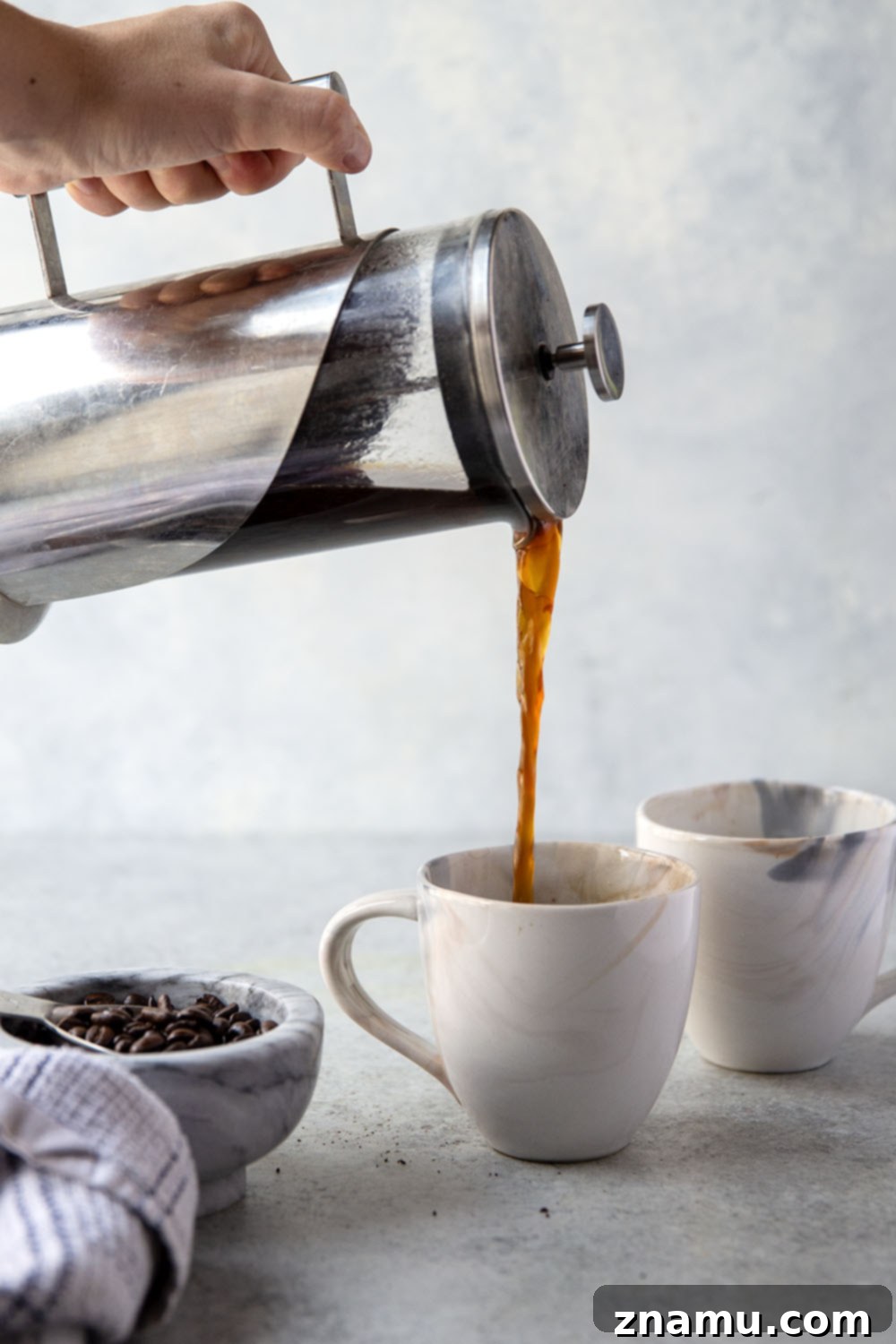
- Decant Coffee Immediately for Best Flavor: This is a critical final step for preserving the quality and flavor of your French press coffee. Once the plunger is fully depressed, immediately pour all the brewed coffee into your waiting mugs or a separate insulated carafe. Do not let the coffee sit in the French press with the grounds for an extended period. If you do, the coffee will continue to extract from the grounds, leading to over-extraction and an increasingly bitter, unpleasant flavor. For the freshest, cleanest, and most balanced taste, prompt decanting after brewing is an absolute must.
Effortless Cleaning for Your French Press
Cleaning a French press, especially disposing of all the spent coffee grounds, can sometimes feel like a bit of a chore. However, we’ve discovered a simple trick that makes the process much easier and quicker. After you’ve decanted your delicious coffee, add about a half-cup of warm water to the bottom of the French press carafe and give it a gentle swirl. This helps loosen and suspend the remaining coffee grounds, making it incredibly easy to pour them into a compost bin or your regular trash. Remember, it’s generally best to avoid washing large quantities of coffee grounds down the sink drain, as they can accumulate and potentially cause clogs over time.
Once the bulk of the grounds are removed, rinse the French press thoroughly in warm water. Pay special attention to the plunger assembly, carefully checking to ensure no tiny coffee particles are stuck in the mesh filter or around the edges. Any lingering grounds can affect the taste of your next brew. For a deeper clean, particularly if you notice coffee oils starting to build up on the glass or metal components, it’s a good practice to disassemble the plunger. Wash each component (the mesh, spring, and rod) with a mild dish soap and a brush. Periodically, a soak in a solution of warm water and white vinegar can work wonders to remove stubborn coffee stains, break down oil residue, and neutralize any lingering odors, keeping your French press pristine, hygienic, and ready for your next perfect brew.
How to Savor Your French Press Coffee
The true beauty of French press coffee lies not only in its robust flavor but also in its incredible versatility. You can treat French press coffee just like you would any other morning brew, tailoring it to your personal preferences and mood. Whether you prefer it pure and black, allowing the full depth and nuanced flavors of the beans to shine through, or enhanced with your favorite additions, French press coffee provides an excellent, full-bodied base that stands up beautifully to various accompaniments.
Consider mixing in a splash of your preferred creamer – be it classic dairy half-and-half, a rich heavy cream, or a dairy-free alternative such as creamy oat milk, almond milk, or soy milk. The richness of French press coffee pairs wonderfully with these, creating a luxurious and satisfying texture. For those with a sweet tooth, a pump of your favorite coffee syrup (vanilla, caramel, hazelnut), a spoonful of sugar, honey, or a sugar substitute can elevate your cup into a delightful treat. The full-bodied nature of French press ensures that these additions enhance, rather than overwhelm, the coffee’s inherent flavors, offering a truly customizable and enjoyable experience.
Craving Iced French Press? Here’s How!
Absolutely! Converting your freshly brewed French press into a refreshing iced drink is incredibly simple and yields a remarkably flavorful result, far superior to many instant iced coffee options. For an optimal iced experience, you might even consider brewing your coffee slightly stronger than usual (adjusting the coffee-to-water ratio to 1:12 or 1:13) to account for the inevitable dilution from melting ice.
Once your hot French press coffee is brewed, allow it to cool slightly at room temperature for about 5-10 minutes. For a truly cold start, you can even chill it in the refrigerator for 20-30 minutes. Once cooled to your preference, grab a tall glass and fill it generously with ice. Pour the concentrated French press coffee over the ice. Now, the fun begins: customize it to your heart’s content! Mix in your favorite creamers, a touch of simple syrup for sweetness, a dash of vanilla extract, or any flavored coffee syrup you desire. Stir everything well, and you’ll have a gourmet iced coffee that rivals any coffee shop creation, perfect for warmer days or whenever you crave a chilled caffeine boost. For an even smoother, less acidic iced coffee, consider using French press to make a cold brew concentrate overnight, which offers an incredibly refreshing taste without any bitterness.
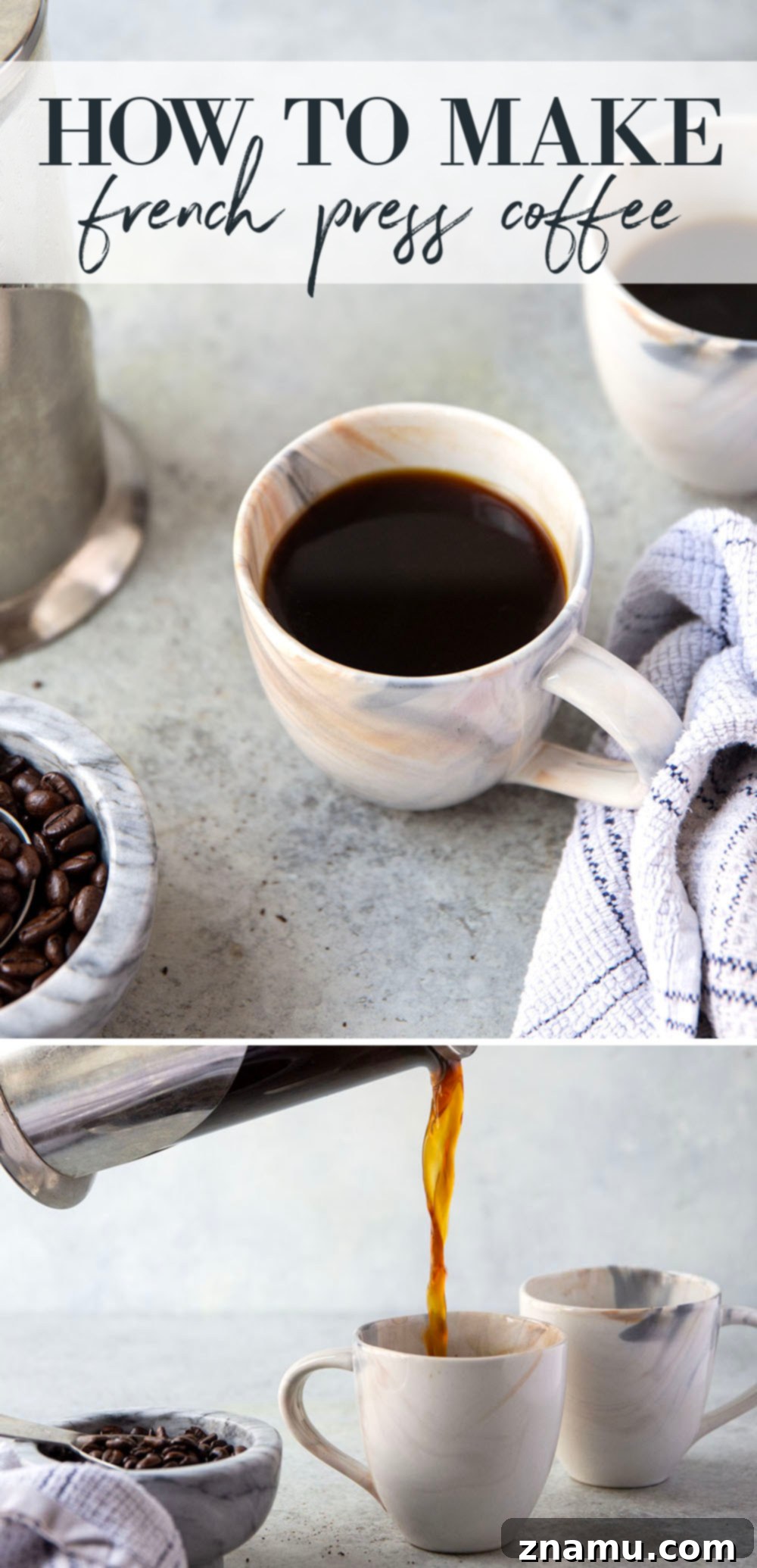
When brewed correctly, French press coffee truly is an absolute delight. Its magic lies in its ability to produce an incredibly smooth, rich, and intensely flavorful cup of coffee that consistently starts your day on the right foot. The tactile and engaging process of preparing it, from precisely grinding your beans to carefully pressing the plunger, adds a meditative quality to your morning ritual, making the final sip even more rewarding and appreciated.
Once you experience the depth of flavor, the luxurious mouthfeel, and the satisfying richness of homemade French press coffee, you’ll understand why so many coffee aficionados declare they’ll never go back to conventional drip coffee again. It’s a simple, elegant, and profoundly satisfying brewing method that champions the true essence and character of coffee beans.
We encourage you to embark on this rewarding brewing journey and discover your perfect cup. Experiment with different beans, ratios, and additions to truly make it your own. If you create this amazing French press coffee, we’d love to hear about it! Please share your experiences and triumphs by leaving a comment and star rating below, or take a photo and tag it on Instagram with #wholeandheavenlyoven.
For a visual walkthrough of this coffee preparation, explore our dedicated Google Web Stories.
More Ways to Get Your Coffee Fix!
- Cafe-Style Overnight Cold Brew Coffee
- Salted Caramel Pumpkin Cold Brew
How To Make French Press Coffee
Learn how to make the best cup of French press coffee with this simple step-by-step guide! Perfect for a single-serve coffee and an easy part of your morning routine.
This recipe may include paid links. As an Amazon Associate, I earn a commission from qualifying purchases.
Prep Time: 10 minutes
Total Time: 10 minutes
Servings: 1 (8 oz) serving
Ingredients
- 14 grams (approximately 2 tablespoons) whole coffee beans
- 8 oz filtered water, plus additional for warming
Instructions
- Bring about 1/2 cup of filtered water to a boil. Pour this hot water into your French press carafe, swirl it around to preheat, and then place the plunger lid on top. Allow the French press to warm while you prepare your beans.
- Weigh 14 grams of whole coffee beans and place them in a burr grinder. Grind the beans to a coarse consistency, aiming for a texture similar to flaky sea salt or coarse breadcrumbs. Once ground, drain the warming water from the French press and add the freshly ground coffee to the bottom of the carafe.
- Bring 8 oz of filtered water to a full boil (212°F or 100°C). Remove it from the heat and let it sit for 1 minute to cool slightly to the optimal brewing temperature of 195-205°F (90-96°C).
- Carefully pour the heated water over the ground coffee in the French press. Let it sit undisturbed for 1 minute to allow the coffee to “bloom” and release carbon dioxide. After blooming, use a long spoon to gently stir the coffee, ensuring all grounds are fully saturated. Place the plunger lid back on top, but do not push down the plunger yet. Allow the coffee to steep for an additional 3 minutes.
- Once the total steep time of 4 minutes (1-minute bloom + 3-minute steep) is complete, slowly and steadily push the French press plunger down. Apply gentle, even pressure as you press, taking about 20-30 seconds to complete the plunge.
- Immediately after plunging, pour all the brewed coffee into a mug for serving. Do not let the coffee sit in the French press with the grounds, as it will continue to extract and become bitter. Serve your perfect French press coffee immediately and enjoy!
Tried this recipe? Leave a comment and rating below. Feel free to share a picture on Instagram and tag @wholeandheavenlyoven or hashtag it #wholeandheavenlyoven
This post was updated with new recipe tips and photos on 7/20/23.